Cup vs. Flange Plunger: How to Choose the Right Tool
Learn the difference between cup vs. flange plungers. Discover physics, DIY steps, and when to call 24x7 American Plumber at 762-383-0288.

How to Choose the Right Plunger: Cup vs. Flange Plungers
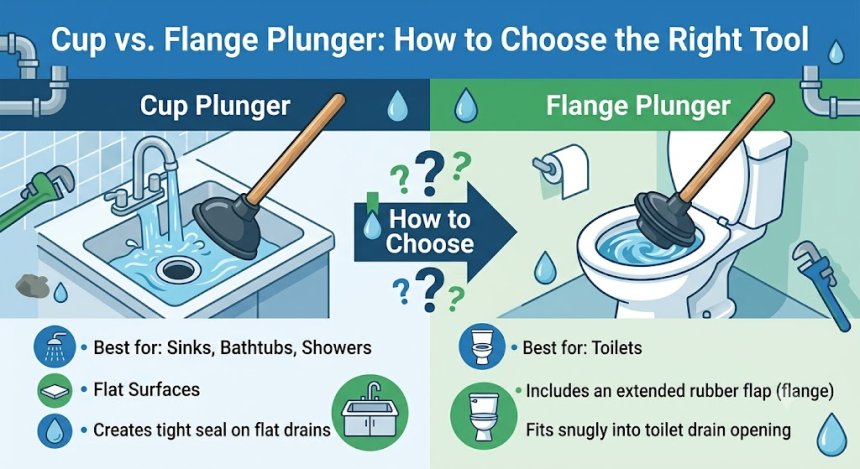
To clear a clog effectively, match the plunger head to the drain's shape: use a flat cup plunger on flat drain openings like sinks, tubs, and showers to build a tight vacuum; use a flange plunger with an extended rubber sleeve on curved toilet bowls to seal the trapway correctly.
The Physics of Plunging: How Hydraulic Pressure Clears Clogs
Plunging relies on fluid dynamics and basic mechanical advantage. Water is virtually incompressible, whereas air compresses under force. When a drain fills with water above an obstruction, a plunger acts as a manual hydraulic piston.
       CUP PLUNGER (Flat Drains)              FLANGE PLUNGER (Toilets)

          [  Handle  ]                           [  Handle  ]
               ||                                     ||
               ||                                     ||
          +----------+                            +----------+
         /            \                          /            \
        (  Flat Cup    )                        (   Dome Cup   )
         \__________/                            \__________/
         | Flat Surface |                        | Fold-Out  |
                                                 |  Sleeve   |
                                                 +-----------+
                                                | Curved Trap |
When you press down on the handle, you force water into the drain line, applying positive dynamic hydraulic pressure directly against the blockage. When you pull back up, you create negative pressure (a atmospheric siphonage pull).
It is actually this upward suction force—not the downward thrust—that breaks up most clogs. The negative pressure dislodges the impacted mass, pulling sediment, hair, or toilet paper backward so water currents can disperse it. Attempting to clear a curved toilet drain with a flat cup plunger breaks the airtight seal, allowing force to vent harmlessly around the rim rather than driving hydraulic energy into the trapway.
Cup vs. Flange Plungers: Side-by-Side Comparison
| Feature | Cup Plunger | Flange Plunger |
| Best Used For | Sinks, bathtubs, showers, floor drains | Toilets, curved porcelain openings |
| Head Design | Flat-bottomed rubber or silicone cup | Cup with an extended internal rubber sleeve |
| Seal Mechanism | Creates flat perimeter seal against smooth surfaces | Sleeve inserts into trapway for 360° seal |
| Ideal Drain Geometry | Flat, level surfaces | Deeply contoured, angled outlets |
| Average Tool Cost | $5 – $12 | $8 – $18 |
| Average Lifespan | 3 – 5 years (deteriorates with chemicals) | 3 – 5 years (deteriorates with acid/chlorine) |
Deep Dive: The Cup Plunger
The standard cup plunger features a straight wooden or plastic handle affixed to a flexible, hemispherical rubber dome with a flat rim.
Primary Applications
-
Bathroom Sinks & Kitchen Sinks: Fits flush against flat porcelain or stainless steel sink basins.
-
Bathtubs & Showers: Covers flat strainer plates and tub shoe drains.
-
Utility Trays & Floor Drains: Seals over flat concrete or tile drain grates.
Why It Fails on Toilets
Toilet bowls feature an irregular, contoured siphon outline leading into an angled trapway. A flat cup plunger cannot conform to this geometry. Air vents continuously from the side gaps, preventing the atmospheric vacuum required to push and pull water through the toilet's internal siphon loop.
Deep Dive: The Flange Plunger (The Toilet Plunger)
The flange plunger (often called a toilet plunger) features a secondary rubber sleeve or flexible collar extended below the main dome.
Primary Applications
-
Standard & High-Efficiency Toilets: The drop-down sleeve tucks directly inside the drain throat, establishing a 360-degree seal inside curved porcelain.
-
Dual Purpose Use: The inner flange can be folded up inside the cup, temporarily converting it into a flat cup plunger for sinks or tubs.
Master Plumber Tip: Keep separate plungers for sanitation reasons! Never use the same plunger on a kitchen sink that has been inside a toilet bowl, even after cleaning.
Hidden Pro Tips & Secrets from Master Plumbers
-
Submerge the Rim: Air compresses, but water does not. Always ensure the rubber cup is completely submerged in water before plunging. If the basin or bowl is dry, add 1 to 2 inches of water to seal the force.
-
Purge Trapped Air First: Lower the plunger into the basin at a 45-degree angle to let air bubbles escape out of the cup, filling the dome with water instead of air.
-
Block the Overflow Opening: Kitchen sinks, bathroom sinks, and bathtubs feature overflow vents. If left open, plunging pressure vents straight out the overflow wall instead of pushing down on the clog. Cover the overflow tightly with a damp rag or duct tape to preserve pressure.
-
Petroleum Jelly Seal: For stubborn clogs on slightly textured basin bottoms, smear a thin layer of petroleum jelly (Vaseline) around the rim of the plunger cup to form an airtight seal.
-
Hot Water Pre-Soak: Pouring hot (not boiling) water into the bowl 10 minutes prior softens stubborn toilet paper and organic waste mass before applying physical pressure.
Step-by-Step DIY Diagnostic & Unclogging Guide
Follow these sequential steps to clear minor obstructions safely without damaging household fixtures or pipe joints.
+-----------------------------------------------------------------+
|                        SAFETY FIRST                             |
|  Wear eye protection and heavy rubber gloves.                   |
|  NEVER plunge if chemical drain cleaners were used recently!    |
+-----------------------------------------------------------------+
                                |
                                v
+-----------------------------------------------------------------+
|  STEP 1: Prep & Protect Area                                    |
|  Lay towels down and seal overflow drains with damp rags.       |
+-----------------------------------------------------------------+
                                |
                                v
+-----------------------------------------------------------------+
|  STEP 2: Purge Trapped Air                                      |
|  Angle plunger inside bowl to replace air in cup with water.   |
+-----------------------------------------------------------------+
                                |
                                v
+-----------------------------------------------------------------+
|  STEP 3: Establish Tight Seal                                   |
|  Fit flange into toilet throat OR cup flat over sink drain.     |
+-----------------------------------------------------------------+
                                |
                                v
+-----------------------------------------------------------------+
|  STEP 4: Execute Push-Pull Motion                               |
|  Gently push first, then vigorously plunge 15-20 thrusts.       |
+-----------------------------------------------------------------+
                                |
                                v
+-----------------------------------------------------------------+
|  STEP 5: Rapid Pull & Flush Test                                |
|  Break seal sharply on final pull; test flow with bucket water. |
+-----------------------------------------------------------------+
Safety Warnings
-
Chemical Hazard: Never plunge a drain if harsh chemical drain openers (sulfuric acid or sodium hydroxide) were recently poured into it. Hydraulic pressure will spray caustic liquid onto your skin, eyes, and bathroom surfaces.
-
Thermal Shock: Never pour boiling water into a porcelain toilet. Porcelain expands rapidly when exposed to sudden heat, leading to cracked bowl housing and localized flooding.
Step-by-Step Instructions
-
Prepare the Area: Lay down towels around the base of the fixture. Put on chemical-resistant rubber gloves and safety eyewear.
-
Seal Secondary Openings: If working on a double sink or bathtub, plug the neighboring drain or overflow opening using a damp rag.
-
Check Water Level: Confirm water completely covers the rubber cup. Add water if necessary; scoop out excess water if the fixture is overflowing.
-
Purge Air inside Plunger: Dip the plunger head at an angle into the water so the internal chamber fills with water rather than trapped air.
-
Position the Tool:
-
For Sinks/Tubs: Center the cup directly over the drain grate.
-
For Toilets: Extend the inner flange and seat it firmly inside the toilet throat.
-
-
Apply Plunging Cycles: Press down gently on the initial stroke to drive out remaining air and lock the seal. Then perform 15 to 20 fast, rhythmic up-and-down strokes while maintaining firm contact with the drain perimeter.
-
Break the Vacuum sharply: Finish with a forceful pull upward to release the seal. The dislodged blockage should pull backward into the basin.
-
Test the Flow: Flush or pour a bucket of clean water down the drain to check if clear flow has been restored.
Persistent main line blockages require specialized plumbing augers or hydro-jetting equipment to protect your sewer infrastructure. For prompt, professional drain clearing, contact
24x7 American Plumber at 762-383-0288 today.
Safe DIY vs. Requires a Licensed Professional
Knowing your limits prevents costly structural water damage, pipe displacement, or local plumbing code violations.
| Task Category | Safe for DIY Homeowners | Requires a Licensed Professional |
| Toilet Clogs | Single fixture backup cleared with flange plunger | Multiple fixtures backing up simultaneously (sewer line main clog) |
| Sink/Shower Clogs | Localized soap scud or hair buildup in the fixture trap | Deep line tree root intrusion or collapsed galvanized drain pipes |
| Equipment Use | Handheld cup/flange plungers, hand-crank sink snakes (<15 ft) | Commercial motorized augers, hydro-jetters, video camera inspection |
| Drain Integrity | Adjusting PVC slip-joint nuts under vanity sinks | Replacing hidden DWV (Drain, Waste, Vent) piping inside walls |
| Chemical Use | Enzymatic bio-cleaners for routine maintenance | Acidic main line clearing agents or high-pressure flushing |
Professional Equipment & Industry Cost Context
When standard plungers fail, specialized mechanical tools are required to restore waste lines safely without damaging delicate pipe walls or porcelain.
       CABLE SNAKE / AUGER                    HYDRO-JETTER NOZZLE

         ___/\/\/\/\/\- (Head)                 ===||========= (Hose)
        /                                         ||  /// (Forward Stream)
   (S) ===[ Cable Reel ]                     +----++----+
        \___                                 | :::  ::: | (Rearward High-
            \/\/\/\/\/-                      +----------+   Pressure Jets)
How Plumbers Work
-
Toilet Closet Augers: A flexible shaft wrapped in a protective rubber sleeve that passes through porcelain traps without scratching glaze. It reaches 3 to 6 feet down to retrieve or break apart solid blockages.
-
Motorized Drain Snakes (Cable Machines): Rotating steel cables equipped with specialized cutting heads cut through grease, sediment calcification, and heavy hair clogs up to 100 feet deep.
-
Hydro-Jetters: High-pressure water systems delivering 3,000–4,000 PSI stream jets that scour grease deposits, sediment, scale, and organic buildup cleanly off pipe walls.
-
In-Line Video Camera Inspection: Waterproof HD camera heads pushed through main stack lines isolate collapsed pipes, bellied lines, or invasive tree roots.
Realistic Industry Cost & Lifespan Estimates (US Standard)
-
Flange / Cup Plunger Lifespan: 3 – 5 years (Cost: $5 – $20)
-
Toilet Closet Auger Purchase: $35 – $75 (Homeowner grade)
-
Professional Drain Clearing (Standard Clog): $150 – $350
-
Professional Hydro-Jetting Service: $450 – $900
-
Video Camera Sewer Line Inspection: $250 – $500
-
Standard Toilet Fixture Lifespan: 20 – 50 years (Wax ring sealant: 10 – 15 years)
When to Call the Pros
While a plunger resolves most minor, localized drain stops, certain red flags signal deeper sewer or drain line issues that demand professional equipment and certified diagnostics.
Call a Professional Immediately If:
-
Multiple Fixtures Are Backing Up: Running your washing machine or flushing the upstairs toilet causes water to surge up into downstairs shower basins or floor drains.
-
Gurgling Sounds in Wall Cavities: Hearing air bubbling through sink traps when toilets are flushed indicates a blocked plumbing vent stack or main line restriction.
-
Recurring Drain Blockages: A single fixture requires plunging multiple times a week despite normal water and waste usage.
-
Sewer Gas Odors: Foul hydrogen sulfide smells near interior drains indicate dried p-traps, broken vent pipes, or main sewer line breaches.
-
Standing Sewage or Water Damage: Water overflows the toilet rim and seeps down through floor subfloors or ceiling drywall.
When DIY efforts fall short, avoid pushing blockages deeper or risking costly pipe cracks. Contact the master plumbing team at 24x7 American Plumber for rapid emergency service and long-term drain reliability.
-
Direct Phone:
762-383-0288 -
Web Services & Scheduling:
24x7americanplumber.com -
Service Availability: 24/7 Emergency & Scheduled Residential/Commercial Service Across the USA
Frequently Asked Questions (FAQs)
Q: Can I use a flange plunger on a kitchen sink or bathtub drain?
A: Yes. You can fold the inner sleeve (flange) inside the top cup dome. This flattens the bottom edge, turning the tool into a standard cup plunger suitable for flat sink, tub, and shower drain surrounds.
Q: Why does my toilet keep clogging even after I successfully plunge it?
A: Persistent toilet blockages usually point to a partial obstruction further down the branch drain, mineral scale buildup inside the bowl's siphon jet, an aging wax ring restriction, or root intrusion in the main sewer lateral line.
Q: Are accordion-style plastic plungers better than rubber flange plungers?
A: Accordion plungers generate high forward displacement force due to their hard plastic design, but their rigid lip makes securing an airtight seal against contoured porcelain difficult. Soft, high-grade rubber flange plungers offer superior sealing efficiency and won't scratch porcelain finishes.
Q: Will chemical drain cleaners hurt my pipes if plunging doesn't work?
A: Yes. Caustic drain cleaners contain heavy acids that generate intense heat (exothermic reactions), which can warp PVC drain pipes, soften plastic joints, pit cast iron pipes, crack porcelain bowls, and pose serious chemical spray hazards to plumbers who must later snaking the drain manually.