What Is a Backflow Preventer & Why Annual Testing Is Required
Protect your drinking water! Learn how backflow preventers work, why cities mandate annual testing, and call 24x7 American Plumber at 762-383-0288.

What Is a Backflow Preventer and Why Does the City Require Annual Testing
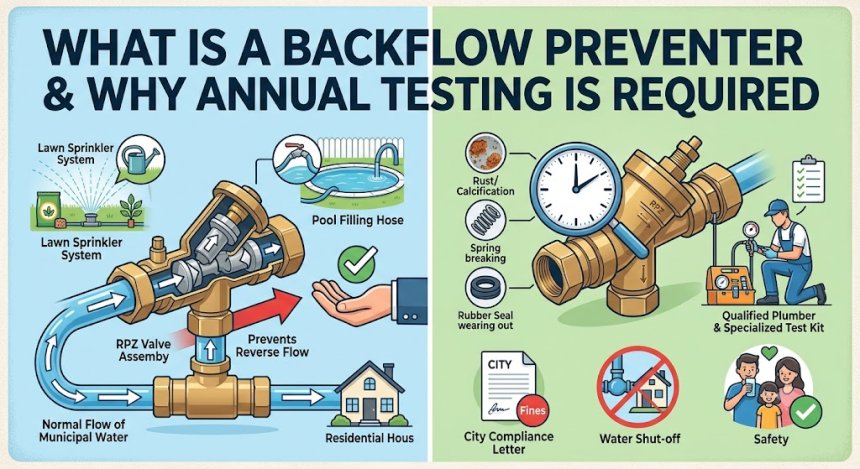
A backflow preventer is a mechanical valve assembly installed on a water service line that prevents contaminated water, fertilizers, or industrial chemicals from reversing flow into the municipal drinking supply during unexpected pressure changes, which is why local water authorities mandate annual certified testing.
The Hydraulics & Physics: How Backflow Hazards Occur
Water within a municipal supply system is designed to flow under positive hydraulic pressure from public water mains into private property fixtures. However, fluid dynamics dictate that water always flows from an area of higher pressure to an area of lower pressure. When hydraulic imbalances occur, cross-connections can pollute clean drinking water through two distinct physical phenomena: back-siphonage and back-pressure.
                          CROSS-CONNECTION HYDRAULICS

     PUBLIC WATER MAIN                                  PRIVATE PROPERTY
   [ Standard Pressure ]  ---- Normal Water Flow ---->  [ Lawn Irrigation System ]
            |                                                     |
            | (Pressure Drop / Main Break)                        | (Pesticides / Stagnant Water)
            v                                                     v
   [ Low Pressure Zone ]  <--- REVERSE BACKFLOW RUN --- [ High System Pressure ]
                          (Contaminants Enter Main)
1. Back-Siphonage Mechanics
Back-siphonage occurs when a sudden drop in municipal main supply pressure creates a partial vacuum or negative pressure differential within the distribution piping. This suction effect acts like a giant straw, pulling non-potable liquids backward into clean water lines. Common triggers include:
-
Municipal Water Main Breaks: A rupture in a street main rapidly drains distribution piping, reversing flow.
-
High-Volume Fire Fighting Operations: Fire pumper trucks pulling tens of thousands of gallons from hydrants lower street main line pressure significantly.
-
Heavy Utility Line Maintenance: Routine Flushing or valve replacements that temporarily depressurize sections of the municipal grid.
2. Back-Pressure Mechanics
Back-pressure occurs when a private downstream water system generates a higher pressure than the incoming public supply line. This forces non-potable fluids backward through cross-connections into the potable water network. Common sources include:
-
Elevated booster pumps in high-rise buildings.
-
Commercial steam boilers or closed-loop hydronic heating systems.
-
Pressurized chemical chemical-feed tanks and auxiliary farm irrigation systems.
Common Backflow Assembly Types & Applications
Different cross-connection hazards require specific mechanical protection devices regulated by local plumbing codes (ASSE, AWWA, and USC-FCCCHR standards).
| Assembly Type | Protection Level | Mechanical Design | Typical Applications |
| Reduced Pressure Zone (RPZ / RP) | High Hazard (Toxic Chemicals & Sewage) | Two independently acting check valves separated by an automatically operated differential relief valve | Commercial boilers, medical facilities, chemical processing, high-hazard irrigation |
| Double Check Valve Assembly (DCVA) | Low Hazard (Non-Toxic Contaminants) | Two independently acting, spring-loaded check valves in series | Residential underground lawn sprinklers, light commercial fire lines |
| Pressure Vacuum Breaker (PVB) | High/Low Hazard (Back-Siphonage Only) | A loaded air inlet valve combined with an independently operating check valve | Above-ground lawn irrigation systems, commercial washing equipment |
| Atmospheric Vacuum Breaker (AVB) | Low Hazard (Point-of-Use Back-Siphonage) | A gravity-operated air inlet valve that opens when water stops flowing | Hose bibbs, utility sinks, commercial dishwasher rinse arms |
Why Cities Mandate Certified Annual Testing
Municipal water purveyors operate under strict guidelines established by the EPA Safe Drinking Water Act and local public health codes. Because backflow assemblies contain moving mechanical parts—such as rubber seals, springs, and relief valve diaphragms—they are constantly subjected to water hammer, mineral calcification, thermal expansion, and mechanical wear.
                       ANNUAL TESTING & COMPLIANCE WORKFLOW

   [ Municipal Notice ] ---> [ Certified Tester Call ] ---> [ Differential Gauge Test ]
            |                                                        |
     (30-Day Deadline)                                       (Passes or Fails)
            |                                                        |
            v                                                        v
   [ Risk of Shut-Off ] <--- [ Official Compliance Report ] <--- [ Field Repairs Made ]
1. Mechanical Component Failure Rates
Over time, sediment, rust, and mineral deposits collect on soft rubber check discs, preventing them from seating bubble-tight against internal valve seats. A single grain of sand on a check valve disc allows backflow under pressure drop conditions. Annual testing ensures these internal rubber seals hold tight under extreme pressure differentials.
2. Municipal Legal Liability & Public Safety
If a non-tested private backflow valve fails during a water main break, toxic fertilizers, pool chemicals, or heavy metals can pull back into the city main, contaminating entire neighborhood drinking grids. Local water departments issue annual compliance notices, fines, and water service shut-off warnings to enforce strict compliance and eliminate legal liability.
Hidden Pro Tips & Secrets from Master Plumbers
-
Winterize Before the First Hard Freeze: Unprotected backflow assemblies installed above ground (like PVB or RPZ valves on sprinkler systems) trap water inside their brass bodies. When frozen, expanding ice cracks internal check seats and shatters heavy brass castings, resulting in thousands of dollars in winter flood damage.
-
Never By-Pass a Relieving RPZ Valve: If an RPZ backflow valve discharges continuous streams of water from its bottom relief port, do not plug or cap the opening! Discharging water indicates an internal check valve failure or pressure imbalance. Capping the relief port completely destroys the valve's safety mechanism.
-
Install Strainers Ahead of Backflow Valves: Installing a Y-strainer directly upstream of a backflow assembly catches pipe scale, rust flakes, and solder beads before they reach internal valve seats, extending rubber seal life by up to five years.
-
Thermal Expansion Trap Hazards: Installing a tight backflow preventer creates a closed plumbing system. When your water heater heats cold water, thermal expansion increases indoor pipe pressure to dangerous levels (over 150 PSI). Always ensure your indoor system has a properly charged thermal expansion tank installed on the water heater cold inlet.
-
Keep Test Cocks Sealed and Capped: Test cocks on brass backflow bodies are tapped with delicate threads. Always ensure protective plastic caps or brass plugs remain screwed into unused test ports to prevent dirt, mud-dauber wasps, and corrosion from fouling diagnostic connection points.
Step-by-Step DIY Visual Inspection & Freeze Protection Guide
While state laws strictly require certified plumbers to perform official annual differential pressure testing using calibrated gauge equipment, homeowners can safely perform visual checks and winterizing steps.
+-----------------------------------------------------------------+
|                        SAFETY FIRST                             |
|  Do not dismantle pressurized brass backflow bodies!             |
|  Always relieve system pressure before opening drain petcocks.  |
+-----------------------------------------------------------------+
                                |
                                v
+-----------------------------------------------------------------+
|  STEP 1: Visual Leak & Corrosion Audit                          |
|  Check valve body, test cocks, and relief ports for active weeping|
+-----------------------------------------------------------------+
                                |
                                v
+-----------------------------------------------------------------+
|  STEP 2: Verify Shut-Off Valve Operation                        |
|  Slowly actuate ball valve handles to ensure smooth mechanical movement.|
+-----------------------------------------------------------------+
                                |
                                v
+-----------------------------------------------------------------+
|  STEP 3: Seasonal Freeze Preparation                            |
|  Isolate main water feed, open test cocks to 45-degree angles.  |
+-----------------------------------------------------------------+
                                |
                                v
+-----------------------------------------------------------------+
|  STEP 4: Thermal Insulation Enclosure Check                     |
|  Cover exposed above-ground units with insulated backflow pouches.|
+-----------------------------------------------------------------+
Safety Warnings
-
High Hydraulic Pressure Hazard: Backflow assemblies operate under full city water pressure (40 – 100+ PSI). Never loosen bolts, bonnet covers, or test cocks while the line is fully pressurized.
-
Legal Compliance Hazard: DIY testing does not fulfill municipal reporting mandates. City water authorities only accept test reports signed by state-certified backflow prevention assembly testers using calibrated differential pressure gauges.
Step-by-Step Instructions
-
Perform Visual Inspection: Locate your backflow assembly (typically situated near the water meter pit, along an exterior foundation wall, or inside a dedicated mechanical room). Inspect the brass body for green corrosion, cracks, or active dripping around bonnet gaskets.
-
Exercise Isolation Ball Valves: Slowly turn both inlet and outlet ball valve handles 90 degrees to ensure they rotate freely without binding or snapping off. Return them to the fully open position parallel to the pipe.
-
Winterization Drain Sequence: Before winter freezing temperatures arrive, close the main interior isolation valve feeding the backflow line. Open all downstream irrigation drain valves to empty standing water.
-
Set Test Cocks to 45-Degrees: Use a flathead screwdriver to turn the small test cock slots to a 45-degree angle. Leaving test cocks half-open prevents ice from trapping inside small ball channels and cracking test port threads over winter.
-
Install Insulated Cover: Wrap above-ground outdoor assemblies in an insulated, weather-resistant backflow pouch anchored securely to the ground line.
If your backflow preventer leaks continuously from its relief valve port or fails to hold pressure during seasonal startup, do not risk water shut-off notices from your city provider. Contact
24x7 American Plumber at 762-383-0288 for certified backflow repair and official annual testing.
Safe DIY vs. Requires a Certified Professional
State public health codes and municipal building regulations strictly govern backflow prevention tasks to safeguard the public drinking supply.
| Service / Maintenance Task | Safe for DIY Homeowners | Requires a Certified Licensed Professional |
| Visual Inspections | Checking exterior brass bodies for cracks, winter damage, or weeping | Official annual differential pressure gauge testing & state reporting |
| Winter Insulation | Installing insulated covers or heat tape over above-ground assemblies | Rebuilding internal check valve seats, springs, or rubber diaphragms |
| Basic Maintenance | Clearing leaves, dirt, or debris from around outdoor valve enclosures | Sizing and installing new RPZ, DCVA, or PVB backflow assemblies |
| System Shutdowns | Closing irrigation supply shut-off valves prior to winter freezes | Replacing cracked brass bodies, bonnet assemblies, or shut-off ball valves |
Professional Diagnostic Equipment & Industry Cost Context
Certified backflow technicians utilize precise, calibrated testing gear to verify internal pressure differentials down to fractions of a pound per square inch.
       5-VALVE DIFFERENTIAL PRESSURE GAUGE           INTERNAL VALVE REBUILD KIT

          +-----------------------+                       +-------------------+
          | [ High Side Port ]    |                       | Steel Springs     |
          | [ Low Side Port  ]    |                       | Rubber Check Discs|
          | [ Differential PSI ]  |                       | O-Ring Gaskets    |
          +-----------+-----------+                       +-------------------+
                      |
           [ Flexible Hoses ]
How Plumbers Work
-
Five-Valve Differential Pressure Gauge Testing: Certified testers hook up three color-coded flexible hoses from a calibrated 5-valve differential gauge to the assembly's test cocks. By systematically opening and closing gauge valves, the plumber measures the exact pressure drop across Check Valve 1, Check Valve 2, and the differential relief valve to ensure they meet strict legal thresholds (typically holding at least 2.0 PSI differential).
-
Direct Official City Filing: Upon successful completion of the test, master plumbers file certified compliance documentation directly with your city or regional municipal water purveyor's online tracking database, keeping your account in good legal standing.
-
Internal Component Overhauls: If an assembly fails testing due to dirt or worn seals, certified technicians disassemble the bonnet, scrub internal stainless steel seats, and replace worn rubber check discs using factory rebuild kits without replacing the expensive brass body.
Realistic Industry Cost & Lifespan Estimates (US Standard)
-
Backflow Assembly Mechanical Lifespan: 10 – 15+ years (Internal rubber seals last 3–5 years)
-
Certified Annual Backflow Testing Fee: $85 – $200 (Varies by regional utility fees & pipe size)
-
Standard Internal Rubber Rebuild Service: $150 – $350 (Parts & certified labor)
-
Complete Backflow Assembly Replacement: $450 – $1,500+ (Based on valve type, diameter, & location)
-
City Non-Compliance Fines: $250 – $1,000+ per day (Plus risk of immediate water main shut-off)
When to Call the Pros
Failing to schedule mandatory annual backflow testing can lead to utility service disruptions, heavy municipal fines, and dangerous water contamination.
Call a Professional Immediately If:
-
You Received a Municipal Compliance Notice: Cities issue strict 30-day deadlines for annual backflow inspection forms signed by a state-certified tester.
-
The Relief Valve Is Dumping Water: Continuous water discharge from an RPZ valve indicates broken internal springs or fouled check seats that require professional overhaul.
-
You Notice Sputtering or Discolored Tap Water: Sputtering fixtures or discolored water after outdoor irrigation activation points to severe back-siphonage issues.
-
Installing New Irrigation, Boiler, or Commercial Equipment: Any new connection to municipal water lines requires code-compliant backflow sizing, installation, and initial certification.
Ensure your home or commercial property stays fully compliant with local utility requirements. Contact the certified backflow specialists at 24x7 American Plumber for fast testing, repairs, and complete compliance management.
-
Direct Phone:
762-383-0288 -
Web Services & Scheduling:
24x7americanplumber.com -
Service Scope: Certified Backflow Testing, Repair, Replacement, & 24/7 Emergency Plumbing Services across the USA
Frequently Asked Questions (FAQs)
Q: Can I test my own backflow preventer to satisfy city requirements?
A: No. Municipal water authorities require annual testing to be performed by state-certified backflow prevention assembly testers who hold valid licenses and use annual-calibrated differential pressure testing equipment. DIY tests are not recognized legally.
Q: What happens if my backflow preventer fails its annual test?
A: If an assembly fails testing, a certified plumber must clean or replace internal components (such as rubber check valve discs, springs, or O-rings), perform a re-test to confirm proper operation, and submit the passing test report to your city water department before the compliance deadline.
Q: How long does a certified annual backflow test take?
A: A standard residential or commercial backflow test typically takes between 20 to 45 minutes to complete. During the test, the technician will briefly shut off water flow through the assembly to connect testing hoses and measure internal pressure differentials across the valves.
Q: What is the difference between a Double Check Valve (DCVA) and a Reduced Pressure Zone (RPZ) backflow assembly?
A: A Double Check Valve Assembly features two internal check valves and is used for low-hazard applications like residential sprinklers. A Reduced Pressure Zone valve includes an additional differential pressure relief valve between the check valves, offering maximum protection against high-hazard toxic chemicals and sewage backflow.