Is a Gas Leak a Plumbing or Utility Issue?
Discovered a gas leak? Learn where utility responsibility ends and licensed plumbing responsibility begins. Call 24x7 American Plumber at 762-383-0288.

Is a Gas Line Leak a Plumbing Issue or a Utility Company Issue
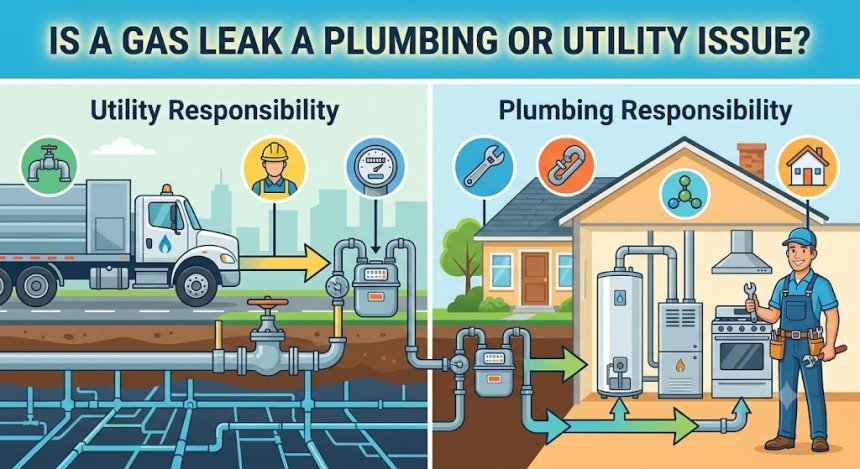
A gas line leak is a plumbing issue if it occurs on the downstream side of your gas meter inside or on your property, whereas leaks occurring on the gas meter itself or upstream on the main street utility lines are the legal responsibility of your local gas utility provider.
The Boundary Line: Division of Responsibility
Understanding the point of demarcation—known as the point of delivery—determines who is legally responsible for paying and scheduling gas line repairs.
                      GAS LINE JURISDICTION BOUNDARY

   PUBLIC UTILITY RESPONSIBILITY         HOMEOWNER / PLUMBING RESPONSIBILITY
   (Gas Company Pays)                    (Licensed Plumber Repairs)

   Street Main ---> Service Line ---> [ GAS METER ] ---> Fuel Lines ---> Household Appliances
                                           |
                                   (Demarcation Line)
1. The Utility Company's Domain (Upstream)
Your local natural gas or propane utility provider owns and maintains all infrastructure leading up to and including the utility gas meter. This includes:
-
The municipal main distribution lines buried beneath streets or easements.
-
The underground service lateral pipe connecting the main line to your property.
-
The physical gas meter assembly, including the primary pressure regulator and utility shut-off valve.
If a leak occurs in any component before or at the gas meter index dial, the utility company must repair it at zero cost to the homeowner.
2. The Master Plumber's Domain (Downstream)
The instant natural gas passes through the outlet side of the gas meter coupling, full legal ownership transfers to the property owner. In every US jurisdiction under the International Fuel Gas Code (IFGC) and Uniform Plumbing Code (UPC), licensed master plumbers hold the specialized trade qualification required to install, test, repair, and certify fuel gas piping systems. Homeowner plumbing responsibility includes:
-
Exterior fuel lines running from the meter underground to outdoor kitchens, fire pits, or pool heaters.
-
Interior black iron, CSST (Corrugated Stainless Steel Tubing), or soft copper fuel lines running through crawlspaces, basements, and wall cavities.
-
Appliance shut-off valves, flexible gas connectors, and appliance burner manifold connections.
Gas Line Mechanics & Physics: Why Gas Leaks Occur
Natural gas (methane) and liquid petroleum gas (propane) travel through fuel piping under low positive pressure—typically 0.25 PSI (7 inches of water column) for low-pressure residential natural gas or up to 2 to 5 PSI for elevated pressure systems. Despite low pressures, several physical factors cause joint degradation and gas leaks.
                         COMMON GAS LEAK MECHANICS

    +-----------------------+     +-----------------------+     +-----------------------+
    |  Galvanic Corrosion   |     | CSST Electrical Arcing|     | Thermal Expansion /   |
    |  Underground dampness |     | Lightning strikes     |     | Vibration Strain      |
    |  eats bare steel      |     | pierces thin tubing   |     | Dries pipe dope/tape  |
    +-----------+-----------+     +-----------+-----------+     +-----------+-----------+
                |                             |                             |
                +----------------------+------+-----------------------------+
                                       |
                                       v
                         [ METHANE / PROPANE LEAK ]
1. Threaded Joint Dry-Out & Thermal Expansion
Black iron pipe threads are sealed using specialized pipe joint compound (pipe dope) or yellow PTFE tape formulated for fuel lines. Over decades, micro-vibrations from nearby appliances, building settling, and seasonal temperature shifts cause pipe metal to expand and contract. This mechanical movement dries out old pipe dope, creating microscopic pathways for gas molecules to escape.
2. Galvanic Corrosion on Underground Piping
Unprotected steel gas lines buried in damp soil undergo galvanic corrosion. Natural electrical currents in soil draw electrons away from bare steel, forming iron oxide pits. Eventually, these corrosion pits breach the pipe wall, leaking pressurized gas into surrounding soil where it can migrate along utility trenches and enter basements.
3. CSST Electrical Arcing During Lightning Strikes
Corrugated Stainless Steel Tubing (CSST) is flexible fuel line coated in a yellow or black jacket. During lightning strikes near a home, high-voltage electrical energy can travel through structural framing and arc onto unbonded CSST. This electrical arc instantly punches micro-holes in the thin stainless steel wall, igniting or leaking natural gas.
Gas Line Jurisdictions & System Comparison
| Property Feature | Utility Company Responsibility | Homeowner / Licensed Plumber Responsibility |
| Piping Scope | Main line to gas meter inlet | Meter outlet valve to all indoor/outdoor gas appliances |
| Equipment Included | Street main, service riser, utility meter, main regulator | Black iron pipe, CSST flex lines, appliance valves, connectors |
| Repair Cost Coverage | 100% covered by utility company rates | Paid out-of-pocket by homeowner or property owner |
| Qualified Repair Trades | Utility linemen & utility technicians | State-licensed Master Plumbers holding gas piping endorsements |
| Permitting Requirements | Federal & State Utility Commission standards | Local municipal plumbing permits & mandatory pressure tests |
Hidden Pro Tips & Safety Secrets from Master Plumbers
-
Mercaptan Is Added for Safety: Pure natural gas is completely odorless and colorless. Utility companies inject a harmless chemical compound called methyl mercaptan (which smells like rotten eggs or sulfur) so humans can detect tiny gas concentrations as low as 1% in the air.
-
Never Re-Use Flexible Appliance Connectors: When replacing a gas water heater, furnace, or stove, never re-use the corrugated brass or stainless steel flexible connector tube. Bending an old flex connector breaks internal metal crystals, leading to immediate fracture when re-pressurized.
-
Beware of Unbonded CSST Tubing: If your home uses flexible yellow CSST tubing, national building codes require it to be direct-bonded to your home's electrical grounding electrode system using a minimum 6 AWG copper wire. Unbonded CSST poses a severe fire hazard during thunderstorms.
-
The Bubble Solution Diagnostic Trick: Never search for a suspected gas leak using a open flame! Master plumbers mix a non-corrosive liquid solution of dish soap and water. Spraying or brushing this solution over threaded joints creates expanding, persistent soap bubbles at the exact location of escaping gas molecules.
-
Red-Tagging Procedure by Utility Techs: If a utility worker detects a leak on your side of the meter, they will immediately shut off the meter, lock it with a physical padlock, and hang a "Red Tag." Municipal utilities will not unlock or restore gas service until a licensed plumber repairs the line, files a permit, passes an official pressure test, and submits a clearance certificate.
Emergency DIY Safety Sequence: What to Do If You Smell Gas
If you detect a rotten-egg sulfur odor inside your home, execute this emergency evacuation protocol immediately.
+-----------------------------------------------------------------+
|                        CRITICAL SAFETY WARNING                  |
|  DO NOT flick light switches, use phones, open windows, or      |
|  start cars near a gas leak! A single electrical spark can      |
|  ignite concentrated natural gas air mixtures!                  |
+-----------------------------------------------------------------+
                                |
                                v
+-----------------------------------------------------------------+
|  STEP 1: Evacuate All Occupants Immediately                     |
|  Leave front door open behind you; move 100+ feet away upwind.  |
+-----------------------------------------------------------------+
                                |
                                v
+-----------------------------------------------------------------+
|  STEP 2: Shut Off Gas at Meter (If Safe)                        |
|  Turn the quarter-turn meter valve blade 90° with a wrench.     |
+-----------------------------------------------------------------+
                                |
                                v
+-----------------------------------------------------------------+
|  STEP 3: Call 911 & Gas Utility from Outside                    |
|  Report emergency from safe location outside your home.        |
+-----------------------------------------------------------------+
                                |
                                v
+-----------------------------------------------------------------+
|  STEP 4: Contact Licensed Plumber for Downstream Repairs        |
|  Schedule diagnostic leak isolation & permit restoration.       |
+-----------------------------------------------------------------+
Safety Warnings
-
Explosion Hazard: Natural gas ignites when air concentration reaches its Lower Explosive Limit (LEL) of 5%. Never use flashlight switches, garage door openers, or cell phones inside a building smelling of gas.
-
Asphyxiation Hazard: High concentrations of methane displace oxygen in enclosed spaces, leading to dizziness, nausea, or loss of consciousness.
Step-by-Step Emergency Instructions
-
Evacuate Structure Immediately: Gather all occupants and pets. Walk out of the house leaving doors open to help ventilate escaping gas.
-
Do Not Touch Any Electrical Fixtures: Do not switch lights on or off, unplug appliances, or adjust thermostats. Do not re-enter the house for any reason.
-
Shut Off Main Gas Meter Valve (If Accessible): Located on the pipe riser coming out of the ground before your meter is a shut-off valve with a rectangular metal blade. Use an adjustable wrench to rotate this blade 90 degrees in either direction until the hole on the blade aligns with the stationary eyelet on the pipe. This shuts off all gas entering the property.
-
Call Emergency Services from Outside: Once safely across the street, call 911 and your local gas utility's emergency hotline to report the leak.
-
Call a Master Plumber for System Repairs: Once utility or fire personnel confirm the perimeter is safe and issue a red tag, contact a licensed plumbing contractor to isolate and repair downstream fuel lines.
If your gas meter has been red-tagged or you require emergency fuel line leak isolation, do not take chances with gas safety. Contact
24x7 American Plumber at 762-383-0288 for immediate emergency gas line repairs and municipal certification.
Safe DIY vs. Requires a Licensed Professional
Fuel gas systems are strictly regulated under state and municipal building codes. Homeowners must understand strict legal limits between basic visual observation and licensed gas fitting work.
| Maintenance / Repair Task | Safe for DIY Homeowners | Requires a Licensed Professional |
| Visual Observations | Checking appliance pilot lights, smelling for sulfur odors outdoor | Installing, extending, or altering interior or exterior gas fuel lines |
| Emergency Actions | Turning off main meter gas shut-off valve during an active emergency | Performing air-pressure drop tests using commercial pressure gauges |
| Basic Cleaning | Wiping dust off appliance flex lines & keeping meter area clear of debris | Replacing broken shut-off valves, CSST lines, or black iron fittings |
| Appliance Care | Reading digital gas detector displays & replacing sensor batteries | Repairing underground yard lines running to pool heaters or gas logs |
Professional Diagnostic Equipment & Industry Cost Context
Master plumbers use specialized pressure testing manifolds, electronic gas sniffers, and mechanical tools to locate micro-leaks and clear red-tag violations.
       ELECTRONIC GAS SNIFFER                PRESSURE MANOMETER TEST RIG

        +---------------------+                 +------------------------+
        | Flexible Sensor Probe|                 | Calibrated Dial Gauge  |
        | Detects 1 PPM Methane|                 | Isolates 15 PSI Air    |
        +----------+----------+                 | 15-Min Hold Test       |
                   |                            +-----------+------------+
        [ Digital Readout PPM ]                             |
                                                [ Quick-Connect Assembly ]
How Plumbers Work
-
Electronic Combustible Gas Detectors: Plumbers trace gas lines using digital micro-sniffers capable of detecting methane or propane concentrations as small as 1 part per million (PPM). The flexible probe pinpoints exact microscopic leaks inside finished wall cavities without tearing down drywall blindly.
-
Calibrated Air-Pressure Isolation Testing: To satisfy city inspectors, plumbers disconnect appliances, cap fuel lines, and pressurize the entire piping network with compressed air at 15 to 30 PSI using a precision diaphragm test gauge. If the gauge needle holds perfectly stable for 15 minutes, the system is certified 100% airtight.
-
Municipal Permitting & Utility Coordination: Licensed plumbers pull official municipal permits, coordinate inspector site visits, and interface directly with utility companies to re-establish gas meter flow once safety certification is complete.
Realistic Industry Cost & Lifespan Estimates (US Standard)
-
Black Iron Fuel Pipe Lifespan: 50 – 75+ years (When protected from moisture)
-
CSST Flexible Line Lifespan: 30 – 50 years (Must be bonded against electrical arcing)
-
Rubber/Metallic Appliance Flex Hose Lifespan: 10 – 15 years (Replace during appliance upgrades)
-
Professional Gas Leak Electronic Diagnostic Fee: $200 – $400
-
Gas Line Pinpoint Repair & Pressure Test: $350 – $850 (Includes city permit filing)
-
Underground Gas Line Replacement (100 ft): $1,500 – $3,500
When to Call the Pros
Gas line issues pose severe life-safety risks that demand immediate certified professional intervention.
Call a Professional Immediately If:
-
Your Meter Has Been "Red-Tagged" by the Utility: Utility companies will not unlock gas meters until a licensed plumber repairs the system, conducts a pressure test, and submits legal clearance forms.
-
You Smell Hissing or Sulfur Near Gas Appliances: A persistent rotten-egg smell near water heaters, furnaces, clothes dryers, or stoves indicates an active fuel leak.
-
Dead Vegetation Rings Over Underground Lines: Patches of dead grass or plants directly above buried fuel lines signal underground gas leaking up through soil.
-
Planning Home Additions or Gas Appliance Upgrades: Adding high-BTU appliances (like tankless water heaters or outdoor fire pits) requires a licensed plumber to recalculate gas pipe volume and diameter capacities.
Protect your family and property with certified fuel gas experts. Contact 24x7 American Plumber for rapid gas leak location, line repairs, and complete municipal red-tag clearance.
-
Direct Phone:
762-383-0288 -
Web Services & Scheduling:
24x7americanplumber.com -
Service Scope: 24/7 Emergency Gas Leak Isolation, Pipe Repair, & Permitted Red-Tag Clearance across the USA
Frequently Asked Questions (FAQs)
Q: Who do I call first if I smell gas in my home?
A: Evacuate the house immediately and call 911 along with your local gas utility company from a safe location outside. Once the utility or fire department clears the home as structurally safe and isolates the gas meter, call a licensed master plumber to repair downstream fuel lines.
Q: Will the gas utility company fix a leak inside my house?
A: No. Gas utility companies are only responsible for public main lines and the utility meter up to its outlet coupling. They will shut off gas service at the meter if an interior leak is found, but the homeowner must hire a private licensed plumber to repair downstream interior piping.
Q: How do plumbers locate hidden gas leaks inside walls?
A: Master plumbers isolate sections of fuel line and pump compressed air into the piping using a precision test gauge to check for pressure drops. They then use electronic combustible gas sniffers and non-corrosive bubble solution along exposed fittings to pinpoint micro-leaks without unnecessary demolition.
Q: Why did the gas company lock my gas meter?
A: The utility company places a physical lock or "red tag" on a gas meter when their technicians detect a hazardous fuel leak on the homeowner's side of the piping system. The lock remains in place by law until a licensed plumber completes repairs and passes a municipal code pressure test.