24 Hour Emergency Plumber NYC
Burst pipe or no heat in NYC? 24x7 American Plumber offers licensed 24-hour emergency plumbing across all 5 boroughs. Call 762-383-0288 now.

24 Hour Emergency Plumbing in New York City: What Every Homeowner and Property Manager Should Know
When a pipe bursts at 2 a.m. in a Brooklyn brownstone or a water heater fails in a Midtown high-rise on the coldest night of the year, plumbing doesn't wait for business hours — and neither should your plumber. After more than 15 years fixing, replacing, and troubleshooting every kind of plumbing failure New York City can throw at a building, I can tell you that the single biggest factor in how much damage an emergency causes is how fast — and how correctly — the first hour is handled.
This guide walks you through what actually counts as a plumbing emergency, what NYC's unique housing stock does to your pipes, what to do in the minutes before help arrives, and how a reliable 24-hour emergency plumber like 24x7 American Plumber handles the job from the first phone call to the final inspection.
If you're dealing with an active emergency right now, stop reading and call 762-383-0288. Everything below is background you can read once things are stabilized.
What Actually Counts as a Plumbing Emergency
Not every leak needs a 3 a.m. service call, but some situations genuinely can't wait. In my experience, these are the ones that qualify as true emergencies:
- Burst or actively leaking pipes — especially inside walls, ceilings, or near electrical wiring
- No heat or no hot water during freezing weather, particularly in buildings with elderly residents or young children
- Sewage backups — toilets, tubs, or floor drains backing up with wastewater
- Gas odor near a plumbing fixture — this is a call-the-gas-company-first situation, but a plumber often needs to inspect connected fixtures afterward
- Water heater failure with flooding or a tank that's leaking from the bottom seam
- Overflowing toilets that won't stop running after the shutoff valve is closed
- Frozen pipes that haven't burst yet but show swelling or no water flow
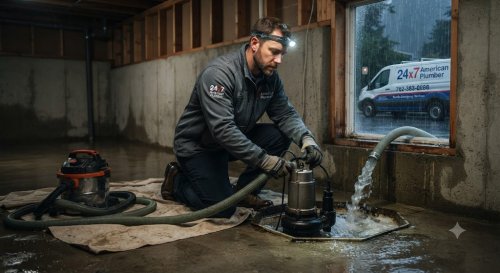
- Flooding from a failed sump pump during heavy rain
- Major leaks affecting a downstairs neighbor's unit in a co-op, condo, or rental building
If you're unsure whether your situation qualifies, call anyway. A good 24-hour service will tell you honestly over the phone whether it's urgent or can wait until morning — and won't pressure you into an unnecessary after-hours dispatch.
Why NYC Plumbing Emergencies Are Different
Plumbing in New York City isn't like plumbing anywhere else, and that's not just a sales pitch — it's a function of the building stock and infrastructure.
The age of the buildings. Large sections of Manhattan, Brooklyn, and the Bronx have pipe systems that are 50, 80, even 100+ years old. Galvanized steel and old cast iron corrode from the inside, which means a "small drip" is often a warning sign of a much larger failure a few feet away.
High-rise water pressure. Buildings over six stories typically rely on rooftop tanks and pressure-boosting pumps. When one component fails, it can affect water pressure or heat for dozens of units simultaneously, which is why fast triage matters — one plumber diagnosing the right cause can save an entire building from being without water.
Winter freeze-thaw cycles. NYC winters swing between deep freezes and sudden warm spells. Pipes in uninsulated basements, exterior walls, or unheated stairwells are especially vulnerable to freezing, then bursting as they thaw.
Shared walls and shared risk. In co-ops, condos, and multi-family rentals, a leak in one unit is rarely just that unit's problem. Water travels down through ceilings and electrical fixtures, which is why response speed directly affects how many neighbors get pulled into a single plumbing failure.
Older sewer lines and combined systems. Many NYC blocks still run on combined sewer systems that carry both stormwater and wastewater. During heavy rain, this raises the risk of backups, especially in basement-level bathrooms and laundry rooms.
What to Do Before Your Plumber Arrives
The actions you take in the first five minutes of a plumbing emergency can be the difference between a simple repair and a five-figure restoration job.
- Shut off the water. Every home should have a main shutoff valve — usually near the water meter, in a basement, or under a kitchen/bathroom sink for localized fixtures. If you don't know where yours is, find it today, before you ever need it in a panic.
- Cut the power to affected areas if water is anywhere near outlets, switches, or fixtures. When in doubt, shut off the breaker for that room rather than risk electrocution.
- Contain the water. Towels, buckets, and a wet/dry vacuum can limit damage while you wait. Move electronics, rugs, and furniture out of the path of water immediately.
- Document everything. Photos and short videos of standing water, damaged ceilings, or visible pipe damage will matter later for insurance claims, even if the repair itself is quick.
- Ventilate if you smell gas, leave the unit, and call your gas utility's emergency line from outside before calling anyone else.
- Don't attempt major repairs yourself. Tightening an exposed fitting or replacing a toilet fill valve is fine. Cutting into a wall or soldering a pipe without proper tools can turn a bad night into a worse one.
Common Emergency Calls We See Across the Five Boroughs
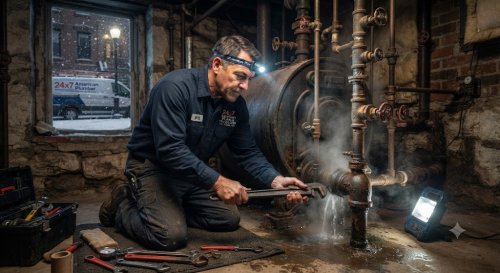
Burst pipes. Almost always tied to freezing temperatures, old galvanized piping, or a sudden pressure spike. These need immediate shutoff and a permanent fix, not a temporary patch, since a rushed repair on old pipe often fails again within weeks.
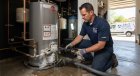
Water heater failures. A tank that's leaking, making popping noises, or producing lukewarm water at best is usually near the end of its life. In an emergency, the priority is stopping active leakage and restoring hot water safely — full replacement can often be scheduled once the immediate danger is handled.
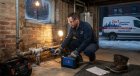
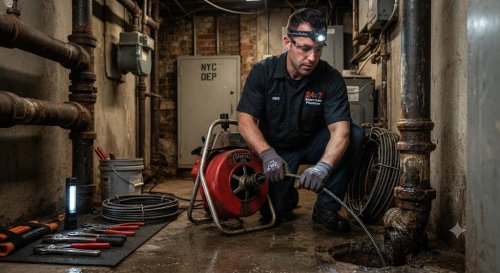
Sewage and drain backups. Often caused by tree root intrusion, aging clay sewer laterals, or grease buildup in older kitchen lines. These require camera inspection to find the actual blockage rather than guessing.
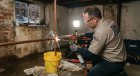
Frozen pipes. Common in unheated basements, garages, and exterior-wall bathrooms. Thawing has to be done carefully with controlled heat — never an open flame — to avoid turning a frozen pipe into a burst one.
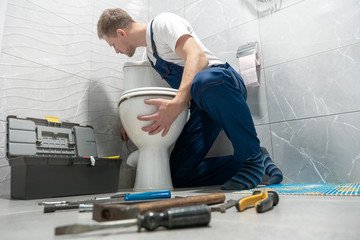
Running or overflowing toilets. Usually a fill valve or flapper issue, but when the shutoff valve itself fails, it becomes a genuine emergency requiring a plumber to isolate the line.
Gas line connections near plumbing fixtures. Water heaters and boilers are gas appliances too, and any suspected leak near these units needs a licensed professional, not a guess-and-check approach.
How 24x7 American Plumber Handles an Emergency Call
1. You call, and a real person answers. No automated menus at 3 a.m. — just a conversation about what's happening so we can prepare the right tools and parts before we even leave.
2. Fast dispatch across all five boroughs. Manhattan, Brooklyn, Queens, the Bronx, and Staten Island are all covered, with technicians positioned to minimize drive time during an active emergency.
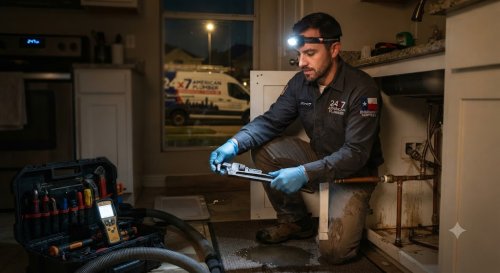
3. On-site diagnosis first, work second. We assess the actual source of the problem — not just the visible symptom — before starting repairs, so you're not paying for guesswork.
4. Upfront pricing before any work begins. You'll know the cost of the fix before we touch a wrench, with no inflated "emergency surcharge" games.
5. Licensed, insured, background-checked technicians. Every plumber we send has been vetted and carries the credentials NYC requires for plumbing work in residential and commercial buildings.
6. Cleanup and prevention advice. We don't just fix the leak and leave — we'll flag related risks (aging fittings, corroded shutoff valves, undersized water heaters) so you can address them before they become the next emergency.
What Emergency Plumbing Typically Costs
Emergency plumbing pricing depends on several honest factors: the time of day, the complexity of the repair, whether parts need to be sourced immediately, and whether the issue is isolated or affects shared building systems. A dripping faucet at midnight costs far less to fix than a burst main line flooding a basement. A trustworthy 24-hour plumber will always quote the price for your specific situation before starting work — be cautious of any company that won't give you a number until the job is finished.
Preventing the Next Emergency
A few habits go a long way toward avoiding a 2 a.m. call in the first place:
- Know the location of your main water shutoff valve and test it once a year
- Have your water heater inspected annually, especially once it passes the 8-10 year mark
- Insulate exposed pipes in basements, garages, and crawl spaces before winter
- Avoid pouring grease, coffee grounds, or wipes down drains, even "flushable" ones
- Schedule a camera inspection of your sewer line if your building is more than 40 years old
- Address small leaks immediately — a slow drip today is often a burst pipe in six months
Frequently Asked Questions
Is a 24-hour plumber more expensive than a daytime appointment? Emergency and after-hours calls typically cost more than scheduled daytime work, since they require immediate dispatch outside normal hours. That said, the cost of waiting — especially with an active leak — is almost always higher than the after-hours rate itself.
What should I do if I smell gas near my water heater? Leave the building immediately, call your gas utility's emergency line from a safe distance, and only bring in a plumber once the utility confirms it's safe to re-enter.
Can frozen pipes really burst even if there's no visible leak yet? Yes. Ice expands inside the pipe, and the burst often happens as the ice begins to thaw and pressure builds — which is why frozen pipes should be treated urgently even before any water is visible.
Do I need a licensed plumber for emergency work in NYC? Yes. New York City requires plumbing work to be performed by licensed professionals, particularly for anything involving gas lines, main water connections, or work that affects a building's shared systems.
What areas does 24x7 American Plumber cover? Manhattan, Brooklyn, Queens, the Bronx, and Staten Island, with 24/7 dispatch for residential and commercial emergencies.
When You Need Help, We're Already On Our Way
Plumbing emergencies in New York City don't follow a schedule, and the right response in the first few minutes protects your home, your building, and your neighbors. 24x7 American Plumber is available around the clock, every day of the year, across all five boroughs — with upfront pricing, licensed technicians, and a real person answering the phone no matter the hour.
Call 762-383-0288 now for immediate 24-hour emergency plumbing service, or visit 24x7americanplumber.com to learn more about our full range of residential and commercial plumbing services.