How to Shut Off Main Water Valve in an Emergency
Learn how to locate and shut off your main water valve quickly during a plumbing emergency. Protect your home and call 24x7 American Plumber at 762-383-0288.

How to Shut Off the Main Water Valve in an Emergency
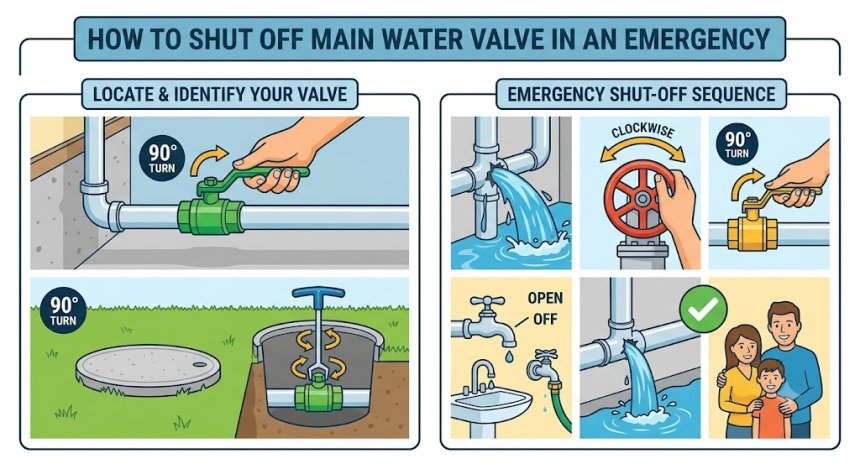
To shut off your main water valve in an emergency, locate the primary valve where the main supply pipe enters your home or inside the street meter pit, then turn a lever ball valve 90 degrees until perpendicular to the pipe or rotate a wheel gate valve clockwise until completely closed.
The Physics & Hydraulics: Why Emergency Water Isolation Is Crucial
Understanding home water pressure dynamics and valve mechanics explains why immediate isolation prevents thousands of dollars in structural property damage during a pipe burst.
                         HOME WATER MAIN HYDRAULICS

    MUNICIPAL WATER MAIN (40 - 80+ PSI Constant Hydraulic Pressure)
                                   ||
                                   \/
                   [ MAIN SHUT-OFF VALVE IS OPEN ]
                                   ||
    +------------------------------++------------------------------+
    |                                                             |
    v                                                             v
[ Burst Pipe / Failed Line ]                          [ Uncontrolled Water Flow ]
(Gushes 8 - 15 Gallons/Min)                            ($1,000+ Damage in Minutes)
                                   ||
                                   \/
                   [ TURN VALVE 90° OR CLOCKWISE ]
                                   ||
                                   \/
                  [ SYSTEM PRESSURE EQUALIZATION ]
                  [ WATER FLOW ISOLATED SAFELY ]
1. Constant Hydraulic Line Pressure & Flow Velocity
Municipal main distribution systems deliver potable water into residential properties under continuous static hydraulic pressure ranging from 40 to 80+ pounds per square inch (PSI). When a supply pipe, washing machine flex hose, or water heater tank ruptures, this pressurized water column drives fluid out at velocities exceeding 8 to 15 gallons per minute (GPM). Within ten minutes, an un-isolated burst pipe dumps over 150 gallons of water into subflooring, drywall cavities, and basement living spaces.
2. Valve Mechanics: Ball Valves vs. Gate Valves
-
Ball Valves (Quarter-Turn): Modern plumbing systems utilize full-port brass ball valves. Inside the valve body, a polished chrome-plated brass sphere with a central bore rotates on Teflon seats. Turning the lever handle 90 degrees rotates the sphere, positioning its solid metal wall perpendicular to fluid flow and stopping water movement instantly with minimal friction.
-
Gate Valves (Multi-Turn Wheel): Older properties often feature brass gate valves. Turning the handwheel clockwise lowers an internal metal wedge (gate) into a machined brass valve seat. Over decades, sediment calcification and galvanic corrosion build up along the threaded stem, causing old gate valves to freeze, snap off, or leak through the packing nut when turned during an emergency.
Valve Types & Location Blueprint
| Shut-Off Valve Type | Mechanical Operation | Primary Location in Home | Reliability Level |
| Main Interior Ball Valve | Lever handle; quarter-turn (90°) | Basement, crawlspace, utility closet, or near water heater | High (Resists scale & mechanical seizure) |
| Main Interior Gate Valve | Round wheel; multi-turn clockwise | Basement wall near main service entrance pipe | Moderate to Low (Prone to stem freezing) |
| Curb Stop Valve (Street Meter) | Pentagonal nut or key valve blade; quarter-turn | Underground meter box near property curb or sidewalk | High (Requires specialized meter key tool) |
| Fixture Isolation Valve (Angle Stop) | Small oval knob; quarter-turn or multi-turn | Directly under sinks, behind toilets, & behind ice makers | High to Moderate (Point-of-use isolation only) |
Hidden Pro Tips & Secrets from Master Plumbers
-
The Curb Box Water Meter Key Hack: If your interior main valve seizes or leaks during an emergency, your secondary shut-off point is the street curb meter box. Keep a steel water meter key (a 3-foot T-bar tool) hanging in your garage. If you do not have a key during a severe flood, heavy-duty adjustable channel-lock pliers combined with a screwdriver for leverage can rotate the curb stop blade 90 degrees.
-
Never Force a Seized Gate Valve with Pliers: Forcing a stuck handwheel on an old gate valve can snap the internal brass stem off inside the housing. If the valve resists, apply penetrating oil to the stem threads, wait two minutes, and tap the handwheel hub lightly with a wrench handle before attempting to turn it again gently.
-
Exercise Valves Twice a Year: Ball and gate valves collect mineral scale when left untouched for years. Turn your main shut-off valve off and back on twice a year (during daylight savings time switches) to sweep away mineral deposits and keep internal rubber seals flexible.
-
Depressurize Hot and Cold Lines After Shut-Off: After turning off the main supply, open the highest and lowest faucets in your home (e.g., a top-floor bathroom sink and a basement laundry tub). This relieves trapped kinetic pressure, drains remaining pipe water safely into sinks, and stops residual dripping at the leak site.
-
Tag Your Main Valve with a High-Visibility Label: In a dark basement during a sudden midnight pipe burst, finding an unlabelled pipe valve takes precious minutes. Wrap bright red reflective tape around your main shut-off handle so every family member can identify it instantly with a flashlight.
Step-by-Step DIY Emergency Shut-Off Sequence
Follow this immediate action guide when a pipe bursts, a flex line snaps, or an appliance overflows.
+-----------------------------------------------------------------+
|                        SAFETY FIRST                             |
|  If standing water touches electrical outlets, appliance cords,  |
|  or breaker panels, DO NOT enter the water! Turn off main       |
|  electrical power at the breaker panel first if safe.           |
+-----------------------------------------------------------------+
                                |
                                v
+-----------------------------------------------------------------+
|  STEP 1: Locate Primary Main Service Entrance                   |
|  Find point where main pipe enters foundation floor or wall.    |
+-----------------------------------------------------------------+
                                |
                                v
+-----------------------------------------------------------------+
|  STEP 2: Execute Valve Isolation                                |
|  Lever Handle: Turn 90° perpendicular to pipe.                  |
|  Wheel Handle: Turn clockwise until firmly seated.              |
+-----------------------------------------------------------------+
                                |
                                v
+-----------------------------------------------------------------+
|  STEP 3: Relieve Residual Line Pressure                         |
|  Open lowest & highest indoor faucets to drain standing pipe water.|
+-----------------------------------------------------------------+
                                |
                                v
+-----------------------------------------------------------------+
|  STEP 4: Verify Complete Isolation & Call Pros                  |
|  Confirm leak stops; contact licensed emergency plumber.        |
+-----------------------------------------------------------------+
Safety Warnings
-
Electrical Hazard: Never step into standing basement water to reach a shut-off valve if electrical wires or floor outlets are submerged. Turn off power at the main electrical breaker first if accessible.
-
Scalding Hazard: If a hot water line or water heater tank breaks, beware of scalding water (120°F–140°F). Wear protective gloves and long sleeves before reaching into damp areas.
Step-by-Step Instructions
-
Locate Service Entry Point: Walk to the lowest level of your home (basement, crawlspace, or garage). Look for a 3/4-inch or 1-inch copper, CPVC, or PEX line coming through the concrete slab or foundation wall facing the street.
-
Identify Valve Type: Look for a lever handle (ball valve) or a round wheel handle (gate valve) located just before or after your water meter and pressure regulator.
-
Operate Valve:
-
For Ball Valves: Pull or push the lever handle until it forms a 90-degree right angle across the pipe body.
-
For Gate Valves: Grasp the round wheel handle firmly and turn it clockwise (righty-tighty) until it comes to a complete, firm stop. Do not overtighten with excessive force.
-
-
Check Street Curb Meter Box (If Interior Valve Fails): If the interior valve spins freely without stopping water, locate the ground box near the street curb. Remove the lid, insert a water meter key over the pentagonal or slotted valve blade, and turn it 90 degrees until the padlock loop holes align.
-
Bleed System Pressure: Open lower-level bathtub faucets and outside hose bibbs to vent remaining trapped water and equalize line pressure.
If your main shut-off valve is frozen, snapped, leaking through the stem, or unable to stop water flow during an emergency, do not delay. Contact
24x7 American Plumber at 762-383-0288 for immediate 24/7 emergency water isolation and repair.
Safe DIY vs. Requires a Licensed Professional
Distinguishing simple emergency valve operation from complex pipe cutting and main replacement ensures home safety and municipal code compliance.
| Plumbing Action | Safe for DIY Homeowners | Requires a Licensed Professional |
| Emergency Operations | Operating interior main ball valves, gate wheels, or fixture stops | Replacing main shut-off valves attached to active municipal supply lines |
| System Relief | Opening household faucets to relieve system pressure post shut-off | Repairing broken municipal meter curb stops or city-side piping |
| Maintenance | Cleaning debris from water meter boxes & tagging interior main valves | Installing new full-port ball valves, pressure reducing valves, or main backflow units |
| Point-of-Use Repairs | Shutting off toilet or sink angle stops for washer replacement | Sizing and replacing main water lines from street curb to foundation |
Professional Equipment & Industry Cost Context
Master plumbers use specialized freezing equipment, hydraulic press tools, and commercial valves to replace failed main shut-off systems without waiting hours for municipal utility shut-offs.
       PIPE FREEZE KIT & PRESS TOOL            COMMERCIAL FULL-PORT BALL VALVE

        +-------------------------+                 +------------------------+
        | $CO_2$ Freezing Jacket  |                 | Heavy Brass Body       |
        | Forms Solid Ice Plug    |                 | Chrome Brass Ball      |
        +------------+------------+                 | Teflon Seats (200 PSI) |
                     |                              +------------------------+
        [ Rapid ProPress Fitting ]
How Plumbers Work
-
Cryogenic Pipe Freezing Equipment: If a home's main gate valve fails and the street curb valve is frozen, plumbers freeze the water inside the incoming main service pipe using liquid $CO_2$ or electric freezing collars. This creates a solid ice plug inside the live pipe, allowing them to cut out the broken valve and install a new ball valve safely under pressure.
-
ProPress Cold-Crimping Technology: Modern plumbers avoid torch-soldering near wet main entry lines. They utilize hydraulic press tools to crimp heavy-duty brass ball valves with EPDM seals directly onto copper main lines in under 5 seconds.
-
Pressure Reducing Valve (PRV) Diagnostics: While replacing main valves, plumbers test incoming street pressure with calibrated gauges. If municipal pressure exceeds 80 PSI, they install an adjustable PRV to protect home appliances from high-pressure rupture.
Realistic Industry Cost & Lifespan Estimates (US Standard)
-
Brass Ball Valve Lifespan: 20 – 30+ years (Highly resistant to corrosion)
-
Brass Gate Valve Lifespan: 10 – 15 years (Vulnerable to stem snapping & scale)
-
Water Meter Key Tool Cost: $20 – $40 (Available at home improvement stores)
-
Professional Main Shut-Off Valve Replacement: $250 – $600 (Parts & labor)
-
Emergency Pipe Freeze & Live Main Repair: $450 – $950
-
Average Uncontrolled Water Damage Restoration: $3,000 – $20,000+
When to Call the Pros
When water main components fail, prompt professional intervention prevents thousands of dollars in water-logging and foundation damage.
Call a Professional Immediately If:
-
The Main Valve Handles Spin Without Stopping Water: A spinning handle indicates a snapped valve stem or stripped internal gate threads that cannot seal.
-
Water Leaks From the Valve Stem When Operated: Water spraying or dripping from the packing nut when turned requires repacking or valve replacement.
-
You Cannot Locate Your Main Shut-Off Valve: If your home lacks an accessible main interior valve, a master plumber can locate, expose, and install a dedicated ball valve.
-
Active Burst Pipe Flooding: During a severe rupture where you cannot stop incoming water, call for emergency dispatch immediately.
Protect your property from sudden water damage with certified plumbing expertise. Contact 24x7 American Plumber for emergency water isolation, main shut-off upgrades, and full-service residential plumbing.
-
Direct Phone:
762-383-0288 -
Web Services & Scheduling:
24x7americanplumber.com -
Service Scope: 24/7 Emergency Repairs, Main Line Isolation, & Water Damage Prevention across the USA
Frequently Asked Questions (FAQs)
Q: Which way do I turn my main water valve to shut off the water?
A: Turn round wheel gate valves clockwise (to the right, following "righty-tighty") until fully seated. For lever-style ball valves, rotate the lever handle 90 degrees in either direction until the handle stands perpendicular (at a right angle) to the water pipe.
Q: Where is the main water shut-off valve usually located in a house?
A: In cold-climate US states, the main shut-off valve is located inside the basement or crawlspace near the front wall where the main water line enters. In warmer southern regions, it is often located in an exterior ground box near the street curb or along an outside foundation wall near an outdoor faucet.
Q: What should I do if my main water shut-off valve is stuck and won't turn?
A: Do not force a stuck valve with heavy wrenches or leverage bars, as this can snap the brass stem and cause an uncontainable leak. Spray penetrating oil on the stem threads, wait a few minutes, and gently wiggle the handle back and forth. If it remains frozen, call a plumber to replace it.
Q: Can I use the shut-off valve in the street meter box myself during an emergency?
A: Yes, during an active flooding emergency when an interior valve fails, you can open the utility meter pit lid at the street curb and use a water meter key or sturdy pliers to turn the pentagonal/slotted valve blade 90 degrees to isolate water to your home.