What Is a Slab Leak? Causes, Signs & Repair Guide
Learn what causes a slab leak under your foundation, warning signs to watch for, and expert repair options. Call 24x7 American Plumber at 762-383-0288 today.

What Is a Slab Leak and What Causes It?
A slab leak is a high-risk plumbing failure occurring in copper, PEX, or galvanized water lines buried beneath a building’s concrete slab foundation. Left unchecked, pressure fluctuations, soil shift, and pipe corrosion breach the line, releasing pressurized water directly beneath your structural foundation and causing severe property damage.
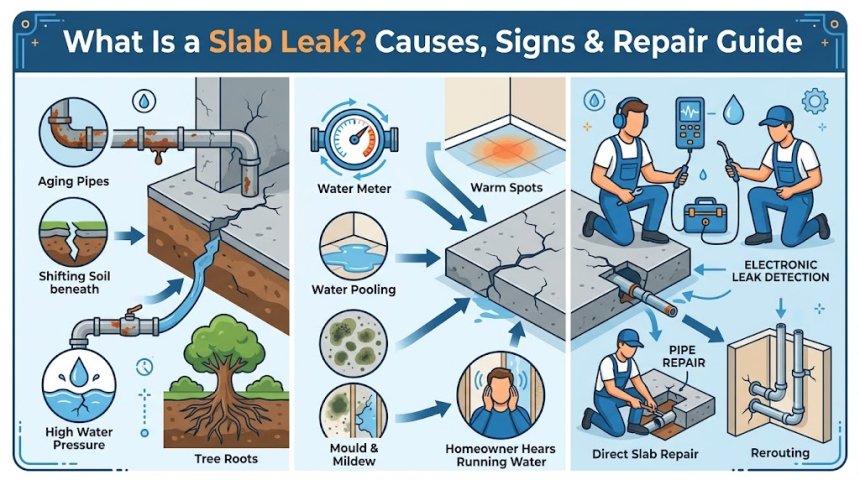
Understanding Slab Leaks: The Physics and Mechanics Behind the Failure
A concrete slab foundation serves as the structural base of modern residential and commercial properties. During construction, plumbers lay incoming potable water lines beneath or directly within the poured concrete. While this design keeps plumbing out of sight, it exposes supply lines to extreme physical and chemical stress over time.
       +-------------------------------------------------+
       |                  FINISHED FLOORING              |
       +-------------------------------------------------+
       |               CONCRETE SLAB FOUNDATION          |
       +-------------------------------------------------+
       |  SOIL & GRAVEL BASE                             |
       |                   * LEAK POINT *                |
       |                  /                              |
       |  ====== [SUPPLY PIPE] ======                    |
       |         Water pressurized                       |
       |         at 40–80 PSI                            |
       +-------------------------------------------------+
When a water line underneath the concrete breaches, pressurized water (typically flowing at 40 to 80 PSI) escapes continuously. Because the water cannot easily rise through solid concrete, it travels along the path of least resistance—saturating the gravel bedding, shifting subterranean soil, and building upward hydraulic pressure against your subfloor.
Primary Drivers of Subterranean Pipe Failure
-
Abrasion and Thermal Expansion: Hot water supply lines continuously expand and contract as temperature fluctuates. As the pipe shifts against rough aggregate gravel or dense concrete encasement, friction wears down the outer metallic wall, causing thin spots and eventual pinhole punctures.
-
Galvanic and Electrolytic Corrosion: When dissimilar metals contact each other in damp underground conditions, or when natural soil minerals react with copper piping, an electrochemical cell forms. This corrosion leaches metal ions out of the pipe walls, creating localized pitting and structural failure.
-
Hydraulic Water Hammer: Sudden shutoffs in fixtures send pressure shockwaves bouncing back through supply lines. Over years, repeated water hammer stress weakens soldered elbows and tee-fitting connections hidden under the foundation.
-
Soil Movement and Foundation Shifting: Expansive clay soils shrink during dry spells and swell when saturated. This soil shifting exerts immense bending forces on buried water lines, shearing rigid pipes or cracking joint fittings.
-
Soil pH and Sediment Calcification: Highly acidic or alkaline soil, combined with aggressive hard water carrying mineral deposits, erodes the inner lining of water pipes from the inside out.
Hidden Warning Signs Every Homeowner Must Know
Slab leaks are notoriously stealthy. Because the piping is completely encased, visual evidence usually emerges only after significant damage has occurred underneath your home.
Interior & Exterior Warning Indicators
-
Unexplained Spikes in Water Bills: A sudden increase in monthly water consumption without an operational change often signals a continuous sub-slab leak.
-
Warm Spots on Bare Flooring: Hot water line breaches warm up carpet, tile, or hardwood floors directly above the leak zone.
-
Sound of Running Water: Hearing water rushing or dripping near walls or floorboards when all household fixtures are shut off.
-
Damp, Buckling, or Discolored Flooring: Hardwood boards crowning, vinyl planks warping, or damp spots appearing on carpets.
-
Cracked Drywall or Baseboards: Foundation movement caused by subterranean soil erosion leads to diagonal wall cracks and shifting trim.
-
Musty Odors and Mold Growth: Trapped water migrating up through slab pores breeds mildew underneath carpets and along drywall base plates.
-
Decreased Water Pressure: A sudden drop in pressure across multiple interior fixtures indicates supply volume escaping under the floor.
Safe DIY Diagnostics vs. Professional Work
While diagnosing the exact location of an underground leak requires specialized acoustic and thermal equipment, homeowners can safely perform preliminary tests to verify if a leak exists before calling a professional.
| Action Item | Safe for DIY Homeowner | Requires Licensed Professional |
| Water Meter Isolation Test | ✅ | ❌ |
| Visual Floor & Foundation Inspection | ✅ | ❌ |
| Main Shut-off Valve Operation | ✅ | ❌ |
| Electronic Acoustic Leak Detection | ❌ | ✅ |
| Infrared Thermal Imaging | ❌ | ✅ |
| Jackhammering Concrete Slabs | ❌ | ✅ |
| Direct Sub-Slab Pipe Patching | ❌ | ✅ |
| Overhead Line Rerouting & Soldering | ❌ | ✅ |
Safety Warning: Never attempt to break concrete or drill blindly into a slab floor. Slabs contain electrical conduits, post-tension tensioned structural cables, and gas lines. Damaging a tension cable can cause explosive structural failure and severe physical injury.
Step-by-Step DIY Water Meter Leak Test
Follow this zero-risk diagnostic procedure to confirm whether your property has an active plumbing leak:
-
Turn Off All Indoor and Outdoor Fixtures: Ensure all faucets, showers, toilets, washing machines, dishwashers, and outdoor hose bibbs are completely shut off. Stop all ice-makers.
-
Locate the Main Water Meter: Find your municipal water meter box, typically located near the street or front property line inside a concrete or plastic ground box.
-
Examine the Low-Flow Indicator: Open the meter lid. Look for a small red, blue, or white triangular dial (or a spinning star/gear) known as the low-flow indicator.
-
Observe the Dial: If all fixtures are off and the low-flow dial is spinning—even slowly—water is flowing somewhere on your property.
-
Conduct the Static Pressure Check: If the meter features a digital display, note the exact reading down to the last decimal. Leave all water off for 30 minutes, then check the reading again. Any change confirms a leak.
-
Isolate the Home: Turn off the main shut-off valve located where the water main enters your home. If the meter continues running, the leak is in your main yard line. If the meter stops, the leak is inside your home's foundation or interior plumbing system.
When a subterranean leak is confirmed, prompt action prevents foundation damage. For immediate emergency service, contact
How Professional Plumbers Detect and Repair Slab Leaks
Resolving a subterranean supply failure requires specialized equipment and technical training to minimize property disruption and maintain structural integrity.
+-------------------------------------------------------------------+
|                   PROFESSIONAL REPAIR PROCESS                     |
+-------------------------------------------------------------------+
| 1. Acoustic Location  --> Detects sonic frequency of pressurized  |
|                           water escaping under concrete.          |
| 2. Thermal Inspection --> Maps temperature anomalies across floors|
|                           using infrared cameras.                 |
| 3. Pressure Testing   --> Isolates specific line loops using air/ |
|                           nitrogen trace gas pressure.            |
| 4. Strategic Repair   --> Executes direct spot repair, overhead   |
|                           pipe reroute, or epoxy restoration.     |
+-------------------------------------------------------------------+
Advanced Detection Technologies
-
Ultrasonic Acoustic Amplifiers: Technicians use sensitive ground microphones to listen for the specific sound frequency generated by escaping pressurized water under concrete.
-
Infrared Thermal Imaging: Thermal cameras reveal temperature differentials on floor surfaces, pinpointing hot water leaks under tile or wood flooring.
-
Trace Gas Testing: Non-toxic helium or nitrogen gas is injected into drained supply lines. Sensors detect gas escaping through micro-fractures in the slab.
Industry-Standard Repair Approaches
-
Direct Spot Repair: Plumbers open a targeted 12"x12" access hole through the slab, excavate the underlying dirt, remove the damaged pipe section, and braze a heavy-duty copper sleeve or PEX section. Best for newer homes with isolated damage.
-
Pipe Rerouting (Overhead Abatement): Instead of destroying interior flooring, plumbers abandon the leaking underground pipe entirely and install a new PEX line overhead through walls and attic spaces. This is often the cleanest and most cost-effective solution for aging plumbing systems.
-
In-Place Epoxy Lining: In select municipal and commercial applications, specialized non-toxic epoxy resin is pulled through cleaned pipes to seal minor pinhole leaks internally without trenching.
For high-pressure line diagnostic testing or complete system reroutes, reaching out to certified professionals ensures your property remains safe and code-compliant. Contact
Cost Estimates, Equipment Lifespans, and Prevention Tips
Understanding repair costs and pipe longevity helps property owners make proactive, cost-effective decisions.
Estimated US Repair Costs
-
Acoustic Leak Detection & Thermal Mapping: $300 – $700
-
Direct Spot Slab Repair: $1,200 – $3,000 (plus concrete and floor restoration)
-
Overhead Line Reroute (Per Line): $1,500 – $4,500
-
Complete Home Repiping: $4,000 – $12,000+ (depending on property size)
Average Plumbing Pipe Lifespans in the US
-
Type L/K Underground Copper Piping: 40 – 60 Years
-
Galvanized Iron Piping: 20 – 50 Years (High failure rate; recommended for replacement)
-
PEX (Cross-linked Polyethylene): 40 – 50+ Years
-
PVC / CPVC Lines: 25 – 40 Years
Proactive Underground Leak Prevention Tips
-
Maintain Safe Water Pressure: Install a Pressure Reducing Valve (PRV). Keep residential water pressure between 45 and 65 PSI. Pressure exceeding 80 PSI accelerates pipe wear.
-
Address Hard Water Issues: High mineral content degrades copper interiors. Install a whole-house water softener if municipal water hardness exceeds 7 GPG (grains per gallon).
-
Monitor Soil Moisture Balance: Maintain consistent perimeter soil hydration around your foundation to prevent clay soils from shrinking and shifting under your slab.
-
Install Water Hammer Arrestors: Protect pipe joints from high-pressure hydraulic shock caused by fast-closing solenoid valves in dishwashers and washing machines.
When to Call the Pros
Slab leaks are active structural hazards that require fast professional intervention. Delaying repairs leads to severe foundation settlement, widespread mold infestation, and costly interior damage.
If you observe warm spots on your floors, hear running water behind walls, or see a sudden spike in your monthly water bill, contact 24x7 American Plumber immediately.
Why Choose 24x7 American Plumber?
-
24/7 Emergency Response: Round-the-clock availability for critical plumbing emergencies across the US.
-
Non-Destructive Detection: Advanced acoustic, thermal, and electronic leak location technology.
-
Licensed & Insured Technicians: Master plumbers skilled in direct slab repair, pipe rerouting, and whole-home repiping.
-
Upfront Pricing: Honest, clear estimates with zero hidden fees.
Contact Us Today:
-
Phone:
762-383-0288 -
Website:
24x7americanplumber.com
Frequently Asked Questions
Q: Will my homeowner's insurance cover slab leak repairs?
A: Most standard US homeowners insurance policies cover the tear-out process and structural/flooring restoration caused by water damage. However, the physical pipe repair itself is often considered routine maintenance and may not be covered unless you have specific endorsement endorsements.
Q: How long does it take to repair a slab leak?
A: Professional leak detection takes 1 to 3 hours. A direct spot repair or single overhead line reroute typically takes 1 to 2 days to complete, excluding floor replacement time.
Q: Can a slab leak cause structural foundation collapse?
A: While total collapse is rare, continuous subterranean water erosion washes away soil bedding under the slab, causing concrete settlement, severe floor cracking, and structural wall shifts if unaddressed for months.
Q: Is it better to repair a slab leak directly or reroute the pipe overhead?
A: Rerouting lines overhead through walls or attics is usually preferred for older homes. It eliminates the need to break up interior concrete flooring, avoids damaging post-tension slab cables, and prevents future leaks on that same line segment under the foundation.