Signs Galvanized or Cast Iron Pipes Need Replacement
Spot failing galvanized steel supply or cast iron drain pipes before costly leaks hit. Learn warning signs, costs, and call 24x7 American Plumber at 762-383-0288.

Signs Your Old Galvanized or Cast Iron Pipes Need Replacement
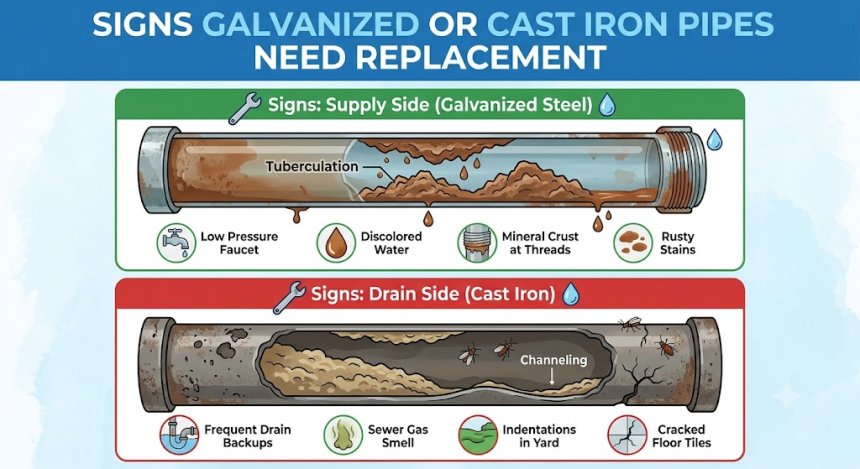
Your old galvanized steel or cast iron pipes need replacement if you experience discolored brown or rusty tap water, persistent low water pressure, recurring drain backups, visible wall or ceiling water stains, sewer gas odors, or hairline cracking along exposed basement pipe joints.
The Chemical & Physical Mechanics of Pipe Deterioration
To understand why aging metallic pipes fail, you must examine the electrochemical and biological processes occurring inside supply lines and sewer stacks installed prior to the 1970s.
       GALVANIZED STEEL (Supply Lines)               CAST IRON (Drain & Sewer Lines)

      +-------------------------------+             +-------------------------------+
      | Zinc Coating Wears Off        |             | Hydrogen Sulfide Gas ($H_2S$) |
      | Iron Oxide Rust Buildup       |             | Sulfuric Acid Corrosion       |
      | Internal Tuberculation        |             | Bottom Channel Deterioration  |
      +-------------------------------+             +-------------------------------+
                      |                                             |
                      v                                             v
      Narrowed Diameter & Low Pressure             Structural Cracks & Tree Roots
1. Galvanic Corrosion & Tuberculation in Galvanized Steel
Galvanized pipes are steel pipes dipped in a protective molten zinc coating. Over 40 to 50 years, slightly acidic municipal water dissolves this zinc barrier. Once exposed, raw iron reacts with dissolved oxygen in water, creating iron oxide (rust).
This corrosion forms rough, jagged mineral mounds called tuberculation. Tuberculation chokes the inner diameter of a 3/4-inch pipe down to the thickness of a drinking straw, severely restricting hydraulic flow and leaching rust particles into drinking water. Furthermore, connecting brass or copper fittings directly to steel causes galvanic corrosion—an electrochemical reaction where electrons transfer between dissimilar metals, eating away pipe threads until catastrophic joint failure occurs.
2. Hydrogen Sulfide Oxidation & Channeling in Cast Iron
Cast iron drain pipes deteriorate from the inside out due to microbial action and chemical exposure. Sewer gas contains hydrogen sulfide ($H_2S$). Microorganisms inside drain lines convert this gas into sulfuric acid ($H_2SO_4$), which attacks the interior crown (top) of horizontal cast iron runs.
Simultaneously, abrasive wastewater debris slowly wears away the bottom invert of the pipe—a process known as channeling. Over time, the pipe bottom thins out completely, allowing raw sewage to leak directly into crawlspaces or beneath concrete slab foundations, attracting aggressive tree roots.
Key Differences: Galvanized Steel vs. Cast Iron Systems
| Feature | Galvanized Steel Pipes | Cast Iron Pipes |
| Primary Plumbing Function | Incoming fresh water supply lines (under pressure) | Outgoing drain, waste, and vent (DWV) stacks (gravity) |
| Typical Installation Era | 1920s – 1960s | 1900s – late 1970s |
| Primary Failure Mechanism | Internal rust tuberculation & galvanic joint decay | Bottom channeling, longitudinal cracking, & sewer gas pitting |
| Telltale Visual Warning | Brown/yellow tap water, low shower pressure, rusty threads | Persistent drain gurgling, sewer odors, damp floor tiles |
| Modern Replacement Standard | Copper or PEX-a / PEX-b tubing | Schedule 40 PVC or ABS plastic piping |
8 Critical Warning Signs Your Pipe Network Is Failing
                                  WARNING SIGNS
                                        |
      +---------------------------------+---------------------------------+
      |                                                                   |
      v                                                                   v
[ SUPPLY LINES: Galvanized Steel ]                       [ DRAIN LINES: Cast Iron ]
* Brown, Metallic-Tasting Water                          * Frequent Drain Backups & Gurgling
* Low Pressure Across Multiple Fixtures                  * Persistent Sewer Gas Odors
* Discolored Stains on Laundry                           * Foundation Cracks & Sewer Rodents
Supply Side Indicators (Galvanized Steel)
-
Red, Brown, or Rust-Tipped Tap Water: Running tap water after returning from a weekend trip yields brownish water filled with discolored iron flakes.
-
Sharp Drop in Dynamic Water Pressure: Running a washing machine while showering drops shower pressure to a trickle due to severe internal mineral restrictions.
-
Discolored Laundry Stains: Microscopic rust particles stain white clothes yellow or brown during wash cycles.
-
Visible Corrosion at Threaded Joints: White, pimple-like mineral crusts or dark rust rings surround exposed fittings in basement walls or floor joists.
Drain Side Indicators (Cast Iron)
-
Slow Drains & Sewer Gas Smells: Hydrogen sulfide odors escaping floor drains signal structural cracks or open crown gaps along main vent stacks.
-
Indentations or Wet Patches in the Yard: Foundation settlement or lush green patches over underground sewer lines point to collapsed cast iron pipes leaking nutrient-rich sewage.
-
Cockroach or Drain Fly Infestations: Persistent pest incursions inside basements often trace back to open structural fractures in main sewer lines.
-
Unexplained Floor Tile Cracking: Water leaking beneath concrete slab floors from channelized cast iron erodes supporting soil, leading to foundation settling and cracked tiles.
Hidden Pro Tips & Inspection Secrets from Master Plumbers
-
The Magnet & Scratch Test: Unsure if your exposed pipes are galvanized steel, lead, or copper? Hold a strong magnet against the pipe. If it sticks firmly, it's galvanized steel. If it doesn't stick and scratches easily with a screwdriver like a soft gray pencil lead, you have dangerous lead piping that requires immediate abatement.
-
Beware of Partial Repiping (Dielectric Unions Required): If a handyman previously replaced a section of galvanized pipe with copper without installing a dielectric union (an insulating rubber bushing that isolates dissimilar metals), galvanic corrosion will destroy the steel connection in 2 to 5 years.
-
Inspect the Hidden Crown of Cast Iron: Cast iron pipes often look solid along their bottom half while the top crown has completely eroded into paper-thin rust flakes due to trapped sewer gases.
-
Hydro-Jetting Danger on Old Cast Iron: Never clear an old, uninspected cast iron drain line with high-pressure hydro-jetting (over 2,000 PSI) before performing a video camera inspection. High-pressure water can wash away weak iron walls, turning a minor clog into a collapsed sewer line beneath your home.
-
Monitor Water Meter Leak Indicator: Shut off all indoor faucets and check your water meter's low-flow indicator triangle or digital dial. If it continues spinning, concealed galvanized supply lines inside walls are leaking.
Step-by-Step DIY Diagnostic Inspection Guide
Perform this safe, non-invasive diagnostic sequence to evaluate your home's metallic plumbing system before calling an inspector.
+-----------------------------------------------------------------+
|                        SAFETY FIRST                             |
|  Wear eye protection & leather gloves when inspecting pipes.    |
|  Locate main water shut-off valve before touching rusted fittings.|
+-----------------------------------------------------------------+
                                |
                                v
+-----------------------------------------------------------------+
|  STEP 1: Magnet & Scratch Surface Test                          |
|  Check exposed basement/crawlspace pipes with a strong magnet.  |
+-----------------------------------------------------------------+
                                |
                                v
+-----------------------------------------------------------------+
|  STEP 2: The Static vs. Dynamic Pressure Drop Test              |
|  Compare single faucet flow rate versus multi-fixture demand.   |
+-----------------------------------------------------------------+
                                |
                                v
+-----------------------------------------------------------------+
|  STEP 3: Cold-Start Water Discoloration Check                   |
|  Fill a clear glass with water first thing in the morning.      |
+-----------------------------------------------------------------+
                                |
                                v
+-----------------------------------------------------------------+
|  STEP 4: Visual Joint Crust Inspection                          |
|  Examine pipe threads for "rust pimples" & green corrosion.     |
+-----------------------------------------------------------------+
Safety Warnings
-
Do Not Strike Corroded Cast Iron: Aged cast iron is extremely brittle. Striking a rusted stack with a hammer can shatter the pipe, dropping heavy iron sections down the wall cavity.
-
Main Shut-Off Valve Caution: Rusted main shut-off valves can snap off if forced. If a gate valve stem resists turning, do not apply leverage bars.
Step-by-Step Instructions
-
Conduct Magnet Test: Locate exposed piping near your water heater or main supply entrance. Touch a magnet to the pipe body to verify if it is iron/steel.
-
Perform Static vs. Dynamic Pressure Test: Turn on a single bathtub faucet and observe the stream. Next, open two adjacent sink faucets and flush a toilet. If the tub stream drops significantly, your supply lines suffer from internal rust narrowing.
-
Execute Morning Water Sample: Leave your plumbing untouched overnight. First thing in the morning, turn on the cold kitchen tap and catch the first half-gallon in a clear glass. Hold it against a white sheet of paper to check for yellow, brown, or red tints.
-
Inspect Thread Joints: Use a flashlight to examine exposed threaded connections in crawlspaces or basements. Look for raised mineral crusts (rust pimples), which signal water slowly weeping through deteriorated threads.
If you discover pinhole leaks, severe joint crusting, or discolored tap water, do not risk major water damage. Contact
24x7 American Plumber at 762-383-0288 to book a comprehensive home piping evaluation.
Safe DIY vs. Requires a Licensed Professional
Understanding what tasks are safe for homeowners versus those requiring licensed plumbing installation prevents code violations and structural damage.
| Diagnostic / Repair Task | Safe for DIY Homeowners | Requires a Licensed Professional |
| Visual Inspections | Performing magnet tests, catching water samples, checking fixtures | Sewer camera video inspections to assess cast iron bottom channeling |
| Minor Maintenance | Cleaning aerators clogged with rust flakes, checking water meter dials | Cutting, threading, or transitioning metallic pipe to PEX or PVC |
| Drain Cleaning | Using chemical-free hand augers or zip tools on shallow sink traps | Heavy-duty mechanical snake or hydro-jetting on structural cast iron |
| System Replacements | Replacing exposed sink drain traps or mechanical pop-up assemblies | Full home supply repiping (PEX) or main sewer stack replacements |
Professional Equipment & Industry Cost Context
Master plumbers use specialized diagnostic tools and replacement materials to restore home water and drainage systems safely.
       HD SEWER CAMERA & LOCATOR               PEX-a EXPANSION REPIPING SYSTEM

        +-------------------+                       +--------------------+
        | Monitor Display   |                       | ProPEX Expander    |
        +---------+---------+                       +---------+----------+
                  ||                                          ||
        [ Flexible Push Rod ]                      [ Flexible PEX-a Pipe ]
        [ 360 Camera Head   ]                      [ Full-Flow Fittings  ]
How Plumbers Work
-
High-Definition Sewer Camera Inspections: Technicians feed a self-leveling fiber-optic camera with a built-in radio transmitter (sonde) down main stack lines to locate precise areas of bottom channeling, pipe separation, or root intrusion without tearing up floors.
-
PEX-a Expansion Repiping: Instead of removing every old wall pipe, plumbers feed flexible PEX-a tubing through existing wall cavities. PEX-a uses expansion fittings that won't narrow flow diameter, resisting freeze damage and scale buildup.
-
Trenchless Pipe Bursting & CIPP Lining: For deep underground cast iron main sewer lines, plumbers use trenchless Cured-In-Place Pipe (CIPP) lining or pipe bursting to pull a new seamless epoxy or HDPE pipe through the old line without excavating gardens or driveways.
Realistic Industry Cost & Lifespan Estimates (US Standard)
-
Galvanized Steel Lifespan: 40 – 50 years (Most US installations are well past useful life)
-
Cast Iron Drain Lifespan: 50 – 75 years (Vulnerable to soil conditions & sewer gas)
-
Modern PEX / PVC Lifespan: 50 – 100+ years (Corrosion-proof)
-
Professional Sewer Camera Inspection: $250 – $500
-
Whole-House Supply Repipe (PEX Conversion): $4,000 – $10,000+ (Based on home size & stories)
-
Cast Iron Main Sewer Stack Replacement: $2,500 – $6,000
When to Call the Pros
Aging metallic pipe systems eventually reach a point where spot repairs no longer make financial or structural sense.
Call a Professional Immediately If:
-
Active Wall or Ceiling Leaks: Damp drywall, sagging plaster, or ceiling ring stains indicate structural joint failure in hidden supply or drain lines.
-
Sewer Backup Into Tubs or Showers: Flushing a toilet that causes raw sewage to surge upward into shower stalls signals a mainline cast iron collapse or severe root blockage.
-
Continuous Pin-Hole Leaks: Fixing one pin-hole leak on a galvanized line only to have another pop up inches away indicates widespread pipe wall thinning.
-
Home Purchase Inspections: Buying a home built before 1975 requires a full plumbing system verification to avoid unexpected repiping costs after closing.
For certified piping evaluations, complete home repiping, and 24/7 emergency response, trust the experienced team at 24x7 American Plumber.
-
Direct Phone:
762-383-0288 -
Web Services & Scheduling:
24x7americanplumber.com -
Service Scope: 24/7 Emergency Repairs, Sewer Camera Inspections, & Complete Home Repiping across the USA
Frequently Asked Questions (FAQs)
Q: How long do galvanized steel water pipes usually last in US homes?
A: Galvanized steel supply pipes have an expected lifespan of 40 to 50 years. Because most galvanized systems in American homes were installed prior to the 1970s, virtually all existing galvanized plumbing networks have reached the end of their design life and suffer from internal corrosion.
Q: Can I replace just a small section of galvanized pipe with copper or PEX?
A: Yes, but you must install an insulating dielectric union or brass transition fitting between copper and galvanized steel. Joining copper directly to steel creates an galvanic cell that accelerates steel corrosion, causing quick joint failure.
Q: Is cast iron pipe failure covered by standard homeowners insurance?
A: Standard homeowners insurance policies typically cover sudden, accidental water damage caused by a burst pipe, but they rarely pay for the gradual wear-and-tear replacement of aging cast iron pipes themselves unless you carry specific sewer line endorsement coverage.
Q: Why does my tap water look brown only in the morning?
A: Brown morning water occurs because sitting overnight gives water time to dissolve loose iron oxide (rust) flakes from the interior walls of corroding galvanized steel pipes. Flushing the tap clears the standing discolored water, but the underlying pipe degradation remains.