Well Pump Running But No Pressure | Fix Guide
Is your well pump running continuously without water pressure? Discover root causes, troubleshooting steps, and when to call a professional plumber.

Introduction
Walking to the kitchen sink, turning the handle, and hearing only an empty hiss or watching water trickle to a dead stop is an instant panic moment for any homeowner. Finding your well pump running continuously without water pressure signals a severe disruption in your private water system, leaving your household entirely without potable water for drinking, sanitation, and hygiene. Properties throughout regional communities rely heavily on private subterranean aquifers, where shifting water tables, electrical fluctuations, and aging mechanical hardware frequently stress well systems.
Allowing a pump to run dry continuously without shutting off will quickly overheat the motor, leading to catastrophic burnout and expensive replacement costs. This comprehensive guide breaks down the mechanical failures behind well pump pressure loss, professional diagnostic workflows, and essential steps to protect your water system.
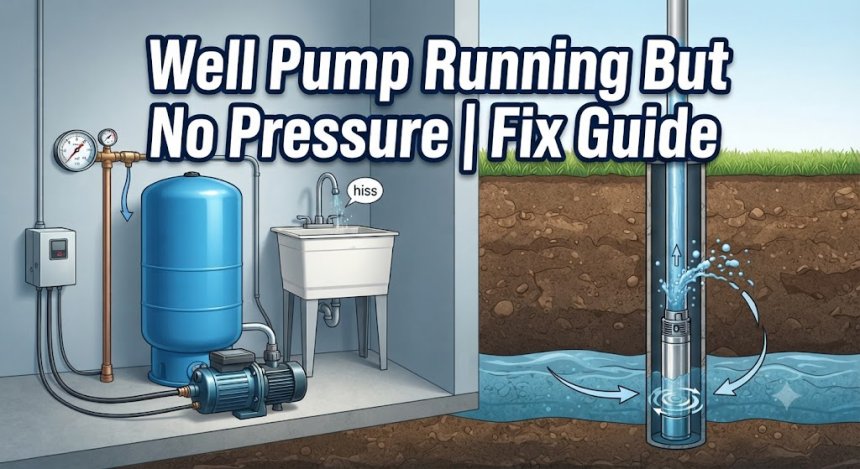
What Is a Well Pump Failure? Decoding the Mechanism
To understand why a well pump runs nonstop without generating pressure, it helps to review how private well systems are designed to operate. A deep-well submersible pump or shallow-well jet pump draws water from an underground aquifer and pushes it into a pressure tank located inside your home. The pressure tank contains an internal bladder separating air and water; as water enters, the air compresses until it reaches a designated cut-off pressure (usually 50 or 60 PSI), signaling the pressure switch to turn the pump off.
When you open a faucet, compressed air forces stored water out of the tank until pressure drops to the cut-in threshold (usually 30 or 40 PSI), triggering the pump to turn back on. When the system fails, the pump runs indefinitely because it cannot build enough back-pressure to trip the pressure switch.
Consider a typical rural home scenario: a tiny pinhole leak develops in the drop pipe deep inside the well casing. Even though the pump motor is spinning constantly, water escapes back down the well instead of reaching your pressure tank, leaving your faucets bone dry while the motor overheats.
Critical Warning Signs: When Your Well System is Sounding the Alarm
Well pumps rarely fail without giving subtle sensory indicators days or weeks before a total loss of pressure:
-
Auditory Clues: Listening to the well pump motor humming continuously in the basement or utility room without ever cycling off, or hearing strange spitting air bursts at your faucets.
-
Performance Anomalies: Noticeable water pressure sputtering, fluctuating water delivery streams, or prolonged pump run times during normal household use.
-
Electrical Indicators: Frequent tripping of the well pump's dedicated circuit breaker or thermal overload switch due to continuous motor overheating.
-
Cascading Risks: Ignoring a continuously running well pump risks total motor burnout, melted wiring harnesses, and dry-firing damage to internal impellers.
Root Causes: Why Well Systems Lose Pressure
Continuous running and pressure loss stem from a blend of mechanical wear, environmental shifts, and hardware failures:
-
Foot Valve or Check Valve Failure: A worn or stuck check valve allows water in the supply line to drain backward into the well, causing the pump to lose its prime and fail to build pressure.
-
Drop Pipe Cracks or Leaks: Subsurface corrosion or shifting well casings can crack the rigid PVC or poly drop pipe connecting the pump to the surface.
-
Waterlogged Pressure Tank: If the internal air bladder in the pressure tank fails or loses air charge, the tank fills entirely with water, causing rapid pressure cycling and pump burnout.
-
Pressure Switch Malfunctions: Bug infestation, corrosion, or burnt electrical contacts inside the pressure switch can prevent it from reading system pressure accurately.
-
Aquifer Depletion or Lowered Water Table: Severe drought conditions or heavy regional usage can drop the local water table below the pump intake level.
Professional Diagnostic & Repair Workflow
When a licensed master plumber or certified well technician arrives to troubleshoot a failed well system, they follow a systematic technical methodology:
-
Safety Triage & Power Isolation: The technician shuts off power to the well pump at the main electrical panel to prevent electrical shock and motor damage.
-
Pressure Switch & Tank Evaluation: Technicians test electrical continuity across the pressure switch contacts and check the air pressure charge inside the pressure tank bladder.
-
Check Valve & Priming Assessment: The system is evaluated for loss of prime, backflow leaks, and pressure holding capacity.
-
Transparent Options & Written Estimating: The plumber provides a clear, flat-rate pricing breakdown detailing whether surface components need replacement or if pulling the deep-well pump is required.
-
Code-Compliant Remediation & Testing: Defective switches, tanks, or underground drop pipes are replaced using high-grade materials in accordance with local plumbing codes, followed by thorough flow and pressure verification.
Advanced Diagnostics: The Professional Tool Arsenal
Professional well technicians utilize specialized heavy-duty equipment to diagnose subterranean problems accurately without guesswork:
-
Digital Clamp Meters & Multimeters: Measures electrical current draw, voltage supply, and motor winding resistance to detect shorted or burnt pump motors.
-
Precision Pressure Gauges & Manometers: Tests exact operating pressures across tank inlets and manifold lines to calibrate pressure switch settings.
-
Megohmmeters (Insulation Testers): Evaluates underground wire insulation integrity to check for grounding or electrical shorts inside deep well casings.
-
Down-Hole Well Cameras: Lowers high-definition waterproof optics deep into the casing to visually inspect pipe conditions, casing alignment, and water levels.
Financial Breakdown: Cost Factors & Investment Realities
Addressing well pump failures involves variable financial inputs depending on equipment depth and accessibility:
-
Service Call & Dispatch Fees: Specialized well truck mobilization and diagnostic testing cover technician dispatch.
-
Surface vs. Submersible Repairs: Replacing an accessible surface pressure switch or tank involves minimal labor, whereas pulling a heavy submersible pump from a 300-foot well requires specialized lifting equipment and crew labor.
-
Material Quality & Horsepower: High-grade stainless steel pumps and heavy-duty bladder tanks carry varying investment requirements based on household water demand.
-
Permitting Requirements: Local municipal codes may require certified well contractors for major underground piping or casing modifications.
DIY Reality Check: What You Can Safely Fix vs. When to Step Back
-
Safe Homeowner Actions: Checking and resetting tripped circuit breakers, clearing insect nests or debris from the exterior pressure switch cover, or adding air to a pressure tank if the bladder is intact.
-
The Danger Zone: Never attempt to pull a heavy submersible well pump out of deep casing yourself without professional tripod rigs and lifting tools; dropping a pump down the well can crush the casing and ruin the water source entirely.
-
When to Call a Pro: If resetting the breaker does not restore power, if the pump hums continuously without pumping water, or if you suspect a dropped line or burnt motor, call a licensed well professional immediately.
Unique Expert Insights: Hard Truths Homeowners Learn Too Late
Years of hands-on field experience reveal critical industry realities that protect well-water property owners from expensive mistakes:
-
Running a Pump Dry Destroys It: Allowing a well pump to run continuously against a closed or dry line generates intense frictional heat that melts plastic impellers within minutes.
-
Pressure Switches Need Clean Contacts: Small spiders and ants are notoriously attracted to electrical sparks inside pressure switch boxes, frequently wedging between contacts and stopping the pump.
-
Burying Wellheads Violates Code: Sanitary codes require well casings to extend safely above ground grade to prevent surface runoff contamination from entering your drinking water.
-
Skipping Annual Inspections Costs More: Routine pressure tank and switch checks cost a fraction of an emergency midnight well-pulling operation.
Comprehensive Home Plumbing Maintenance Framework
Protect your private well water network from unexpected failures by implementing these seasonal maintenance habits:
-
Spring & Summer Checks: Inspect the wellhead sanitary seal for cracks; test outdoor hose bib pressures and check for irrigation line leaks.
-
Fall & Winter Preparation: Insulate above-ground well pump housings and pressure tanks located in unheated outbuildings or crawlspaces to prevent freezing.
-
Year-Round Habits: Monitor your pressure tank air charge annually; check the pressure switch contacts for debris every six months; test household water quality regularly.
Emergency Protocol: When Immediate Dispatch is Non-Negotiable
Certain well system failures demand immediate, 24/7 professional intervention:
-
Total Potable Water Loss: Complete household water shutoff affecting all sinks, toilets, and showers.
-
Electrical Burning Odors: Smelling burning insulation or seeing smoke near the pressure switch or well control box.
-
Contaminated Supply Ingress: Muddy or foul-smelling water suddenly rushing from taps following heavy ground shifting or flooding near the wellhead.
Frequently Asked Questions (FAQs)
Why is my well pump running constantly without building pressure?
Constant running without pressure usually indicates a loss of prime, a broken drop pipe inside the well, a stuck check valve, or a severe leak in the supply line.
Can I damage my well pump by letting it run continuously?
Yes. Running a pump continuously against a dry or blocked line overheats the motor, leading to melted components, burnt windings, and total motor failure.
What is the average lifespan of a submersible well pump?
Most quality submersible well pumps last between 10 to 15 years, depending on water chemistry, usage volume, and electrical stability.
How do I check the air pressure in my well pressure tank?
Turn off power to the well pump, drain all water from the pressure tank using a nearby faucet, and use a standard tire pressure gauge on the Schrader valve to check the air charge.
What causes a well pump to lose its prime?
Loss of prime is typically caused by a faulty foot valve or check valve that allows water to drain out of the suction pipe back into the well.
How deep are most residential well pumps?
Residential well depths vary widely by region, ranging from 50 feet for shallow wells to over 400 feet for deep-aquifer submersible installations.
What should I do if my well pump circuit breaker trips?
Reset the breaker once. If it trips immediately a second time, leave it off and call a professional technician, as this signals an electrical short or seized motor.
How do I know if my pressure switch is broken?
If the pump fails to turn on when water pressure drops, or if it stays stuck running continuously when pressure is high, the pressure switch contacts are likely failed.
Why Homeowners Trust Professional Plumbing Experts
Maintaining and repairing private well water systems requires specialized electrical knowledge, heavy lifting equipment, and technical licensing. Relying on professional plumbing and well contractors ensures your water supply is restored safely, efficiently, and in compliance with local health codes.
Are you experiencing well pump pressure loss at your property, or would you like to schedule an emergency diagnostic inspection today?