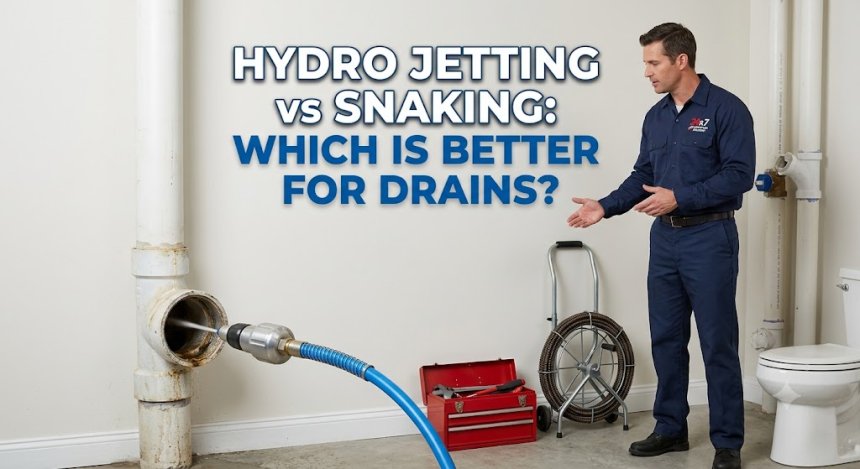
Hydro Jetting vs Snaking: Which Is Better for Drains?
Hydro jetting vs. drain snaking: discover which drain clearing method is best for your pipes. Compare costs, safety, efficiency, and expert tips today

Hydro Jetting vs. Snaking: Which Is Better for Clogged Drains
Hydro jetting is better for thoroughly scouring entire pipe walls clean of heavy grease, scale, and intrusive tree roots using high-pressure water, whereas traditional snaking is ideal for quickly punching a path through simple, localized clogs like paper jams or hair tangles.
Mechanics and Physics: How Hydro Jetting and Snaking Work
Understanding the physical principles behind mechanical augering (snaking) and hydraulic scouring (hydro jetting) explains why each method produces very different long-term results inside your pipes.
 MECHANICAL SNAKING (Punching Action)   HYDRO JETTING (Scouring Action)
┌─────────────────────────────────┐   ┌─────────────────────────────────┐
|   [ Flexible Steel Cable ]      |   [ High-Pressure Water Hose ]      |
|              │                  |   │ 3,500 PSI Streams               |
|              ▼                  |   │ ◄── ◄── █ ──► ──►               |
|    ───  ( Solid Clog )  ───     |   │   (Cleans 100% Pipe Diameter)  |
|         Core Punched Out        |   │   Removes Slime, Scale & Roots  |
|    ───                  ───     |   └─────────────────────────────────┘
└─────────────────────────────────┘
1. Mechanical Snaking: Rotational Shear Force
Drain snaking uses a flexible metal cable fed down a drain pipe. Powered by a motor or hand crank, the cable rotates rapidly, using a corkscrew-style auger head or C-cutter blade to punch through dense obstructions.
-
Physics of the Hole: Snaking relies on rotational mechanical force to puncture and grab debris (such as hair clusters or paper wads). It restores a flow pathway by creating a hole through the blockage equal to the diameter of the cutter head.
-
Limitations: A standard auger blade rarely touches the entire interior surface of a 4-inch or 6-inch pipe. Slime, grease buildup, and scale along the pipe walls remain behind, allowing future clogs to reform quickly.
2. Hydro Jetting: High-Velocity Hydraulic Scouring
Hydro jetting utilizes a heavy-duty hose attached to a high-pressure water pump and specialized self-propelling nozzle.
-
Fluid Dynamics & Propulsion: Water is pressurized up to 3,500–4,000 PSI (Pounds per Square Inch) at a flow rate of 6 to 12 GPM (Gallons per Minute). Reverse-facing rear water jets propel the nozzle forward through the pipe while forward-facing jets obliterate solid obstructions.
-
360-Degree Pipe Restoration: The high-velocity stream creates intense shearing forces that slice tree roots, emulsify grease, and wash away hardened mineral scale, returning the interior pipe wall to near-original inner diameter.
Direct Comparison: Hydro Jetting vs. Drain Snaking
| Feature / Metric | Traditional Drain Snaking | High-Pressure Hydro Jetting |
| Primary Function | Punches a hole through localized clogs | Completely scours and cleans pipe walls |
| Best For | Hair, paper towels, minor toilet jams | Heavy grease, sludge, scale, tree roots |
| Pipe Compatibility | Safe for almost all pipe types, including older pipes | Requires sound pipes (PVC, ABS, strong Cast Iron) |
| Duration of Results | Short-to-medium term (clogs can recur) | Long-term (restores full pipe capacity) |
| Pre-Inspection Needed? | Recommended | Mandatory (Sewer camera inspection required) |
| DIY Feasibility | Small hand snakes are safe for DIY | Strictly Professional (Extreme high pressure) |
| Average Cost Range (US) | $150 – $450 | $450 – $1,000+ |
Safe DIY Maintenance vs. Professional Plumbing Scope
Attempting to clear secondary drains with consumer tools is common, but main line clearing and high-pressure jetting carry serious safety hazards and require certified expertise.
| Task / Procedure | Safe for DIY? | Requires a Licensed Professional |
| Clearing Sink / Shower Traps with Hand Snake | Yes | Optional |
| Plunging Minor Toilet or Sink Stoppages | Yes | Optional |
| Operating Medium Motorized Drain Augers (Secondary Lines) | Moderate | Recommended |
| Clearing Main Sewer Lines with 100-ft Commercial Auger | No | Yes |
| Pre-Clearing Fiber-Optic Sewer Camera Inspections | No | Yes (Specialized Equipment) |
| High-Pressure Hydro Jetting (3,000+ PSI) | No | Yes (Safety Hazard) |
| Trenchless Pipe Lining or Underground Main Line Repair | No | Yes (Permit Required) |
Step-by-Step DIY Guide: Safe Hand Snaking for Secondary Lines
If a bathroom sink or tub is draining slowly due to hair or soap scum buildup, a standard hand-crank snake can clear the branch line safely without damaging your pipes.
       DIY SECONDARY DRAIN SNAKING FLOW
       ─────────────────────────────────
 [Step 1: Remove Stopper & Insert Snake Cable]
                       │
                       ▼
 [Step 2: Feed Cable Until Resistance Is Met]
                       │
                       ▼
 [Step 3: Rotate Handle to Hook & Break Clog]
                       │
                       ▼
 [Step 4: Retract Cable slowly & Flush Warm Water]
Tools Needed:
-
1/4-inch hand-crank drain snake (15–25 feet)
-
Bucket and rag
-
Rubber gloves and safety glasses
-
Bucket of warm water
Step 1: Prep the Fixture Access
Remove the sink stopper or tub overflow plate. Place a bucket underneath the P-trap if working from below the sink basin.
Step 2: Feed the Cable into the Drain
Gently push the cable into the drain opening by hand. Slide the thumbscrew lock forward, feed the wire, and lock the screw as you proceed.
Step 3: Work Through Traps and Obstructions
When you feel resistance (typically the bend of the P-trap or the clog itself), tighten the cable lock. Turn the hand crank clockwise while applying steady downward pressure. Do not force the cable violently, as bending or kinking the wire can damage thin plastic pipe walls.
Step 4: Hook Debris and Retract
Once the cable penetrates or hooks the mass, slowly pull the cable back while wiping it clean with a rag. Dump retrieved hair or debris into the trash—never flush it back down the sink. Flush the drain with hot water to ensure smooth flow.
Dealing with a stubborn main line clog or recurring sewer backup? Don't risk puncturing your pipes with commercial machinery. Contact 24x7 American Plumber at
762-383-0288 for professional drain camera inspections and hydro jetting services.
Pro "Hidden Tips" for Long-Term Drain Health
-
Avoid Chemical Drain Cleaners Before Snaking or Jetting: Caustic chemical drain openers contain heavy concentrations of sulfuric acid or sodium hydroxide. They rarely dissolve dense main line obstructions completely, leaving behind a pool of hazardous acid that can burn plumbing technicians or splash during auger extraction.
-
Always Require a Video Camera Inspection Before Jetting: High-pressure water is an effective cleaning tool, but if your underground sewer pipe is compromised, cracked, or made of thin Orangeburg (fiber conduit), 3,500 PSI water can destroy the pipe walls. A sewer camera scope ensures structural integrity before jetting begins.
-
Use Enzymatic Maintenance Cleaners: Maintain clean drain walls after professional jetting by using organic enzymatic drain treatments monthly. Enzymes break down organic hair, grease, and soap scum films naturally without corroding metal or plastic fittings.
Plumber Work: How Master Plumbers Clear Sewer Mains
When a master plumber addresses a main sewer stoppage, they follow a systematic workflow to ensure pipe safety and long-term performance:
┌─────────────────────────────────────────────────────────────────┐
|               PROFESSIONAL DRAIN CLEARING PROTOCOL              |
├─────────────────────────────────────────────────────────────────┤
| 1. Sewer Camera Scope Inspection: Identify clog composition     |
|    (roots, grease, offset joints) and verify pipe material.     |
|                                                                 |
| 2. Initial Augering (If Needed): Use heavy C-cutters to punch   |
|    a relief channel through standing water columns.             |
|                                                                 |
| 3. High-Pressure Hydro Jetting: Advance jetting hose down pipe  |
|    to scour 360 degrees of pipe circumference clean.            |
|                                                                 |
| 4. Post-Cleaning Verification Scope: Perform final camera scan |
|    to prove the line is fully restored and free of defects.     |
└─────────────────────────────────────────────────────────────────┘
Need a precise diagnosis of your underground main line? Advanced tools like hydro-jetters and fiber-optic sewer cameras restore flow fast without unneeded yard excavation. Call 24x7 American Plumber at
762-383-0288 today.
Industry Cost Breakdown and Equipment Lifespan Context
Understanding typical US repair costs and expected piping lifespans helps homeowners choose between short-term fixes and long-term solutions.
                  EXPECTED SEWER PIPE LIFESPAN
 ─────────────────────────────────────────────────────────
 Schedule 40 PVC Drain Lines   : 50 - 100 Years
 Cast Iron Pipe Systems        : 30 - 50 Years
 Clay Tile Pipe Connections     : 20 - 30 Years
Estimated Industry Cost Ranges (US Averages):
-
Simple Secondary Drain Snaking (Sink/Shower): $150 – $250
-
Main Sewer Line Snaking (Motorized Cable): $250 – $450
-
Sewer Line HD Camera Scope Inspection: $200 – $450
-
Commercial Hydro-Jetting Service (Main Line): $450 – $1,000+
-
Trenchless Epoxy Pipe Lining (CIPP): $150 – $250 per linear foot
When to Call the Pros
Certain plumbing scenarios demand immediate intervention by a certified plumbing authority:
-
Wastewater Backing Up into Low-Lying Showers or Tubs: Indicates a full main sewer line stoppage requiring heavy commercial equipment.
-
Gurgling Toilets When Running Sinks or Washing Machines: Points to severe negative pressure caused by a main stack obstruction.
-
Recurring Drain Clogs Happening Every Few Weeks: Signals that simple snaking left behind heavy grease, scale, or tree root masses that require hydro jetting.
-
Persistent Sewer Odors Near Drains or Foundation: Indicates dried-out P-traps or cracked underground sewer lines leaking sewer gas.
Frequently Asked Questions
Can hydro jetting damage old sewer pipes?
Hydro jetting can damage severely compromised, rusted-through cast iron or old fragile Orangeburg pipes. This is why a certified plumber always performs a fiber-optic video camera inspection prior to jetting to confirm the pipe is structurally sound.
How often should a main sewer line be hydro jetted?
For standard residential homes, hydro jetting every 2 to 3 years acts as effective preventive maintenance, keeping grease and root intrusion at bay. Commercial properties (especially restaurants dealing with heavy fats and oils) should schedule hydro jetting annually.
Does snaking remove tree roots completely from a sewer pipe?
No. A mechanical snake cable with a cutting blade will slice a hole through dense tree root masses to restore flow temporarily, but it leaves root stubs attached to pipe joints. Hydro jetting uses high-pressure water to shear roots flush against pipe walls and wash them away completely.
Is hydro jetting worth the extra cost compared to snaking?
Yes. While snaking costs less upfront, it often leaves residue behind that causes clogs to return within months. Hydro jetting thoroughly cleans the entire pipe diameter, delivering longer-lasting results and saving money on repeated service calls.
Restore Your Drains with 24x7 American Plumber
Don't let stubborn drain blockages disrupt your home or business. Trust the master plumbing authorities at 24x7 American Plumber for 24/7 emergency drain clearing, HD camera scope diagnostics, and high-pressure hydro jetting across the USA.
-
Call Us 24/7:
762-383-0288 -
Visit Our Website:
24x7americanplumber.com -
Our Commitment: 24/7 Rapid Emergency Response, Upfront Pricing, and Dependable Workmanship Guaranteed