What Can Go Down a Garbage Disposal? Do's & Don'ts
Wondering what can and cannot go down a garbage disposal? Discover safe foods, items to avoid, DIY jam fixes, and expert tips to protect your pipes

What Can and Cannot Be Safely Put Down a Garbage Disposal
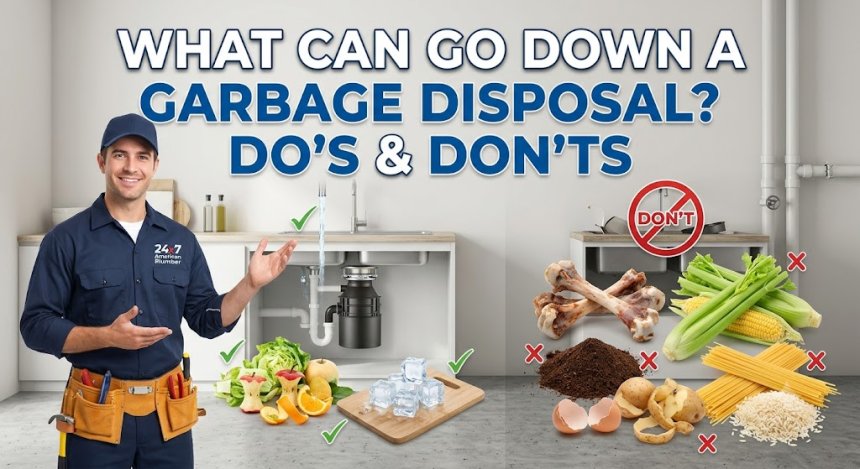
You can safely put soft food scraps, small citrus peels, liquid food waste, and cold water down a garbage disposal, but you must avoid FOG (fats, oils, grease), fibrous vegetables, coffee grounds, bones, expansion starches like pasta and rice, and non-food items.
The Physics and Mechanics: How Garbage Disposals Actually Work
A widespread misconception among homeowners is that garbage disposals contain sharp spinning blades that slice food like a blender. In reality, the mechanical operation relies entirely on centrifugal force, impellers, and hydraulic flushing.
┌─────────────────────────────────────────────────────────────────┐
|               GARBAGE DISPOSAL GRINDING MECHANICS               |
├─────────────────────────────────────────────────────────────────┤
| 1. Motor Activation   ──> High-torque motor spins plate at 1700 RPM |
| 2. Centrifugal Force ──> Food waste thrown to outer chamber wall |
| 3. Impeller Impact    ──> Swiveling lugs crush waste against ring|
| 4. Shredder Pass      ──> Food forced through stationary teeth   |
| 5. Hydraulic Wash     ──> Cold water flushes slurry into P-trap   |
└─────────────────────────────────────────────────────────────────┘
1. Centrifugal Force and Swivel Impellers
Inside the grinding chamber sits a flat, heavy steel turntable powered by an induction motor running at 1,400 to 1,720 RPM. Attached to this turntable are two swiveling metal lugs (impellers). As the plate spins, centrifugal force flings food waste outward against a stationary outer shredder ring.
2. The Shredder Ring and Hydraulic Pulper
The outer ring features stationary, hardened-steel teeth (grinding element). The swiveling lugs impact food particles repeatedly, mashing them into micro-particles against the shredder ring. The unit acts as a hydraulic pulper, transforming solids into a fine slurry.
3. Flow Dynamics and Siphonage
A continuous stream of cold water is necessary during operation. Cold water solidifies minor trace fats so the impellers can break them apart while providing the hydraulic volume required to push pulverized waste through the narrow 1.5-inch kitchen sink P-trap without causing pipe siphonage or drainage clogs.
What Can vs. What Cannot Go Down Your Disposal
To prevent costly drain line backups and motor burnouts, keep this definitive list in your kitchen:
                  GARBAGE DISPOSAL COMPATIBILITY
                  ───────────────────────────────
      SAFE TO PROCESS                     DO NOT PUT DOWN DISPOSAL
 ┌────────────────────────┐             ┌────────────────────────┐
 │ • Soft fruit/veggie    │             │ • Fats, Oils, & Grease │
 │   scraps               │             │ • Coffee Grounds       │
 │ • Small citrus peels   │             │ • Fibrous Vegetables   │
 │ • Cooked meat scraps   │             │ • Pasta, Rice, & Beans │
 │ • Small soft bones     │             │ • Eggshells & Husks    │
 │   (chicken/fish)       │             │ • Hard Bones & Shells  │
 │ • Ice cubes (cleans)   │             │ • Non-Food Trash       │
 └────────────────────────┘             └────────────────────────┘
Safe Items (In Moderation):
-
Soft Produce Scraps: Apple cores, berries, cucumber skins, and chopped leafy greens.
-
Small Citrus Peels: Lemon, lime, or orange peels (in small pieces) help scrub internal walls and neutralize odors.
-
Cooked Meat Scraps: Chopped chicken, beef, or pork pieces without heavy fat or large bones.
-
Ice Cubes: Grinding ice cubes helps knock off stubborn food sludge clung to the impellers and turntable.
Banned Items (Major Clog & Damage Risks):
-
Fats, Oils, and Grease (FOG): Warm liquid fat cools inside household drain lines, coating pipe walls and forming dense grease plugs.
-
Coffee Grounds: Grounds accumulate inside P-traps, packing together into an impenetrable, concrete-like paste.
-
Fibrous & Stringy Vegetables: Celery, corn husks, artichokes, and asparagus contain tough longitudinal fibers that wrap around the rotating flywheel, binding the motor.
-
Pasta, Rice, Oatmeal, and Potato Peels: These items contain expansion starches that absorb water, expanding inside waste pipes into a gel-like clog.
-
Eggshells: Contrary to myth, eggshell membranes string out and wrap around shredder rings, while pulverized shell sand collects in trap bends.
-
Hard Bones & Seafood Shells: Clam shells, beef bones, and pork rib bones will jam the impellers or crack the disposal's plastic outer housing.
Safe DIY Maintenance vs. Professional Plumbing Scope
While resetting a jammed flywheel is a safe homeowner task, electrical repairs and drain line augering require professional tools and expertise.
| Task or Repair Scenario | Safe for DIY? | Requires a Licensed Professional |
| Resetting Tripped Thermal Overload Button | Yes | Optional |
| Unjamming Flywheel with Hex Wrench | Yes | Optional |
| Cleaning Disposal Chamber with Ice and Salt | Yes | Optional |
| Replacing Household Sink Strainer / Mounting Ring | Moderate | Recommended |
| Clearing Main Kitchen Drain Line Stoppages | No | Yes (Commercial Augers) |
| Hardwiring Electrical Switches / Receptacles | No | Yes (Electrical Safety) |
| Replacing Complete Disposal & Drain Re-piping | Moderate | Recommended |
Step-by-Step DIY Guide: Safely Unjamming a Garbage Disposal
If your disposal hums without spinning or stops working entirely, the motor's thermal overload switch has likely tripped due to a mechanical flywheel jam. Follow this safe sequence to clear it.
       GARBAGE DISPOSAL UNJAMMING PROCEDURE
       ───────────────────────────────────
 [Step 1: Turn Off Electrical Switch & Unplug Unit]
                         │
                         ▼
 [Step 2: Insert Hex Key into Bottom Center Port]
                         │
                         ▼
 [Step 3: Rotate Wrench Back & Forth to Free Jam]
                         │
                         ▼
 [Step 4: Press Red Thermal Reset Button on Bottom]
                         │
                         ▼
 [Step 5: Restore Power & Test with Cold Water]
Safety Equipment & Tools Needed:
-
1/4-inch Allen key (or the Jam-Buster wrench provided with the unit)
-
Flashlight
-
Tongs or needle-nose pliers (Never insert fingers into the disposal chamber)
Step 1: Isolate Electrical Power
Turn off the wall switch control. For absolute safety, unplug the disposal unit from the under-sink outlet, or switch off the dedicated breaker at your main electrical panel.
Step 2: Clear the Mechanical Jam from Beneath
-
Crawl under the sink and locate the small circular port in the center of the disposal's bottom metal plate.
-
Insert your 1/4-inch Allen wrench directly into the hex socket.
-
Work the wrench handle back and forth counterclockwise and clockwise. Crank with firm pressure until the turntable completes a full 360-degree rotation freely.
Step 3: Remove Obstruction Objects
Use a flashlight to look down through the top sink opening. Locate the freed object (e.g., a coin, bone chunk, or fruit pit) and remove it using long tongs or pliers.
Step 4: Reset the Motor Circuit
Find the small red square Reset Button located on the bottom or lower side of the unit casing. Press it firmly inward until it clicks into place.
Step 5: Test Operation
Plug the unit back in or restore power at the breaker panel. Turn on cold tap water at high volume, then flip the wall switch on to test smooth motor operation.
Disposal still humming, leaking water underneath, or causing severe line clogs? Avoid electrical hazards or ruptured drain lines. Contact the certified team at 24x7 American Plumber at
762-383-0288 for same-day service.
Pro "Hidden Tips" for Garbage Disposal Care
-
Always Run Cold Water Before, During, and After: Start running cold water 5 seconds before turning the disposal on, and leave it running for 15 seconds after switching it off. Cold water keeps the motor cool and carries pulverized waste through the main kitchen drain line.
-
Scrub Internal Walls with Citrus, Ice, and Rock Salt: Pour a cup of ice cubes, two tablespoons of rock salt, and several lemon peels into the chamber. Turn on cold water and run the unit for 30 seconds. The ice and salt act as a natural abrasive to scour film off the turntable, while citrus oils remove foul odors.
-
Never Use Chemical Drain Cleaners in Disposals: Caustic drain openers contain harsh chemicals that dissolve rubber flywheel seals, cause internal motor leakage, and pool in the chamber, creating splash hazards for anyone working on the unit.
Plumber Work: How Master Plumbers Address Kitchen Drainage
When kitchen drains back up past the disposal, a licensed plumber executes specialized mechanical clearing procedures:
┌─────────────────────────────────────────────────────────────────┐
|               PROFESSIONAL KITCHEN SERVICE WORKFLOW             |
├─────────────────────────────────────────────────────────────────┤
| 1. Electrical Continuity Testing: Use digital multimeters to    |
|    verify voltage, switch continuity, and capacitor health.     |
|                                                                 |
| 2. Drain Line Isolation: Disconnect disposal outlet pipe to      |
|    isolate the unit from home drain branch piping.              |
|                                                                 |
| 3. Mechanical Cable Augering: Run specialized 5/16" drop-head   |
|    cables through P-traps to clear grease and food blockages.   |
|                                                                 |
| 4. Baffle & Mounting Ring Resealing: Install vibration-proof    |
|    3-bolt mounting assemblies to eliminate sink rim leaks.      |
└─────────────────────────────────────────────────────────────────┘
Need a deep drain clearing or new disposal installation? Advanced drain cleaning tools like motorized augers and hydro-jetters clear stubborn grease lines safely. Contact 24x7 American Plumber at
762-383-0288 to book an expert technician.
Industry Cost Estimates and Lifespan Breakdown
Understanding repair costs and equipment longevity helps homeowners budget effectively for kitchen upgrades.
                 EXPECTED EQUIPMENT LIFESPAN
 ─────────────────────────────────────────────────────────
 Residential Garbage Disposal : 8 - 12 Years
 Heavy Commercial Unit         : 5 - 8 Years
 Kitchen Branch Drain Piping   : 40 - 50 Years
Estimated US Industry Costs (Parts & Labor):
-
Professional Unjamming & Reset Inspection: $125 – $225
-
Kitchen Drain Line Mechanical Snaking: $175 – $350
-
Complete Replacement (Standard 1/2 HP Unit): $250 – $450 (Includes unit & labor)
-
High-End Heavy Duty Replacement (3/4 to 1 HP Unit): $450 – $750
-
Dedicated Under-Sink Electrical Receptacle Wiring: $200 – $400
When to Call the Pros
You should cease DIY troubleshooting and contact a licensed plumbing authority under the following conditions:
-
Active Leaking Under the Sink: Water dripping from the bottom housing seam indicates the internal motor shaft seal has failed, requiring unit replacement.
-
Electrical Panel Tripping Immediately: If turning on the disposal instantly trips your home circuit breaker, an internal electrical short exists.
-
Persistent Foul Odors Unresolved by Cleaning: Signals decay trapped inside deep wall piping or a dried-out secondary venting stack.
-
Complete Drainage Stoppage in Both Sink Basins: Indicates a deep branch sewer clog beyond the reach of standard household tools.
Frequently Asked Questions
Can I put eggshells down the garbage disposal?
No, it is best to avoid putting eggshells down the disposal. While the shell breaks into fine particles, the inner membrane can wrap around the rotating impellers. Furthermore, the pulverized eggshell sand settles in the P-trap, blending with grease to create dense clogs.
Why does my garbage disposal make a humming noise but won't spin?
A humming noise indicates that electricity is reaching the motor, but an object is jammed between the rotating turntable impeller and the stationary shredder ring. Turn off the power immediately and use a 1/4-inch Allen wrench in the bottom center port to free the jam.
What size garbage disposal HP do I need for my home?
A 1/2 Horsepower (HP) unit is suitable for small households (1–2 people) with light cooking habits. For average families of 3 to 4, a 3/4 HP motor provides better grinding power for tough scraps. Large families or heavy home cooks should choose a 1 HP unit to handle dense food waste smoothly.
How do I clean a smelly garbage disposal safely?
To clean a smelly disposal without chemicals, pour 1/2 cup of baking soda into the disposal, followed by 1 cup of white vinegar. Let the mixture foam for 10 minutes, then flush with hot water while running the unit with ice cubes and lemon peels.
Protect Your Kitchen Plumbing with 24x7 American Plumber
Don't let a jammed garbage disposal or clogged kitchen drain disrupt your routine. Trust the certified experts at 24x7 American Plumber for 24/7 emergency repairs, professional drain cleaning, and seamless equipment installations nationwide.
-
Call Us 24/7:
762-383-0288 -
Schedule Service Online:
24x7americanplumber.com -
Our Commitment: Dependable 24/7 Service, Upfront Pricing, and 100% Satisfaction Guaranteed