Hydro-Jetting vs. Snaking Cost & Guide
Compare hydro-jetting vs. snaking main sewer line cost, effectiveness, and methods to choose the right drain cleaning service for your home.

Introduction
Dealing with a backed-up main sewer line is one of the most stressful experiences a property owner can face, forcing immediate decisions about how to clear the blockage safely and affordably. Understanding hydro-jetting vs. snaking main sewer line cost helps homeowners evaluate whether traditional mechanical rodding or high-pressure water scouring delivers the best long-term value. Property owners throughout the region frequently search for these pricing models when recurring clogs, slow drains, or invasive tree roots threaten their sanitary waste systems.
Choosing the right cleaning method prevents unnecessary plumbing expenses and ensures your sewer lateral remains free-flowing for years to come. This comprehensive guide breaks down the cost factors, mechanical differences, and professional workflows associated with both sewer cleaning techniques.
Financial Breakdown: Cost Factors & Investment Realities
When evaluating sewer cleaning options, understanding upfront and variable pricing inputs helps homeowners budget effectively:
-
Flat-Rate vs. Hourly Pricing: Reputable plumbers typically charge flat-rate fees for standard mechanical snaking or hydro-jetting, avoiding open-ended hourly surprises.
-
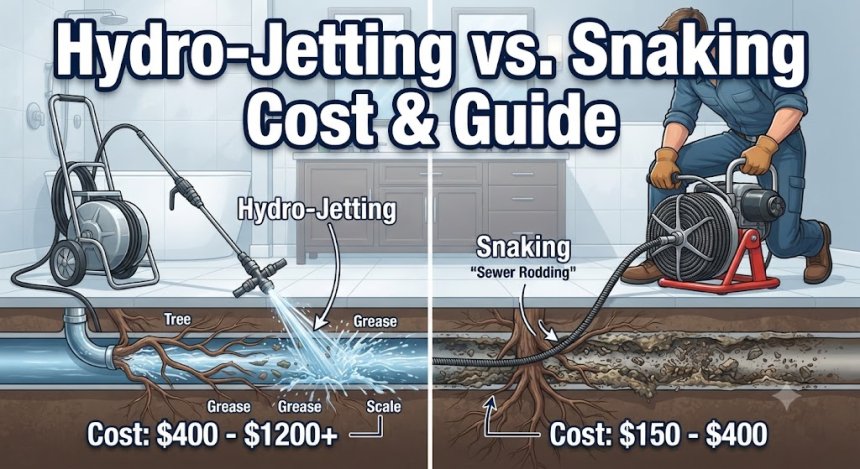
Method Pricing Differences: Basic mechanical snaking generally ranges from $150 to $400 depending on line accessibility, whereas comprehensive hydro-jetting ranges from $400 to $1,200+ based on pipe length and grease severity.
-
Diagnostic Dispatch Fees: Initial service call fees cover technician travel, camera inspection mobilization, and system assessment.
-
Severity and Line Accessibility: Severe root intrusions, broken pipes, or hard-to-reach cleanouts require additional labor and specialized equipment deployment, impacting total project costs.
What Are Hydro-Jetting and Snaking? Decoding the Mechanism
To choose between these two cleaning methods, it helps to understand how they work inside your underground sewer lateral. A standard sewer snake (or mechanical auger) uses a flexible steel cable tipped with specialized cutting blades to punch a hole through clogs, breaking up tree roots and paper blockages to restore immediate drainage. However, a snake leaves grease, scale, and root residue clinging to the interior pipe walls.
Hydro-jetting, by contrast, uses a high-pressure commercial water machine delivering streams between 1,500 and 4,000 PSI through a specialized multi-directional nozzle. Instead of merely punching a hole, hydro-jetting scours the entire 360-degree interior circumference of the pipe, completely stripping away grease, mineral scale, sludge, and stubborn tree roots down to bare pipe walls.
Imagine a midwestern home with mature silver maples lining the front yard: fine roots repeatedly invade the underground clay sewer lateral. Mechanical snaking opens the line temporarily every spring, but hydro-jetting cleans the walls completely and can be paired with root-inhibitor treatments for long-term prevention.
Root Causes: Why Sewer Lines Require Heavy Cleaning
Main sewer lines accumulate blockages due to a combination of environmental pressures, structural settling, and material aging:
-
Invasive Tree Roots: Subsurface root systems seek out microscopic moisture leaks at pipe joints, entering and expanding inside sewer pipes.
-
Grease and Sludge Accumulation: Kitchen fats, oils, grease, and soap scum solidify along pipe interiors, narrowing the flow diameter over time.
-
Aging Infrastructure: Historic cast-iron or clay tile sewer pipes develop rough interior pitting, rust scales, and structural offsets that catch debris easily.
-
Structural Ground Shifting: Freeze-thaw cycles and shifting soil cause pipe sagging (bellies) where standing water and waste settle permanently.
Critical Warning Signs: When Your Main Line is Failing
Sewer line restrictions rarely develop without giving distinct sensory warning indicators before a complete backup occurs:
-
Auditory Clues: Gurgling or bubbling sounds echoing from downstairs toilets or floor drains whenever washing machines, showers, or upper sinks empty.
-
Performance Anomalies: Multiple plumbing fixtures draining sluggishly at the same time, or water backing up into a basement floor drain when laundry runs.
-
Olfactory Indicators: Persistent sulfur, damp earth, or raw sewage odors wafting up from yard cleanouts or indoor drain fixtures.
-
Cascading Risks: Delaying professional cleaning allows trapped pressure to burst pipe joints or push raw sewage across living areas, resulting in costly property damage.
Professional Diagnostic & Repair Workflow
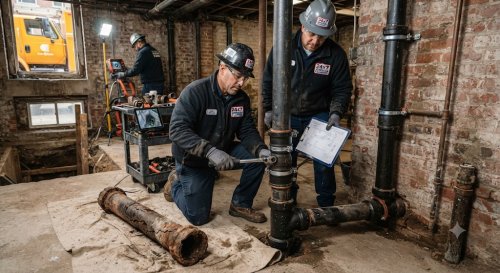
When a licensed master plumber investigates a main sewer line blockage, they execute a systematic technical workflow:
-
Non-Invasive Triage & System Testing: The technician assesses all home fixtures to verify whether the blockage is localized to a branch line or located in the main sewer lateral.
-
High-Definition Video Camera Inspection: Technicians feed a waterproof camera down the cleanout to visually inspect pipe material, root density, and structural integrity before selecting a cleaning method.
-
Transparent Options & Written Estimating: The plumber presents a clear, flat-rate pricing comparison between mechanical snaking and hydro-jetting, tailored to the video inspection findings.
-
Code-Compliant Cleaning Execution: The chosen cleaning method is performed thoroughly, removing all blockages and debris in accordance with local plumbing codes.
-
Post-Cleaning Verification & Cleanup: A final camera pass verifies that the pipe interior is completely clean and flowing smoothly.
Advanced Diagnostics: The Professional Tool Arsenal
Professional plumbing contractors utilize heavy-duty equipment to ensure sewer cleaning is performed with absolute precision:
-
Push-Rod High-Definition Sewer Cameras: Displays crystal-clear digital footage of interior pipe defects, root masses, and blockages on a portable monitor.
-
Electronic Pipe and Sonde Locators: Transmits radio signals from the camera head to locate the exact depth and surface position of underground pipe damage.
-
High-Pressure Hydro-Jetting Units: Delivers regulated high-volume water streams to scour pipe walls completely clean of grease, scale, and roots.
-
Heavy-Duty Mechanical Augers: Employs rugged steel cable drums and interchangeable cutting heads to clear dense structural blockages.
DIY Reality Check: What You Can Safely Fix vs. When to Step Back
-
Safe Homeowner Actions: Clearing localized fixture clogs with a standard plunger, removing hair from sink strainers, or checking accessible outdoor cleanout caps.
-
The Danger Zone: Never rent industrial high-pressure jetters or heavy motorized drain augers without professional training; losing control of a high-torque cable or high-pressure wand can cause severe personal injury or puncture old sewer pipes.
-
When to Call a Pro: If plunging fails, if multiple drains back up simultaneously, or if sewage appears in floor drains, drop the tools and call a licensed plumbing professional immediately.
Unique Expert Insights: Hard Truths Homeowners Learn Too Late
Years of hands-on field experience reveal critical industry realities that protect homeowners from costly mistakes:
-
Snaking is a Temporary Band-Aid: Mechanical rodding punches a hole through roots, but it leaves root remnants behind that multiply and clog the line again within months.
-
Hydro-Jetting Restores Like-New Flow: Water jetting cleans pipe walls entirely, removing the sticky biofilm and grease that attract future clogs.
-
Camera Inspections Are Mandatory: Never authorize hydro-jetting or snaking without a prior camera inspection; jetting fragile, cracked cast-iron or Orangeburg pipe can collapse the line entirely.
-
Chemical Cleaners Ruin Pipes: Pouring corrosive acid cleaners down a blocked main line does not dissolve roots or heavy grease; it sits in the pipe and burns plumbing technicians during emergency repairs.
Comprehensive Home Plumbing Maintenance Framework
Protect your main sewer lateral from unexpected root intrusions and grease clogs by adopting these seasonal maintenance habits:
-
Spring & Summer Checks: Inspect yard cleanout caps for tight seals; monitor yard areas for unexplained wet spots or lush green patches over sewer lines.
-
Fall & Winter Preparation: Avoid pouring cooking fats and grease down kitchen drains before holiday cooking seasons; insulate cleanout pipes exposed to freezing outdoor temperatures.
-
Year-Round Habits: Use mesh strainers on all sinks; schedule annual preventive sewer rodding or hydro-jetting if your property features mature trees.
Emergency Protocol: When Immediate Dispatch is Non-Negotiable
Certain plumbing scenarios demand immediate, 24/7 professional intervention:
-
Active Sewage Overflows: Raw wastewater backing up through basement floor drains, showers, or toilets into living spaces.
-
Total Drainage Collapse: Every plumbing fixture in the home refusing to drain, rendering the sanitation system entirely unusable.
-
Severe Structural Pipe Failure: Sudden ground sinking or collapse near the exterior sewer line path.
Frequently Asked Questions (FAQs)
What is the average cost difference between hydro-jetting and snaking?
Mechanical snaking typically costs between $150 and $400, whereas hydro-jetting ranges from $400 to $1,200+ due to advanced equipment and thorough cleaning results.
Which method is better for removing tree roots from sewer lines?
Hydro-jetting is superior for tree roots because high-pressure water strips roots completely from pipe walls, whereas snaking only punches a temporary hole through them.
Can hydro-jetting damage old sewer pipes?
Yes. If a sewer pipe is severely cracked, rusted out, or made of fragile Orangeburg material, high-pressure water can damage it, which is why a camera inspection is required first.
How often should I hydro-jet my main sewer line?
Homes with mature landscaping or heavy grease usage benefit from preventive hydro-jetting every 2 to 3 years to maintain clear flow.
Is mechanical snaking effective for grease clogs?
No. Snaking creates a small channel through grease, but the sticky residue remains on pipe walls, quickly trapping new debris.
Why do plumbers require a camera inspection before cleaning?
A camera inspection reveals pipe material, structural cracks, offsets, and exact clog types, ensuring the plumber selects the correct cleaning method safely.
How long does a hydro-jetting service take?
Most residential hydro-jetting services take between 1 to 3 hours, depending on line length, accessibility, and severity of buildup.
What should I do if my main sewer line backs up at night?
Stop using all water fixtures immediately, avoid contact with backup water, and call an emergency 24/7 plumbing service for immediate dispatch.
Why Homeowners Trust Professional Plumbing Experts
Resolving main sewer line blockages requires specialized diagnostic cameras, powerful cleaning machinery, and professional licensing. Relying on experienced plumbing contractors ensures your sewer lateral is cleaned safely, priced transparently, and protected by reliable service guarantees.
Are you dealing with a stubborn main sewer line backup, or would you like to schedule a professional camera inspection and cleaning estimate today?