What Is a Sewer Camera Inspection? Guide & Cost
What is a sewer camera inspection and when do you need one? Learn how video sewer scopes work, costs, key signs, and expert home-buying advice today

What Is a Sewer Camera Inspection and When Do You Actually Need One
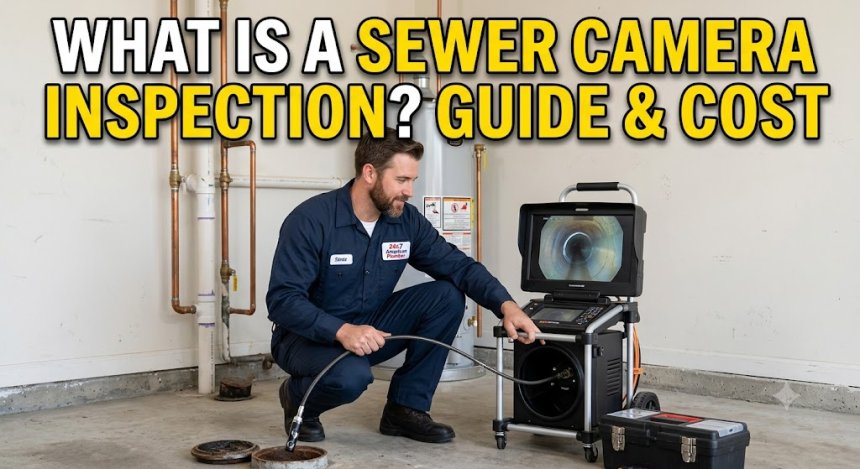
A sewer camera inspection is a non-invasive diagnostic procedure where a flexible, fiber-optic video rod with a high-definition, self-leveling camera is guided through your main sewer line, providing real-time visual assessment of pipe condition, tree root intrusion, bellies, and blockages.
The Technology and Physics: How Sewer Camera Inspections Work
Underground sewer pipes operate unseen beneath concrete slabs, lawns, and driveways. Diagnosing sub-surface pipe failure historically required destructive trenching. High-definition fiber-optic camera systems eliminate blind guesswork using optical physics and electromagnetic frequency locating.
┌─────────────────────────────────────────────────────────────────┐
|              SEWER CAMERA DIAGNOSTIC TECHNOLOGY                 |
├─────────────────────────────────────────────────────────────────┤
| 1. High-Lux LED Array   ──> Illuminates dark 3" to 6" pipe interiors|
| 2. Self-Leveling Head   ──> Gravity gyroscopes maintain upright view|
| 3. Fiber-Optic Push Rod ──> Semi-rigid core navigates 90° bends  |
| 4. Integrated 512Hz Sonde──> Emits signal through soil/concrete  |
| 5. Surface Receiver Wand──> Pinpoints precise depth and position |
└─────────────────────────────────────────────────────────────────┘
1. Optical Illumination and Self-Leveling Gyroscopes
Sewer lines are pitch-black, highly corrosive environments filled with water vapor and organic residue. Modern sewer cameras feature waterproof sapphire glass lenses surrounded by high-lux LED rings. Self-leveling internal gyroscopes ensure the video feed remains right-side-up as the camera navigates pipe turns, preventing orientation confusion for the technician.
2. Push-Rod Dynamics and Push Distance
The camera head attaches to a specialized semi-rigid push cable. Made of fiberglass-reinforced epoxy resin wrapped in a low-friction jacket, this rod provides enough push-strength to travel up to 200–300 feet down a main lateral while remaining flexible enough to pass through 45-degree and 90-degree pipe fittings.
3. Electromagnetic Sonde Telemetry (Sub-Surface Locating)
Inside the camera head sits a small transmitter called a 512Hz Sonde. As the camera travels through the pipe, the sonde emits a continuous low-frequency electromagnetic pulse. Above ground, a plumber uses a handheld location receiver wand to detect this signal, mapping the exact surface position and depth (down to the inch) where pipe damage, root intrusion, or structural collapse exists.
Direct Comparison: When You Need a Sewer Camera Inspection
Not every slow drain requires an optical camera inspection. Understanding when a camera inspection is critical prevents unnecessary expense while catching catastrophic pipe structural failures early.
| Situation / Diagnostic Scenario | Camera Inspection Needed? | Primary Objective | Risk of Ignoring |
| Buying a New or Older Home | Mandatory | Verify sewer line integrity prior to closing | $5,000–$15,000 hidden pipe replacement cost |
| Recurring Main Line Clogs (2+ in a Year) | Mandatory | Identify structural defects, roots, or bellies | Total pipe collapse & indoor sewage backup |
| Homes Built Before 1985 (Cast Iron/Clay) | Recommended | Check for bottom rust scale, channeling, or cracks | Undetected soil erosion under foundation slab |
| Lush Green Patches or Sinkholes in Yard | Mandatory | Locate underground pipe fracture or joint separation | Structural damage, foundation settling, mold |
| Single Isolated Slow Sink Drain | No (Not Needed) | Clear localized P-trap or secondary branch line | Minor localized inconvenience |
Safe DIY Diagnostics vs. Professional Plumbing Scope
While homeowners can safely inspect exterior cleanout access points, operating commercial optical diagnostic systems requires specialized training and heavy-duty equipment.
| Task or Diagnostic Procedure | Safe for DIY? | Requires a Licensed Professional |
| Locating Outdoor Sewer Cleanout Caps | Yes | Optional |
| Plunging or Hand-Snaking Local Sink Traps | Yes | Optional |
| Visual Check of Exterior Cleanout Standpipe | Yes | Optional |
| Operating Consumer USB Endoscope Drain Cameras | Limited (Branch Lines Only) | Not Suitable for Main Sewer Mains |
| Professional Main Line Fiber-Optic Camera Scope | No | Yes (Specialized Equipment) |
| 512Hz Sonde Underground Location Mapping | No | Yes (Precision Telemetry) |
| Hydro-Jetting Pipe Cleansing Post-Inspection | No | Yes (Safety Hazard) |
Step-by-Step DIY Guide: Homeowner Cleanout Location & Pre-Inspection Check
Before calling for a camera scope service, locate your main sewer cleanout and confirm basic access to save diagnostic time.
       PRE-INSPECTION ACCESS CHECK SEQUENCE
       ───────────────────────────────────
 [Step 1: Locate Exterior Sewer Cleanout Access Cap]
                        │
                        ▼
 [Step 2: Inspect Pipe Exterior for Mechanical Damage]
                        │
                        ▼
 [Step 3: Carefully Loosen Threaded Access Cap]
                        │
                        ▼
 [Step 4: Check for Standing Water or Visible Blockage]
Tools Needed:
-
Flashlight
-
Heavy work gloves
-
Channel-lock pliers or pipe wrench
Step 1: Locate Your Main Sewer Cleanout
Look along your home’s exterior foundation wall, usually near bathroom or kitchen plumbing stacks. The cleanout is typically a 3-inch or 4-inch PVC or cast-iron pipe protruding slightly above soil with a square-notched threaded cap. (In colder climates, cleanouts may be located in basements or utility rooms).
Step 2: Inspect Area for Environmental Indicators
Check surrounding soil for foul odors, soggy mud patches, or sudden ground depressions, which signal an underground pipe breach.
Step 3: Carefully Loosen the Cleanout Cap
Put on heavy gloves. Stand to the side of the pipe (never directly over it) and slowly turn the threaded plug counterclockwise using your wrench.
Safety Note: If water begins seeping past the threads under pressure, the line is backed up. Stop turning, re-tighten the cap, and prepare a bucket before proceeding.
Step 4: Perform a Visual Inspection
Shine your flashlight straight down the cleanout stack. If standing water sits inside the pipe, an obstruction exists down-line toward the street main. If the pipe is empty, the stoppage lies upstream inside your house branch lines.
Found standing sewage or suspect underground pipe failure? Don't take chances with toxic wastewater. Contact 24x7 American Plumber at
762-383-0288 to dispatch a master plumber with an advanced HD video inspection system.
Pro "Hidden Tips" for Sewer Line Preservation
-
Never Skip a Sewer Scope When Buying a House: Standard home inspectors check if sinks drain, but they do not run cameras down sewer lines. An old clay pipe crushed by tree roots may flush fine during a 10-minute home tour, only to back up fully the day after you move in. Always request an independent sewer camera inspection prior to closing.
-
Insist on Video Recording Documentation: A trustworthy plumbing company will provide a digital copy (USB or cloud link) of the complete camera inspection run. Keep this recording as a baseline reference for future property assessments or insurance claims.
-
Beware of Fake "Scale" Diagnostics: Unscrupulous contractors sometimes point out normal cast-iron surface oxidation on a camera screen and claim the entire pipe has collapsed. A qualified plumber will distinguish between cosmetic scale and true structural failures (like missing bottoms, shear cracks, or bellies).
Plumber Work: How Master Plumbers Execute Camera Inspections
When a master plumber performs a professional sewer camera inspection, they follow a rigorous protocol to ensure precise diagnostic results:
┌─────────────────────────────────────────────────────────────────┐
|              PROFESSIONAL CAMERA INSPECTION WORKFLOW            |
├─────────────────────────────────────────────────────────────────┤
| 1. High-Pressure Pre-Flush: If line is full of raw sewage, use  |
|    a mechanical auger or hydro-jetter to clear standing water.  |
|                                                                 |
| 2. Calibration & Distance Zeroing: Insert camera into cleanout, |
|    zeroing digital footage counters on the display monitor.    |
|                                                                 |
| 3. Controlled Continuous Feed: Push camera head slowly, documenting|
|    pipe joints, pitch grade, cracks, root entry, and buildup.   |
|                                                                 |
| 4. Sonde Surface Mapping: Activate 512Hz transmitter at defect   |
|    points to mark precise underground position with paint.      |
└─────────────────────────────────────────────────────────────────┘
Need a precise video diagnosis before repairing your line? Specialized tools like hydro-jetters and HD fiber-optic camera systems eliminate blind digging. Contact 24x7 American Plumber at
762-383-0288 today.
Realistic Cost Estimates and Equipment Lifespan Breakdown
Understanding camera scope costs and underlying pipe lifespans helps property owners make educated repair choices.
                  EXPECTED SEWER PIPE LIFESPAN
 ─────────────────────────────────────────────────────────
 Schedule 40 PVC Sewer Pipe    : 50 - 100 Years
 Cast Iron Sewer Mains         : 30 - 50 Years
 Vitrified Clay Tile Lines     : 20 - 30 Years
Realistic US Industry Estimates (Parts & Labor):
-
Standalone Sewer Camera Inspection (Standard Access): $200 – $450
-
Camera Inspection Included with Main Line Clearing: $150 – $300 (Discounted bundle rate)
-
Underground Sonde Pipe Surface Locating: $150 – $300
-
Trenchless Epoxy Pipe Lining (CIPP): $150 – $250 per linear foot
-
Traditional Main Sewer Excavation / Replacement: $3,000 – $9,000+
When to Call the Pros
You should request a professional video sewer inspection immediately under any of the following conditions:
-
Buying an Existing Residential or Commercial Property: Protect yourself against hidden, multi-thousand-dollar underground plumbing defects prior to purchasing real estate.
-
Repeated Backups in Ground-Floor or Basement Drains: Signals a systemic main sewer lateral fault (root invasion, offset joint, or collapsed pipe section).
-
Indentations or Soggy Spots in Your Lawn: Points to an active underground sewage leak washing away supporting soil.
-
Plumbing System Age Over 30 Years: Cast iron and clay pipes undergo natural degradation, pitting, and root penetration over time.
Frequently Asked Questions
How long does a professional sewer camera inspection take?
A standard residential sewer camera inspection takes between 30 and 60 minutes to complete. If the line is blocked with standing sewage or grease, a technician may need extra time to snake or flush the line so the camera lens has a clear view.
Can a sewer camera see through standing water or raw sewage?
No. Camera lenses cannot see through opaque brown water, thick grease, or raw sewage. If your pipe is completely full of backed-up wastewater, the line must first be augered or hydro-jetted to drain standing water before camera inspection can occur.
What is a "belly" in a sewer line, and can a camera find it?
A sewer pipe belly is a sagging section where ground settlement causes the pipe to bend downward. Wastewater and heavy solids settle in this dip instead of draining by gravity, leading to chronic backups. A camera easily identifies bellies because the lens becomes submerged under water while navigating the low spot.
Is a sewer camera inspection worth the cost when buying a home?
Yes, absolutely. A sewer camera inspection costs between $200 and $450, whereas replacing a collapsed underground sewer line can cost $5,000 to $15,000+. Knowing the exact pipe condition gives home buyers crucial leverage during price negotiations or seller repair requests.
Schedule Your Sewer Camera Inspection with 24x7 American Plumber
Don't let hidden underground pipe failures turn into costly disasters. Trust the master plumbing authorities at 24x7 American Plumber for 24/7 emergency service, high-definition fiber-optic video inspections, hydro-jetting, and reliable trenchless line repairs nationwide.
-
Call Us 24/7:
762-383-0288 -
Schedule Service Online:
24x7americanplumber.com -
Our Commitment: 24/7 Rapid Emergency Response, Upfront Pricing, and 100% Guaranteed Workmanship