Whole-House Filter vs Reverse Osmosis: Differences
Compare whole-house water filters vs. reverse osmosis systems. Learn mechanics, filtration levels, costs, and call 24x7 American Plumber at 762-383-0288.

Whole-House Water Filter vs. Reverse Osmosis: What’s the Difference
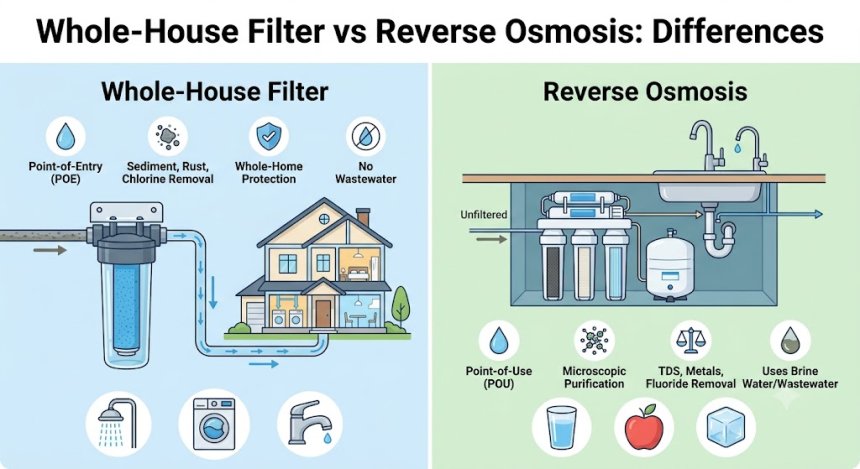
A whole-house water filter installs at your main supply line (Point-of-Entry) to strip sediment, rust, and chlorine from all household water, whereas a Reverse Osmosis (RO) system installs under a specific sink (Point-of-Use) to purify drinking water at a microscopic, molecular level.
The Physics & Mechanics of Water Filtration
Understanding the technical difference between water treatment systems comes down to two distinct mechanical principles: depth media physical straining versus semi-permeable membrane cross-flow separation.
    WHOLE-HOUSE FILTER (Point-of-Entry)         REVERSE OSMOSIS (Point-of-Use)

     Raw Water In (Main Line)                   Pressurized Water Input
              |                                          |
              v                                          v
      +---------------+                          +---------------+
      | 5-20 Micron   |                          | 0.0001 Micron |
      | Sediment/Carbon|                          | Semi-Permeable|
      | Media Matrix  |                          | Membrane Sheet|
      +---------------+                          +---------------+
              |                                     /         \
              v                                    v           v
     Filtered Water to                        Purified      Brine Wastewater
     All Home Outlets                        Drinking Water   to Drain
1. Mechanical Straining & Carbon Adsorption (Whole-House)
Whole-house filtration systems utilize Point-of-Entry (POE) depth media. Water passes through pleated polypropylene or spun-wound cartridges rated between 5 and 20 microns. This mechanical barrier physical stops rust, sand, silt, and pipe scale from entering your plumbing network.
Simultaneously, activated carbon media uses chemical adsorption: its immense porous surface area attracts and traps volatile organic compounds (VOCs), industrial solvents, and disinfectant chloramines. Because water flows through at high velocities (8–15 gallons per minute), these systems do not reduce water pressure or generate wastewater.
2. Cross-Flow Membrane Separation (Reverse Osmosis)
Reverse Osmosis (RO) systems operate at a Point-of-Use (POU) level, using mechanical hydraulic pressure to overpower natural osmotic pressure. Water is forced against a synthetic semi-permeable membrane containing pores sized at approximately 0.0001 microns—small enough to isolate pure $H_2O$ molecules while shedding dissolved solids, heavy metals, arsenic, nitrates, and fluoride.
Because the membrane pores are extremely fine, raw water cannot simply pass straight through without instantly clogging the surface. Instead, RO units use cross-flow filtration: clean water permeates through the membrane wall into a pressurized holding tank, while concentrated contaminants are continuously swept away into a drain line as reject water (brine).
Whole-House Filter vs. Reverse Osmosis: Side-by-Side Comparison
| Feature | Whole-House Water Filter (POE) | Reverse Osmosis System (POU) |
| Installation Location | Main incoming water service line | Dedicated location (under kitchen sink/refrigerator) |
| Filtration Pore Size | 5.0 to 20.0 microns | 0.0001 microns |
| Target Contaminants | Sediment, silt, rust, chlorine, foul odors, turbidity | Dissolved solids (TDS), lead, fluoride, nitrates, microplastics |
| Flow Rate Output | 8 – 15 Gallons Per Minute (GPM) | 50 – 75 Gallons Per Day (GPD) |
| Wastewater Generation | Zero wastewater produced | 1 to 3 gallons sent to drain per 1 gallon purified |
| Protects Home Plumbing? | Yes (Prevents pipe sediment and fixture corrosion) | No (Serves drinking/cooking outlets only) |
| Average Equipment Cost | $600 – $1,800 installed | $300 – $900 installed |
| Filter Replacement Schedule | Every 6 – 12 months | Pre/Post-filters: 6–12 mos; Membrane: 24–36 mos |
Deep Dive: Whole-House Water Filters (POE)
Whole-house systems serve as the first line of defense for a home's entire plumbing infrastructure.
Primary Advantages
-
Comprehensive Home Protection: Protects water heaters, washing machines, dishwashers, and shower valves from abrasive sediment and premature failure.
-
Chlorine-Free Showers: Removes chlorine and chloramines before water reaches showerheads, reducing dry skin, brittle hair, and harsh chemical fumes.
-
Zero Waste & Unrestricted Flow: Filters 100% of incoming water without creating backpressure losses or wasting water down the drain.
Limitations
-
Does Not Remove Dissolved Minerals: Whole-house sediment and carbon filters cannot lower Total Dissolved Solids (TDS), hard water calcium, or heavy dissolved metals like lead.
Deep Dive: Reverse Osmosis Systems (POU)
Reverse Osmosis delivers bottled-quality water directly to a dedicated kitchen faucet or refrigerator icemaker.
Primary Advantages
-
Microscopic Purification: Removes up to 99% of dissolved contaminants, including heavy metals, pharmaceuticals, PFAS ("forever chemicals"), nitrates, and sodium.
-
Superior Taste: Eliminates all trace metallic or chemical flavors from municipal or well drinking water.
Limitations
-
Generates Wastewater: Standard RO systems discharge wastewater through a saddle drain valve to flush the membrane continuously.
-
Slow Production Rate: Water purifies drop-by-drop into a 2- to 3-gallon storage tank, making it unsuitable for whole-house utility supply.
Hidden Pro Tips & Secrets from Master Plumbers
-
The Ultimate Combination Setup: Whole-house filters and reverse osmosis systems are not mutually exclusive. Installing a whole-house sediment/carbon filter protects the expensive RO membrane from being blinded by rust or degraded by chlorine, extending membrane life from 1 year to over 3 years.
-
Install a Permeate Pump on RO Units: Non-electric permeate pumps increase RO system efficiency by up to 400%, reducing wastewater generation from 4:1 down to nearly 1:1 while increasing storage tank pressure.
-
Verify Incoming Water Pressure First: RO systems require at least 40 to 50 PSI of static water pressure to force water through the 0.0001-micron membrane. If your home pressure sits below 40 PSI, you must install an auxiliary booster pump.
-
Remineralization Post-Filters: Because RO filtration strips beneficial minerals alongside bad ones, water can taste slightly flat and measure slightly acidic (pH 6.0–6.5). Add an inline alkaline remineralization cartridge to restore calcium/magnesium ions and elevate pH to a healthy 7.5+.
-
Always Sanitize Housings During Filter Swaps: When changing filter cartridges, wash the inside of the sump housings with mild dish soap and a capful of unscented household bleach before inserting fresh filters to prevent bacterial colonization inside the housing.
Step-by-Step DIY Maintenance & Filter Replacement Guide
Perform this routine filter replacement procedure every 6 to 12 months to maintain proper flow rates and prevent bacterial growth.
+-----------------------------------------------------------------+
|                        SAFETY FIRST                             |
|  Shut off supply valve & bleed line pressure before opening!    |
|  Position a catch bucket directly underneath filter sumps.       |
+-----------------------------------------------------------------+
                                |
                                v
+-----------------------------------------------------------------+
|  STEP 1: Isolate Water & Relieve Pressure                       |
|  Close inlet valve and press red pressure-relief button atop sump.|
+-----------------------------------------------------------------+
                                |
                                v
+-----------------------------------------------------------------+
|  STEP 2: Unscrew Filter Housing Sump                            |
|  Use plastic spanner wrench; turn counter-clockwise slowly.    |
+-----------------------------------------------------------------+
                                |
                                v
+-----------------------------------------------------------------+
|  STEP 3: Wash Housing & Replace O-Rings                         |
|  Clean sump, replace/lubricate black O-ring with silicone grease.|
+-----------------------------------------------------------------+
                                |
                                v
+-----------------------------------------------------------------+
|  STEP 4: Insert New Cartridge & Tighten                         |
|  Center new filter element; hand-tighten sump using spanner wrench.|
+-----------------------------------------------------------------+
                                |
                                v
+-----------------------------------------------------------------+
|  STEP 5: Flush System & Test Flow                               |
|  Open supply valve slowly; flush lines for 5 minutes.           |
+-----------------------------------------------------------------+
Safety Warnings
-
Proper O-Ring Lubrication: Apply only food-grade silicone lubricant to sump O-rings. Never use petroleum-based lubricants, which cause synthetic rubber rings to swell, split, and flood cabinets.
-
Drain Air-Gap Compliance: The drain tubing from an RO system must connect to your sink drain pipe via an approved air-gap faucet or dedicated air-gap adapter to prevent sewage back-siphonage into your drinking water.
Step-by-Step Instructions
-
Isolate Water Line: Turn the dedicated supply valve off. Open a downstream faucet to depressurize the water line.
-
Relieve Internal Pressure: Press the red button on top of the filter manifold head to bleed remaining air and water pressure.
-
Unscrew Sump: Slide the plastic spanner wrench over the filter housing sump and turn counter-clockwise to loosen. Keep a bucket underneath to catch water.
-
Clean Housing: Remove the old cartridge. Wash the interior housing using warm water and mild liquid soap. Inspect the rubber O-ring at the top of the threads; replace it if flattened or cracked.
-
Install Replacement Filter: Remove plastic wrap from the new cartridge, drop it centered into the sump casing, and screw the housing back onto the manifold head hand-tight plus a 1/4 turn with the wrench.
-
Slow Repressurization: Turn the water supply back on slowly to prevent air locks or hydraulic shock, and check the unit carefully for drips over the next 15 minutes.
For assistance with main water line tie-ins, high-capacity water treatment loops, or low water pressure diagnostics, contact
24x7 American Plumber at 762-383-0288 .
Safe DIY vs. Requires a Licensed Professional
Understanding where safe maintenance ends and complex pipe alterations begin keeps your home compliant with local plumbing codes.
| Installation / Service Task | Safe for DIY Homeowners | Requires a Licensed Professional |
| Routine Maintenance | Replacing sediment, carbon, or RO filter cartridges | Installing main line bypass loops or whole-house treatment manifolds |
| Point-of-Use Upgrades | Mounting under-sink RO systems using quick-connect fittings | Hard-plumbing backwash drain lines into main sewer stack pipes |
| System Adjustments | Sanitizing storage tanks and lubricating housing O-rings | Installing commercial pressure-reducing or booster pump stations |
| Diagnostic Checks | Testing water TDS with handheld meters or hardness strips | Comprehensive laboratory water chemistry testing & iron/sulfur filtration |
Professional Equipment & Industry Cost Context
Professional plumbers utilize industrial water testing equipment and installation fittings to ensure clean water integration without pressure loss.
       TDS METRIC DIGITAL TESTER               SADDLE DRAIN / AIR-GAP ADAPTER

        +-------------------+                      [ Sink Drain Pipe ]
        |  P.P.M.  [ 012 ]  |                              ||
        |  Digital Readout  |                      +-------||-------+
        +---------+---------+                      | Drain Saddle   |
                  ||                               | Air-Gap Shield |
             [ Sensor ]                            +-------||-------+
                                                           ||
                                                   [ RO Drain Line ]
How Plumbers Work
-
Digital Total Dissolved Solids (TDS) Meters: Plumbers use calibrated electrical conductivity meters to measure dissolved inorganic solids in parts per million (PPM), verifying RO membrane performance (a healthy membrane maintains 90%+ TDS reduction).
-
Bypass & Pressure Regulating Valves: Technicians install dedicated 3-valve manual bypass systems on whole-house units, ensuring homeowners can isolate the filter without shutting off water to the entire house during servicing.
-
Code-Approved Air-Gap Faucets: Installers fit specialized air-gap drinking spouts that physically isolate purified water from sink drain backups, satisfying health department regulations.
Realistic Industry Cost & Lifespan Estimates (US Standard)
-
Whole-House Filter System Lifespan: 10 – 15 years (Media tanks and manifold heads)
-
RO System Equipment Lifespan: 7 – 10 years (Storage tanks and module manifolds)
-
Annual Cartridge Replacement Costs: Whole-House ($80 – $180) | RO Unit ($60 – $120)
-
Professional Whole-House System Installation: $1,200 – $2,800 (Includes pipe modifications & bypass)
-
Professional Under-Sink RO Installation: $350 – $650 (Includes water line tap & sink drilling)
When to Call the Pros
While changing a filter element is a straightforward weekend task, primary line alterations and complex water quality problems demand expert attention.
Call a Professional Immediately If:
-
Main Line Cutting Required: Installing a whole-house filter requires cutting into your primary copper, PEX, or CPVC main service line entering the building.
-
Significant Drop in Home Water Pressure: A sudden drop in house-wide pressure after installing a filtration unit points to improper pipe sizing, undersized manifold ports, or extreme sediment clogging.
-
Drilling Stone Countertops: Installing a dedicated RO faucet through quartz, granite, or marble sinks requires diamond-core bits to prevent cracking the slab.
-
Well Water Quality Issues: Well water containing hydrogen sulfide ("rotten egg" odor), dissolved iron, or bacterial contamination requires specialized oxidation filters rather than standard carbon units.
When you need clear guidance and reliable water treatment solutions, rely on the certified plumbing team at 24x7 American Plumber.
-
Direct Phone:
762-383-0288 -
Web Services & Scheduling:
24x7americanplumber.com -
Service Availability: 24/7 Emergency Service & Whole-Home Plumbing Solutions Nationwide across the USA
Frequently Asked Questions (FAQs)
Q: Do I need a whole-house water filter if I already have a reverse osmosis system?
A: Yes, if you want to protect your home's entire plumbing system, water heater, and appliances from sediment, rust, and chlorine. An RO system purifies water at a single drinking tap, leaving the rest of your home's pipes exposed to municipal or well water contaminants.
Q: Does a reverse osmosis system remove healthy minerals from drinking water?
A: Yes, RO membranes strip trace minerals like calcium and magnesium alongside harmful contaminants. However, dietary intake of these minerals comes primarily from food. If desired, you can add an inline alkaline remineralization filter to restore trace minerals and raise water pH before consumption.
Q: Will a whole-house water filter reduce my home's water pressure?
A: A properly sized whole-house system (selected based on your home's peak Gallons Per Minute demand) will not cause a noticeable pressure drop. However, failing to replace dirty sediment cartridges on schedule will restrict water flow across all household fixtures.
Q: How much water does a reverse osmosis system waste during filtration?
A: Standard residential RO systems discharge approximately 2 to 4 gallons of wastewater down the drain for every 1 gallon of purified water produced. Modern high-efficiency systems equipped with permeate pumps reduce this ratio down to 1:1.