Why You Need a Battery Backup for Your Sump Pump
Protect your basement from flooding! Learn why battery-backup sump pumps are vital during storm power outages. Call 24x7 American Plumber at 762-383-0288.

Why You Need a Battery-Backup System for Your Sump Pump
You need a battery-backup sump pump because severe storms that bring heavy rainfall frequently knock out electrical grid power, rendering standard AC pumps useless and leaving your basement completely unprotected against rising groundwater, hydrostatic pressure, and catastrophic basement flooding.
The Physics & Mechanics: Why Primary Sump Pumps Fail
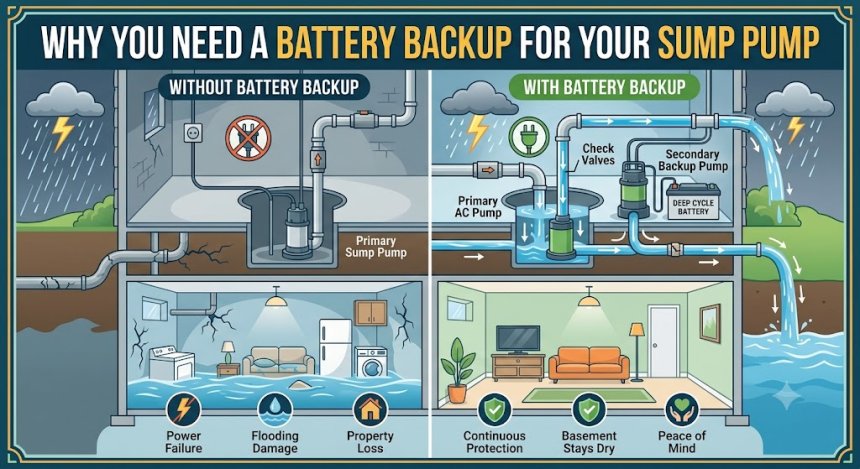
Relying on a single AC-powered primary sump pump leaves your property vulnerable to mechanical, electrical, and hydraulic single-point failures.
                  PRIMARY AC PUMP vs. BATTERY-BACKUP SYSTEM

    [ AC Grid Power ] ---> [ Primary AC Sump Pump ]
            |                       |
     (Storm Outage)         (Mechanical Failure)
            |                       |
            v                       v
    [ SYSTEM FAILS ]       [ SYSTEM FAILS ]
            \                       /
             v                     v
          +-------------------------------+
          |  WITHOUT BACKUP: FLOODING     |
          +-------------------------------+

    [ DC Battery ] ------> [ Secondary DC Pump ] ---> [ CONTINUOUS PROTECTION ]
1. Hydrostatic Pressure Siphonage During Grid Failures
During extreme weather events, soil saturation reaches maximum capacity, creating intense hydrostatic pressure beneath foundation slabs. Water naturally flows through perimeter drain tile into the sump pit via gravity. If the primary pump loses AC power, incoming water rapidly overcomes the basin volume, causing liquid to siphon upward through slab construction joints and flood basement living areas.
2. Primary Motor Thermal Overload & Mechanical Jamming
Even if electrical power remains uninterrupted, primary pumps fail under continuous duty cycles. Small rocks, silt, or debris entering the intake volute can jam the internal impeller, stalling the motor shaft. This draws locked-rotor amperage, tripping the thermal overload switch and leaving the pump non-functional while water continues to rise.
3. Float Switch Failure Mechanics
Mechanical float switches are the single highest failure point in sump systems. Over time, vibration shifts the pump, causing tethered or vertical floats to pin against the pit wall. A stuck float prevents switch contact closure, leaving the primary motor off regardless of basin water height.
Primary AC Pumps vs. Secondary Battery-Backup Systems
| Feature | Primary AC Sump Pump | Secondary DC Battery-Backup System |
| Power Source | Standard 120V AC Household Grid | Deep-Cycle Marine DC Battery (AGM / Maintenance-Free) |
| Trigger Mechanism | Primary Lower Float Switch | Independent Secondary Upper Float Switch |
| Operation During Outage | Stops working completely | Runs automatically for 24–48 hours of intermittent pumping |
| Pumping Capacity (GPH) | High (3,000 – 4,500 Gallons Per Hour) | Medium-High (1,500 – 3,000 Gallons Per Hour) |
| System Duty Cycle | Continuous primary groundwater removal | Emergency backup during power loss, switch failure, or overflow |
| Average Equipment Lifespan | 7 – 10 years | Pump: 7–10 years |
Deep Dive: How a Dual-Pump Backup System Operates
A battery-backup system acts as an independent guardian alongside your primary unit, creating a redundant defense system.
                     DUAL-PUMP BASIN CONFIGURATION

                        [ Common Discharge Line ]
                                   ||
                   +---------------||---------------+
                   | Check Valve B || Check Valve A |
                   +---------------||---------------+
                                   ||
  +--------------------------------||--------------------------------+
  | Basement Floor                 ||                                |
  +--------------------------------||--------------------------------+
                                   ||
          +------------------------||------------------------+
          | Sump Pit               ||                        |
          |                        ||                        |
          |               +--------||-------+                |
          |               | Secondary Upper |                |
          |               | Float Switch    |                |
          |               +--------+--------+                |
          |                        |                         |
          |               +--------v--------+                |
          |               | Secondary DC    |                |
          |               | Backup Pump     |                |
          |               +-----------------+                |
          |                                                  |
          |               +-----------------+                |
          |               | Primary AC Pump |                |
          |               +-----------------+                |
          +--------------------------------------------------+
1. Dual Float Staging
The primary AC pump float switch sits lower in the pit (e.g., 6 inches above the basin floor). The secondary battery-backup float switch mounts 3 to 6 inches above the primary activation point. Under normal conditions, the primary pump cycles on and off, keeping water well below the backup float.
2. Smart Battery Charging & Switching
The backup system plugs into a wall outlet to maintain a trickle charge on a heavy-duty 12V deep-cycle marine battery. When the power cuts out or the primary pump fails, rising water engages the secondary upper float switch. The smart controller instantly draws 12V DC power from the battery bank to drive the auxiliary pump motor.
Hidden Pro Tips & Secrets from Master Plumbers
-
Always Use AGM Maintenance-Free Batteries: Conventional lead-acid batteries require periodic topping off with distilled water and off-gas flammable hydrogen under charge. Modern Absorbed Glass Mat (AGM) deep-cycle batteries are factory-sealed, maintenance-free, and last up to 5 years without acid spills or dangerous off-gassing.
-
Install Separate Discharge Lines (Or High-Flow Y-Check Valves): Tieing both primary and secondary pumps into a single 1.5-inch discharge pipe restricts flow when both pumps try to run simultaneously during massive storm surges. Installing dual independent discharge lines or a high-flow dual-check-valve manifold prevents back-pressure locks.
-
Smart Monitoring & Wi-Fi Alerts: Modern backup controllers feature Wi-Fi connectivity. They send instant text or app push alerts to your smartphone if AC power drops, battery voltage falls below 12.1V, or the backup pump activates while you are away from home.
-
Water-Powered Backups as an Alternative: If your home uses municipal city water (not a private well pump), consider a water-powered backup pump. These units use municipal water pressure (venturi effect) to evacuate pit water endlessly without needing electrical batteries.
-
Set Up a Visual Battery Maintenance Log: Tape a waterproof maintenance sticker to the top of the battery box recording the installation date and voltage checks. Test battery voltage with a multimeter every spring and fall; replacing a weak battery costs far less than restoring a flooded basement.
Step-by-Step DIY Maintenance & Inspection Guide
Perform this diagnostic routine every 3 months to guarantee your backup system responds instantly when a storm hits.
+-----------------------------------------------------------------+
|                        SAFETY FIRST                             |
|  Never touch battery terminals with metal tools or bare skin!   |
|  Wear protective eyewear when working around battery leads.     |
+-----------------------------------------------------------------+
                                |
                                v
+-----------------------------------------------------------------+
|  STEP 1: Visual Controller & Terminal Check                     |
|  Inspect charger lights; clean white corrosion off terminals.   |
+-----------------------------------------------------------------+
                                |
                                v
+-----------------------------------------------------------------+
|  STEP 2: Test DC Battery Voltage                                |
|  Use a digital multimeter; confirm resting charge reads >12.6V. |
+-----------------------------------------------------------------+
                                |
                                v
+-----------------------------------------------------------------+
|  STEP 3: Simulate Power Outage                                  |
|  Unplug primary AC pump power cord from wall outlet completely.|
+-----------------------------------------------------------------+
                                |
                                v
+-----------------------------------------------------------------+
|  STEP 4: Conduct Secondary Float Lift Test                      |
|  Manually lift secondary float switch; verify DC pump runs.    |
+-----------------------------------------------------------------+
                                |
                                v
+-----------------------------------------------------------------+
|  STEP 5: Restore AC Power & Re-verify Charging                  |
|  Plug primary unit back in; confirm charger returns to float.   |
+-----------------------------------------------------------------+
Safety Warnings
-
Chemical & Spark Hazards: Lead-acid batteries contain sulfuric acid. Never short-circuit battery terminals, as high DC current will instantly melt metal tools, burn wiring, or ignite hydrogen gas.
-
Never Run Pumps Dry: Running a DC backup pump out of water for more than 5 seconds will burn out the mechanical shaft seal, causing premature motor failure.
Step-by-Step Instructions
-
Check System Display: Examine the battery charger control box. Confirm the green "AC Power On" and "Battery Charged" status indicators are lit without warning beeps.
-
Inspect Terminal Connections: Inspect battery posts for white or blue corrosion powder. Disconnect terminals and clean cable ends with a wire brush if buildup is present.
-
Test Battery Voltage: Disconnect the charger and attach a digital multimeter across the battery terminals. A healthy, fully charged 12V battery should measure between 12.6V and 13.2V DC.
-
Isolate Primary Pump: Unplug the primary AC pump from the wall outlet to simulate a total power grid outage.
-
Test Secondary Float Activation: Lift the secondary float switch arm manually inside the basin (or pour 5 gallons of water into the pit). The DC backup pump should engage immediately, pumping water out with a strong, steady hum.
-
Re-engage Primary Power: Lower the float switch, reconnect the primary AC pump, and confirm the smart charger resumes trickle-charging the battery bank.
If your battery controller beeps constantly, fails to hold a 12.6V charge, or shows signs of motor burnout, contact
24x7 American Plumber at 762-383-0288 for immediate professional diagnostic service.
Safe DIY vs. Requires a Licensed Professional
Knowing what tasks are safe for homeowners versus those requiring licensed plumbing and electrical work prevents property damage and code violations.
| Maintenance Task | Safe for DIY Homeowners | Requires a Licensed Professional |
| System Inspections | Checking charger lights, cleaning battery terminals, testing floats | Sizing backup GPH capacity based on peak foundation water inflow |
| Battery Upgrades | Swapping out old 12V AGM batteries with direct plug connections | Hard-piping dual discharge lines or installing silent dual check valves |
| Maintenance Checks | Conducting 5-gallon bucket activation tests | Installing water-powered backup systems connected to main potable water lines |
| Alert Testing | Connecting smart controllers to home Wi-Fi networks | Modifying electrical panels or adding dedicated 20-amp GFCI circuits |
Professional Equipment & Industry Cost Context
Master plumbers use high-capacity commercial equipment and dual-pump assemblies to deliver complete flood protection.
      BATTERY-BACKUP CONTROLLER               HIGH-FLOW DUAL-CHECK MANIFOLD

       +-------------------------+                     [ Main Discharge ]
       |  STATUS: System OK      |                             ||
       |  VOLTS: 13.1V DC        |                   +---------++---------+
       |  ALARM: [TEST / SILENCE]|                   | Check B  | Check A |
       +------------+------------+                   +----+-----+----+----+
                    |                                     |          |
            [ Smart Sensors ]                        [DC Pump]  [AC Pump]
How Plumbers Work
-
Dual-Pump Pre-Assembled Combination Kits: Techs install factory-engineered dual-pump manifolds featuring cast-iron primary pumps paired with high-output secondary DC pumps mounted on a single non-corrosive base plate.
-
Potable Backflow Prevention (Water-Powered Systems): When installing water-powered backup systems, plumbers fit code-mandated Reduced Pressure Zone (RPZ) backflow preventers to keep pit water from back-siphoning into drinking water lines.
-
Dual AGM Battery Banks: For high-water-table regions, plumbers wire two 12V batteries in parallel, doubling backup pump runtime to up to 96 hours during extended regional power outages.
Realistic Industry Cost & Lifespan Estimates (US Standard)
-
Standalone Replacement AGM Deep-Cycle Battery: $180 – $300 (Lifespan: 3 – 5 years)
-
DIY Battery-Backup Pump Kit (Unit Only): $300 – $700
-
Professional Battery-Backup System Installation: $900 – $1,800 (Includes high-capacity pump, smart charger, AGM battery, & plumbing tie-in)
-
Professional Water-Powered Backup System Installation: $1,200 – $2,200 (Includes RPZ backflow device & main line tap)
-
Average Basement Flood Cleanup Cost: $5,000 – $25,000+
When to Call the Pros
Do not wait for a major hurricane or summer cloudburst to discover your backup pump isn't working.
Call a Professional Immediately If:
-
The Battery Alarm Beeps Continuously: Persistent beeping indicates a dead battery cell, controller circuit failure, or blown internal fuses.
-
Your Primary Pump Keeps Tripping Circuit Breakers: Repeated electrical trips place total reliance on your backup system, which will eventually drain the battery if the primary issue isn't fixed.
-
Water Backups During Heavy Rain: If water rises above both floats during severe rain, your current pumping capacity is undersized for your foundation's water table.
-
No Backup System Currently Installed: Operating a home with a finished basement or high water table without a secondary backup pump exposes you to massive financial loss.
Protect your basement investment with certified plumbing expertise. Contact 24x7 American Plumber for complete sump pump system evaluations, battery backup upgrades, and emergency flood prevention.
-
Direct Phone:
762-383-0288 -
Web Services & Scheduling:
24x7americanplumber.com -
Service Scope: 24/7 Emergency Service & Flood Prevention Solutions Nationwide across the USA
Frequently Asked Questions (FAQs)
Q: How long will a battery-backup sump pump run during a power outage?
A: A fully charged AGM deep-cycle battery typically powers a secondary pump for 5 to 7 hours of continuous pumping, or up to 24 to 48 hours of intermittent cycling (running every 2 to 3 minutes) during a standard storm power outage.
Q: Can I use a standard car battery for my backup sump pump?
A: No. Car batteries are designed to deliver a short, high-amp burst to start an engine and must be recharged immediately by an alternator. Backup sump pumps require deep-cycle marine or AGM batteries engineered to deliver steady, continuous power over many hours and handle deep discharge cycles.
Q: Does a battery-backup sump pump turn on automatically when the power goes out?
A: The backup pump turns on based on water height, not power state. If the primary AC pump stops working due to a power outage, rising water in the pit lifts the secondary float switch, which automatically activates the DC backup pump using battery power.
Q: What is better: a battery-backup sump pump or a water-powered backup pump?
A: Battery-backup systems work on all homes regardless of water source and offer high pumping flow rates. Water-powered backups run indefinitely without batteries, but require high municipal water pressure (40+ PSI) and cannot be used on properties served by private well pumps.