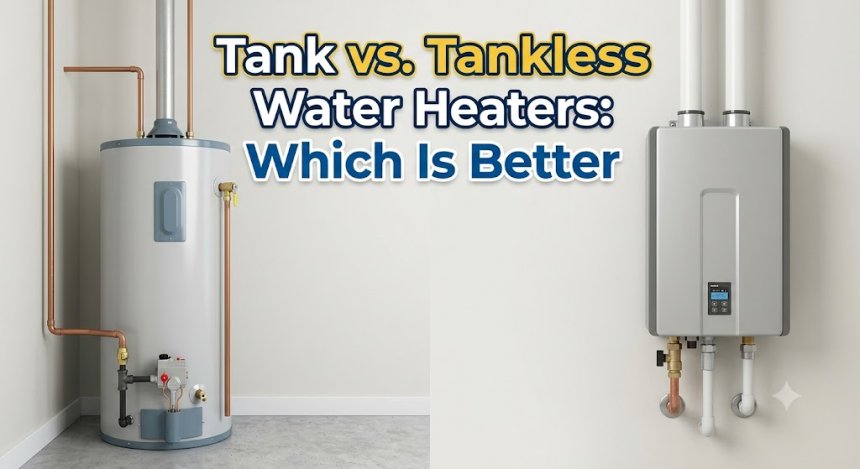
Tank vs. Tankless Water Heaters: Which Is Better
Is your water heater making popping or rumbling noises? Learn what causes sediment buildup, DIY flushing tips, repair costs, and when to call a pro.

Why Is My Water Heater Making a Popping or Rumbling Noise?
A popping or rumbling noise from your water heater is almost always caused by heavy sediment accumulation at the bottom of the tank. As hard water minerals settle and bake into a concrete-like layer, water gets trapped underneath, boils, and violently bursts through the sediment shell.
The Physics Behind the Noise: How Sediment Traps Steam
To understand why your water heater sounds like a kettle on full boil or popcorn popping in a microwave, you have to look at the chemistry of tap water and basic thermodynamics.
                    [ HOT WATER OUTLET ]
                             │
       ┌─────────────────────┴─────────────────────┐
       │                                           │
       │              HEATED WATER                 │
       │                                           │
       │~~~~~~~~~~~~~~~~~~~~~~~~~~~~~~~~~~~~~~~~───│ <── Trapped Steam Bubbles
       │███████████████████████████████████████████│ <── Hard Mineral Sediment Layer
       └─────────────────────┬─────────────────────┘
                             │
                     [ BURNER / ELEMENT ]
1. Thermal Precipitation and Mineral Calcification
Tap water contains dissolved minerals, primarily calcium carbonate and magnesium. When water is heated above 120°F, these minerals lose their solubility and precipitate out of the liquid, forming solid micro-crystals. Over months and years, these crystals settle at the bottom of your water heater tank, gradually hardening into a thick layer of scale.
2. Trapped Water and Micro-Boiling
In gas water heaters, the burner sits directly beneath the bottom tank head. In electric units, lower heating elements stick out into this lower zone. When the burner fires up, it must heat through the heavy layer of mineral scale before reaching the water above. Water becomes trapped beneath and within the porous sediment layer.
3. Hydraulic Expansion and Popping Explosions
Because the sediment layer insulates the water trapped underneath, that localized water rapidly overheats past its boiling point. It flashes into steam bubbles. As these high-pressure steam bubbles force their way upward through the compacted mineral crust, they collapse and violently burst upon contact with the cooler water above. That miniature hydraulic explosion creates the loud popping, thumping, or deep rumbling sound reverberating through your plumbing system.
Other Common Water Heater Noises and What They Mean
While popping and rumbling are the most frequent complaints, water heaters can make several distinct sounds. Diagnosing the exact sound helps pinpoint the mechanical issue before major damage occurs.
-
Squealing or High-Pitch Whistling: Usually caused by water forcing its way through a restricted valve—often a partially closed inlet valve or an accumulation of scale inside the hot water outlet nipple.
-
Sizzling or Hissing: On gas units, this typically happens when condensation drips onto the hot burner assembly. On electric units, it indicates that scale has completely encased an electric heating element, causing localized boiling.
-
Ticking or Tapping: Often caused by heat traps (small check valves inside the nipple connections) or thermal expansion as copper pipes expand and rub against wooden wall studs.
-
Hammering or Loud Banging: Known as water hammer, this occurs when a high-pressure shockwave travels back through the pipes when a valve shuts off abruptly.
The Hidden Dangers: Why You Shouldn't Ignore The Noise
A noisy water heater isn't just an annoyance—it's a warning signal that your system is working under severe mechanical stress.
+------------------------------------------------------------------------+
|                      THE CYCLE OF TANK FAILURE                         |
|                                                                        |
|  [Mineral Buildup] ──> [Insulates Tank Bottom] ──> [Overheats Steel]   |
|         ▲                                                 │            |
|         │                                                 ▼            |
|  [Tank Replacement] <── [Catastrophic Leak] <── [Cracks Protective Glass]|
+------------------------------------------------------------------------+
-
Extreme Thermal Stress and Metal Fatigue: The sediment layer acts as a thermal blanket, keeping heat trapped against the steel bottom of the tank. Steel temperatures can reach over 1,000°F under heavy sediment, causing the metal to expand unevenly and stress welded seams.
-
Glass Lining Fracture: Porcelain enamel (glass lining) coats the inside of steel water heater tanks to prevent rust. Overheating the steel causes it to flex beyond the expansion rate of glass, causing microscopic cracks in the lining and exposing raw steel to corrosive water.
-
Spiking Utility Bills: Scale is a thermal insulator. Your burner must stay on significantly longer to heat the same volume of water, consuming up to 25–30% more gas or electricity every month.
-
Premature Anode Rod Consumption: The sacrificial anode rod works double-time to protect exposed raw steel, depleting prematurely and leaving your tank defenseless against rust.
Need immediate help with a noisy or leaking unit? Don't wait for a flood. Call our licensed technicians at
762-383-0288 for same-day service and tank inspections.
Safe DIY Maintenance vs. Professional Repair
While flushing light sediment can be a straightforward DIY task, working with high-pressure hot water, electrical circuits, and gas lines carries real risks.
Step-by-Step DIY Guide: Flushing Light Sediment Safely
If your tank is making mild popping noises, performing a full water heater flush can clear light, un-compacted sediment before it hardens.
     DIY WATER HEATER FLUSHING FLOW
     ──────────────────────────────
     [1. Cut Power / Gas] ──> [2. Shut Off Cold Water]
              │
              ▼
     [3. Connect Garden Hose] ──> [4. Open T&P Valve & Drain]
              │
              ▼
     [5. Flush Clean] ──> [6. Refill & Restore Power]
Safety Equipment Needed:
-
Heavy-duty leather or rubber work gloves
-
Eye protection
-
Standard garden hose (short length preferred)
-
Flathead screwdriver or pliers
-
Bucket or drain access (floor drain, driveway, or basin)
Step 1: Shut Off the Energy Source
-
For Electric Water Heaters: Switch off the dedicated breaker inside your main electrical panel. Never work on an electric unit with the breaker live.
-
For Gas Water Heaters: Rotate the gas control valve dial on the front of the unit from "ON" to the "PILOT" or "OFF" setting.
Step 2: Shut Off the Cold Water Supply
Locate the cold water shut-off valve on the pipe leading into the top of the tank (usually marked with a blue handle or cap). Turn the valve clockwise until fully closed.
Step 3: Attach the Drain Hose
Connect your garden hose securely to the drain valve located at the bottom of the water heater tank. Direct the other end of the hose to a floor drain, sump basin, or outside driveway.
Step 4: Open a Hot Water Faucet and the Drain Valve
Open a hot water faucet on the floor above the water heater (this breaks the vacuum and lets air into the system). Carefully open the drain valve at the bottom of the tank using your screwdriver or valve handle.
Step 5: Flush and Inspect
Let the water drain completely. Caution: The water coming out will be scalding hot. Observe the discharge for discoloration, white sand-like particles, or brown flakes. Once empty, turn the cold water supply valve back on in short 30-second bursts to stir up and flush out remaining loose sediment.
Step 6: Refill and Restart
Close the drain valve and disconnect the hose. Keep the upstairs hot water faucet open while turning the main cold water supply back on. Once a steady stream of water (without sputtering air) flows from the upstairs faucet, turn off the faucet. Finally, turn the electric breaker back on or return your gas valve to "ON."
Plumber Work: How Pros Clear Deeply Calcified Sediment
When sediment hasn't been flushed for years, standard gravity draining won't work. Hardened calcium forms a solid brick at the base of the tank, blocking the factory drain valve entirely. Here is how master plumbers solve the issue:
┌─────────────────────────────────────────────────────────────────┐
|                  PROFESSIONAL SEDIMENT EXTRACTION               |
├─────────────────────────────────────────────────────────────────┤
| 1. High-Flow Valve Upgrade: Plastic valve removed; full-port    |
|    1/2" or 3/4" brass ball valve installed for maximum flow.    |
|                                                                 |
| 2. Mechanical De-Scaling: Curved mechanical agitators break up  |
|    calcified sediment chunks safely without cracking glass wall.|
|                                                                 |
| 3. Reverse Pressure Flushing: Hydro-injection tools blast air   |
|    and high-pressure water back into the drain port.            |
|                                                                 |
| 4. Thermal Inspection: Digital cameras evaluate glass wall      |
|    integrity and heating element scale buildup.                 |
└─────────────────────────────────────────────────────────────────┘
If the tank shows signs of severe glass lining fracture or seam corrosion during the inspection, a professional plumber will recommend replacing the unit rather than risking a total tank rupture.
Equipment Lifespan, Costs, and Replacement Context
Knowing standard repair and replacement costs helps you make an educated decision when your system starts making noise.
       EXPECTED LIFESPAN OF WATER HEATER TYPES
       ────────────────────────────────────────
       Standard Tank (Gas/Electric) : 8 - 12 Years
       Tankless Water Heater        : 15 - 20 Years
       Hybrid Heat Pump Tank        : 10 - 15 Years
Estimated Industry Repair & Replacement Costs (US Average):
-
Professional Tank Flush & Maintenance Inspection: $150 – $300
-
Drain Valve Replacement (High-Flow Brass Conversion): $175 – $350
-
Heating Element or Thermostat Replacement (Electric): $200 – $450
-
Complete Water Heater Replacement (Tank-Style): $1,200 – $2,800 (Includes unit, labor, permit, and code compliance)
-
Conversion to Tankless Water Heater: $2,500 – $4,500+
Rule of Thumb: If your tank-style water heater is over 8–10 years old and requires a repair costing more than 50% of a new installation, replacing the unit is almost always the more cost-effective choice long term.
Need an honest assessment of your water heater? Contact 24x7 American Plumber at
762-383-0288 . We provide upfront pricing with zero hidden fees.
When to Call the Pros
Some water heater symptoms demand immediate professional attention. Shut off your system and call a plumber right away if you notice any of the following:
-
Active Water Leaking from the Bottom: Water pooling under the tank usually indicates a rusted-through inner steel shell.
-
Popping Accompanied by Burning Odors: Smelling gas or electrical burning near the controls indicates a major fire hazard.
-
Water Flowing from the T&P Valve: Indicates dangerous over-pressurization or excessive temperatures inside the tank.
-
Rusty or Foul-Smelling Hot Water: A sign that internal corrosion is dissolving your tank walls or the sacrificial anode is completely gone.
Frequently Asked Questions
Can a noisy water heater explode?
While modern water heaters have safety devices like the Temperature and Pressure (T&P) Relief Valve to prevent excessive pressure buildup, extreme sediment accumulation can block safety ports or cause sudden structural tank failure, leading to major flooding.
How often should I flush my water heater to prevent popping noises?
In areas with standard water hardness, flush your water heater once every 12 months. If you live in an area with hard water, flush the system every 6 months or install a whole-home water softener to stop scale accumulation.
Will turning down the thermostat stop the rumbling noise?
Lowering the temperature setting to 120°F slows down mineral precipitation slightly, but it will not remove sediment that has already accumulated at the bottom of the tank. The tank must be physically flushed or mechanically cleaned.
Why is my tankless water heater making a clicking or hum noise?
Tankless water heaters do not store water, so popping noises from standing sediment are rare. Clicking noises typically point to the ignition electrode lighting the burner, while humming usually stems from fan vibration or flow control valves. However, hard water scale can still coat the heat exchanger, requiring annual descaling with a vinegar flush.
Need Emergency Water Heater Service? Contact 24x7 American Plumber Today!
Don't let a noisy water heater turn into a sudden flood. At 24x7 American Plumber, our master plumbing technicians are ready to help with complete diagnostics, flushing, repairs, and energy-efficient replacements.
-
Call Us 24/7:
762-383-0288 -
Visit Us Online:
24x7americanplumber.com -
Service Scope: Proudly serving residential and commercial properties across the USA with fast, emergency response.