How Often Should Drains Be Cleaned Professionally?
How often should you clean your drains professionally? Discover recommended schedules, hidden maintenance tips, costs, and expert cleaning methods today.

How Often Should You Have Your Drains Professionally Cleaned
You should have your main sewer line and secondary drains professionally cleaned once every 1 to 2 years for standard single-family homes. Commercial properties, large households, older residences with cast-iron pipes, or homes with heavy surrounding tree roots should schedule professional drain cleaning annually.

The Physics and Chemistry Behind Drain Buildup
Drainage networks rely on gravity flow, smooth pipe walls, and negative pressure equalization to move wastewater away from your home. Over time, several hydraulic and chemical processes slow this drainage down:
                  DRAIN RESTRICTION MECHANICS
                  ───────────────────────────
  [Laminar Flow Surface Friction]  ──> Soap scum & grease adhere to rough pipe walls
                                                   │
                                                   ▼
  [Biofilm Layer Accumulation]     ──> Organic waste & hair form thick, sticky gel
                                                   │
                                                   ▼
  [Sediment Calcification]         ──> Minerals precipitate out & harden in trap bends
                                                   │
                                                   ▼
  [Hydraulic Capacity Reduction]   ──> Pipe diameter shrinks, causing negative siphonage
1. Boundary Layer Drag and Roughness Coefficients
In fresh PVC or newly scoured cast-iron pipes, wastewater experiences minimal friction, maintaining a smooth velocity (laminar flow). As grease, bath oils, and soap scum enter the line, they stick to the lower invert of the pipe. This buildup increases wall roughness, slowing fluid velocity and allowing suspended solids (like hair and paper) to settle out of the flow stream.
2. Mineral Calcification and Scale Formation
Hard water containing dissolved calcium and magnesium ions reacts with fat acids in soaps to form an insoluble substance commonly called "soap curd." Over months of daily use, this curd hardens along drain elbows and P-trap bases through mineral calcification, gradually restricting a 2-inch branch line down to less than an inch.
3. Tree Root Geotropism and Joint Intrusion
Underground clay and cast-iron sewer laterals consist of interconnected 4- to 5-foot pipe segments. Micro-cracks or loose mortar joints release moisture vapor into the surrounding soil. Tree roots sense this humidity gradient (hydrotropism) and grow through microscopic gaps. Once inside, roots feed on nutrient-rich wastewater, multiplying into dense masses that trap toilet paper and solids.
Recommended Cleaning Frequency by Property Type
Cleaning schedules depend on usage volume, pipe material, household size, and environmental surroundings.
| Property / System Type | Recommended Cleaning Frequency | Primary Maintenance Method | Primary Risk Factor |
| Single-Family Home (1–3 Occupants) | Every 2 Years | Mechanical Snaking / Hydro Jetting | Hair, soap scum, light grease |
| Large Family Home (4+ Occupants) | Annually | High-Pressure Hydro Jetting | High water volume, food debris, paper |
| Older Homes (Cast Iron / Clay Pipes) | Every 12 Months | Video Inspection & Hydro Jetting | Pipe corrosion scale & root intrusion |
| Commercial Kitchen / Restaurant | Every 3 to 6 Months | Heavy Grease Hydro Jetting | Fats, Oils, and Grease (FOG) |
| Rental / Multi-Family Properties | Annually (Between Tenancies) | Camera Scope & Line Flushing | Unpredictable occupant disposal habits |
Safe DIY Maintenance vs. Professional Plumbing Scope
Property owners can safely perform basic preventative flushes, but deep line scouring and root clearing require specialized commercial machinery.
| Diagnostic or Cleaning Task | Safe for DIY? | Requires a Licensed Professional |
| Routine Baking Soda & Vinegar Enzyme Flushes | Yes | Optional |
| Clearing Hair Strands from Pop-Up Strainers | Yes | Optional |
| Hand-Snaking Secondary Sink Traps (Under 15 Feet) | Moderate | Optional |
| Clearing Main Lines with 100-ft Commercial Augers | No | Recommended |
| High-Definition Fiber-Optic Camera Inspections | No | Yes (Diagnostic Equipment) |
| High-Pressure Hydro Jetting (3,000+ PSI) | No | Yes (Safety Hazard) |
| Trenchless Epoxy Pipe Lining / Underground Repair | No | Yes (Permit Required) |
Step-by-Step DIY Guide: Monthly Preventative Drain Maintenance
Performing a gentle organic flush every month prevents minor grease layers from solidifying into dense blockages between professional cleanings.
       MONTHLY PREVENTATIVE MAINTENANCE FLOW
       ─────────────────────────────────────
 [Step 1: Run Hot Tap Water for 60 Seconds]
                     │
                     ▼
 [Step 2: Pour 1/2 Cup Baking Soda Down Drain]
                     │
                     ▼
 [Step 3: Follow with 1 Cup White Vinegar & Seal]
                     │
                     ▼
 [Step 4: Wait 15 Minutes & Flush with Boiling Water]
Safety Equipment Needed:
-
Safety goggles and heavy rubber gloves
-
1/2 cup baking soda
-
1 cup white distilled vinegar
-
1 gallon boiling water
-
Drain plug or damp rag
Step 1: Warm the Drain Lines
Run hot tap water down the drain fixture for 60 seconds to raise the internal pipe temperature and soften trace grease deposits along the P-trap.
Step 2: Apply the Natural Cleanser
Pour 1/2 cup of baking soda (sodium bicarbonate) directly down the drain opening, ensuring it reaches the trap bend.
Step 3: Trigger the Chemical Reaction
-
Pour 1 cup of warm white distilled vinegar (acetic acid) down the drain immediately after the baking soda.
-
Cover the drain opening tightly with a drain plug or damp rag to trap the carbon dioxide foam inside the pipe.
-
Allow the fizzing reaction to loosen organic biofilm for 15 to 20 minutes.
Step 4: Perform a Thermal Flush
Carefully pour 1 gallon of boiling water down the drain to wash away loosened debris and flush the trap clean.
Experiencing slow drains across multiple rooms despite monthly maintenance? Deep main line blockages require heavy commercial machinery. Contact 24x7 American Plumber at
762-383-0288 for professional drain camera scope diagnostics and hydro-jetting services.
Pro "Hidden Tips" for Preventative Drain Care
-
Avoid Caustic Chemical Drain Cleaners Entirely: Commercial liquid drain openers contain concentrated sodium hydroxide or sulfuric acid. These chemicals generate high heat inside standing water columns, which can soften PVC joints, corrode old cast-iron walls, and create severe chemical burn risks for technicians servicing the line later.
-
Install Mesh Basket Strainers in Every Basin: Stainless steel mesh strainers cost very little, yet they catch up to 90% of hair, soap chips, and food particles before waste enters your branch piping.
-
Use Bio-Enzymatic Cleaners Quarterly: Unlike caustic chemicals, biological enzyme cleaners contain live, harmless bacteria that digest organic waste, grease, and hair biofilms continuously over 8 to 12 hours without harming metal or plastic pipe walls.
Plumber Work: How Master Plumbers Clean Drains Safely
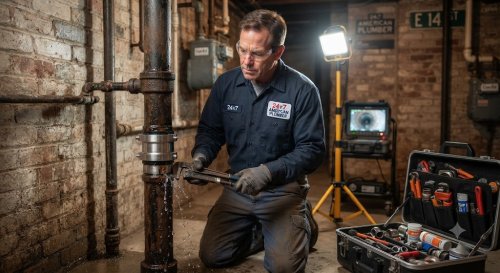
When a licensed plumber performs routine preventative drain cleaning or clears a severe backup, they execute a comprehensive diagnostic protocol:
┌─────────────────────────────────────────────────────────────────┐
|              PROFESSIONAL DRAIN CLEANING WORKFLOW               |
├─────────────────────────────────────────────────────────────────┤
| 1. High-Definition Camera Inspection: Inspect pipe walls for    |
|    cracks, offsets, root intrusion, or sagging (bellies).       |
|                                                                 |
| 2. Mechanical Cable Augering: Use C-cutter blades to punch a    |
|    relief channel through solid obstructions and standing water. |
|                                                                 |
| 3. Commercial Hydro-Jetting: Scour 360 degrees of pipe walls    |
|    using 3,000–4,000 PSI water streams at 12 GPM.              |
|                                                                 |
| 4. Post-Cleaning Video Audit: Re-insert camera to confirm 100%  |
|    restoration of internal pipe diameter and structural integrity.|
└─────────────────────────────────────────────────────────────────┘
Need a precise diagnosis of your underground pipes? Specialized tools like hydro-jetters and sewer cameras restore full flow fast. Contact 24x7 American Plumber at
762-383-0288 to schedule a camera inspection.
Realistic Cost Estimates and Equipment Lifespan Breakdown
Understanding industry standard service costs helps property owners plan routine maintenance budgets effectively.
                  EXPECTED DRAINAGE SYSTEM LIFESPAN
 ─────────────────────────────────────────────────────────
 Schedule 40 PVC Waste Lines   : 50 - 100 Years
 Cast Iron Soil Pipes          : 30 - 50 Years
 Underground Clay Lateral Pipe : 20 - 30 Years
Estimated US Industry Service Costs:
-
Routine Secondary Line Snaking (Sink / Shower): $150 – $250
-
Main Sewer Line Mechanical Snaking: $250 – $450
-
Sewer Line HD Camera Scope Inspection: $200 – $450
-
Commercial Hydro-Jetting Service (Main Line): $450 – $1,000+
-
Annual Preventative Drain Maintenance Package: $250 – $500
Value Analysis: Investing $300 in routine preventative drain cleaning every 1 to 2 years prevents catastrophic sewer backups that typically cost $3,000 to $10,000+ in water damage restoration and emergency structural repairs.
When to Call the Pros
You should bypass DIY maintenance and contact a certified plumbing authority immediately under any of the following conditions:
-
Wastewater Backing Up into Low-Lying Showers or Tubs: Indicates a full main sewer line stoppage requiring heavy commercial equipment.
-
Gurgling Toilets When Running Faucets or Washing Machines: Points to severe negative pressure caused by a blocked main stack or roof vent.
-
Recurring Drain Clogs Within 30 Days: Signals that simple snaking left behind heavy grease, scale, or tree root masses that require hydro jetting.
-
Foul Sewer Odors Emerging from Multiple Fixtures: Indicates dried P-traps, broken vent stacks, or a leaking underground sewer lateral.
Frequently Asked Questions
Why do my drains need professional cleaning if they aren't completely clogged?
Even if water flows out of your sinks, grease, hair, and mineral scale collect along pipe walls over time. Waiting for a complete blockage can result in sewage backing up into your home, causing property damage and health hazards that are far more expensive than routine preventative cleaning.
Is hydro jetting safe for older pipes?
Hydro jetting is safe for sound cast-iron, PVC, and clay pipes when performed by a licensed plumber. However, if an initial fiber-optic camera inspection reveals severely corroded, collapsed, or thin-walled pipe sections, mechanical snaking or trenchless pipe lining is recommended instead.
How long does a professional drain cleaning service take?
A standard professional drain cleaning service—including initial camera inspection, mechanical snaking or hydro jetting, and a final video verification scan—typically takes 1 to 2 hours for standard residential properties.
What is the difference between snaking and hydro jetting?
Snaking uses a rotating wire cable to punch a hole through a solid blockage to restore water flow, leaving residual sludge on pipe walls. Hydro jetting uses high-pressure water streams to scour the entire 360-degree interior surface clean, removing grease, scale, and tree roots completely.
Keep Your Drains Flowing Smoothly with 24x7 American Plumber
Don't wait for a clogged main line to flood your home or property. Trust the certified master plumbers at 24x7 American Plumber for 24/7 emergency response, video camera diagnostics, high-pressure hydro jetting, and affordable preventative maintenance plans across the United States.
-
Call Us 24/7:
762-383-0288 -
Schedule Service Online:
24x7americanplumber.com -
Our Promise: 24/7 Rapid Emergency Response, Transparent Upfront Pricing, and Dependable Workmanship Guaranteed