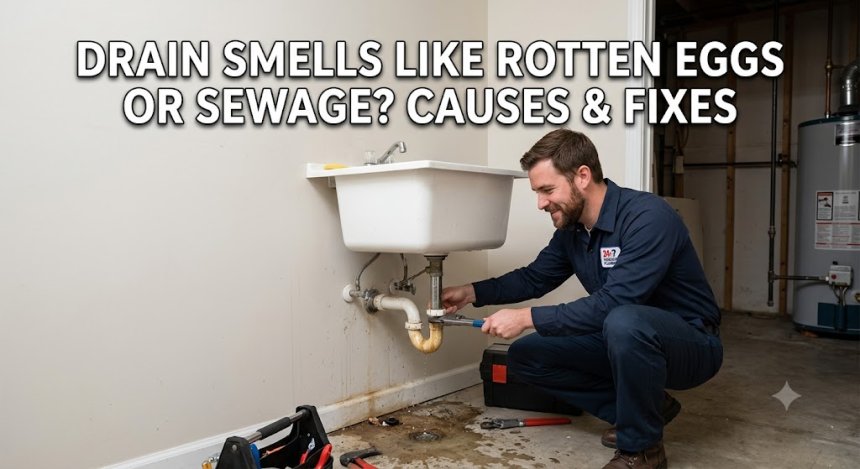
Drain Smells Like Rotten Eggs or Sewage? Causes & Fixes
Why does your drain smell like rotten eggs or sewage? Discover top causes like dry P-traps, biofilm, or anode rod issues, plus easy DIY fixes today.

Why Does My Drain Smell Like Rotten Eggs or Sewage?
A drain smells like rotten eggs or sewage primarily due to dry P-traps allowing hydrogen sulfide gas to escape, bacterial biofilm decomposing organic waste inside the pipe walls, clogged plumbing vent stacks, or a deteriorating water heater magnesium anode rod reacting with sulfates in your water supply.
The Physics and Chemistry Behind Drain Odors
Sewer gas contains a complex mixture of hydrogen sulfide ($H_2S$), methane ($CH_4$), ammonia ($NH_3$), and trace organic compounds. Understanding the mechanical and chemical dynamics that allow these foul gases to enter your living space is key to resolving the issue permanently.
                  ODOR TRANSMISSION DYNAMICS
                  ──────────────────────────
  [Dry P-Trap / Siphonage]     ──> Water barrier vanishes; sewer gas flows freely
                                               │
                                               ▼
  [Biofilm & Slime Buildup]    ──> Anaerobic bacteria break down organic waste ($H_2S$)
                                               │
                                               ▼
  [Blocked Vent Stack]         ──> Negative pressure pulls gas into living spaces
                                               │
                                               ▼
  [Anode Rod Reaction]         ──> Sulfate-reducing bacteria react in water heater
1. P-Trap Siphonage and Hydraulic Pressure
Every plumbing fixture is equipped with a U-shaped pipe bend called a P-trap. Under normal operating conditions, this trap retains a standing column of clean water (roughly 2 to 4 inches deep) that acts as an airtight hydraulic seal.
-
Dry Traps: In guest bathrooms or unused floor drains, this water barrier evaporates over several weeks.
-
Negative Siphonage: When a main sewer line or vent stack experiences a restriction, moving wastewater creates a vacuum effect down-line. This negative atmospheric pressure sucks the standing water out of nearby P-traps, breaking the hydraulic seal and letting sewer gas vent directly into your home.
2. Anaerobic Biofilm & Organic Decomposition
Over time, hair, soap scum, grease, and food particles coat the interior walls of drain tailpieces and overflow channels. Harmless soil bacteria colonize this organic layer, forming a slimy biofilm. In environments deprived of rapid air exchange, these micro-organisms digest the waste anaerobically (without oxygen), releasing hydrogen sulfide gas as a metabolic byproduct.
3. Chemical Reactions Inside the Water Heater
If the rotten egg odor appears exclusively when running hot water, the drain itself is usually not the culprit. Instead, sulfate-reducing bacteria present in hard municipal or well water react with the sacrificial magnesium or aluminum anode rod inside your water heater. This chemical reduction generates dissolved hydrogen sulfide gas that off-gases the second hot water exits your faucet aerator.
Direct Comparison: Root Causes and Diagnostic Triggers
| Odor Location & Symptom | Primary Cause | Typical Mechanism | Primary Solution |
| Unused Bathroom or Basement Drain | Dry P-Trap | Water barrier evaporated | Pour water & mineral oil down drain |
| Kitchen or Bathroom Sink Drain | Biofilm / Organic Sludge | Bacteria decomposing hair & soap | Deep cleaning / Mechanical scrub |
| Smell Exclusively from Hot Water | Water Heater Anode Rod | Magnesium reacting with sulfates | Replace with powered titanium anode |
| Multiple Drains + Gurgling Noises | Clogged Roof Vent / Main Sewer | Negative pressure pulling trap water | Clear vent stack / Hydro-jet main line |
| Outdoor Drain / Lawn Area | Broken Sewer Lateral | Underground pipe crack leaking gas | Camera scope inspection & line repair |
Safe DIY Diagnostics vs. Professional Plumbing Scope
While clearing light organic buildup or refilling a dry P-trap is entirely safe for property owners, addressing roof vents, gas leaks, or main sewer lines requires specialized safety protocols.
| Diagnostic or Repair Scenario | Safe for DIY? | Requires a Licensed Professional |
| Refilling Dry P-Traps with Water | Yes | Optional |
| Flushing Sink Overflow Basins & Tailpieces | Yes | Optional |
| Descaling Water Heater with Vinegar Solution | Moderate | Recommended |
| Replacing Water Heater Sacrificial Anode Rod | Moderate | Recommended |
| Clearing Main Sewer Blockages with Hydro-Jetting | No | Yes (Specialized Equipment) |
| Clearing Roof Vent Stacks (Fall & Height Hazard) | No | Yes (Safety Regulations) |
| Repairing Broken Cast-Iron / PVC Underground Mains | No | Yes (Code Enforced) |
Step-by-Step DIY Guide: Deep Cleaning Sink Traps & Overflow Channels
If your bathroom or kitchen sink drain produces a sour or rotten egg smell, follow this safe sequence to eliminate organic biofilm and restore your P-trap seal.
       DRAIN ODOR ELIMINATION SEQUENCE
       ───────────────────────────────
 [Step 1: Pour Hot Water Down Trap to Confirm Water Seal]
                        │
                        ▼
 [Step 2: Flush Sink Overflow Vents with Enzymatic Cleaner]
                        │
                        ▼
 [Step 3: Scrub Tailpiece with Baking Soda & Vinegar]
                        │
                        ▼
 [Step 4: Perform Final Hot Water Flush]
Safety Equipment & Items Needed:
-
Safety goggles and rubber gloves
-
1/2 cup baking soda
-
1 cup white distilled vinegar
-
Small bottle brush or flexible pipe cleaner
-
1 gallon boiling water
Step 1: Check and Refill the P-Trap
If the drain has not been used recently, run tap water for 30 seconds. To prevent rapid future evaporation in unused guest rooms, pour 2 tablespoons of mineral oil down the drain—the oil floats on top of the water column, preventing evaporation.
Step 2: Clean the Hidden Sink Overflow Channel
Bathroom sinks feature a hidden overflow opening near the top rim. Water and soap scum become trapped inside this inner cavity, cultivating heavy bacterial growth.
-
Place a funnel inside the overflow hole at the top of the sink basin.
-
Pour 1/2 cup of baking soda into the funnel, followed by 1 cup of warm white vinegar.
-
Allow the foaming action to work for 15 minutes to break down sticky mold and grease deposits.
Step 3: Scrub the Vertical Tailpiece
Insert a flexible bottle brush down through the main sink drain grate to scrub the walls of the vertical pipe section above the P-trap. Remove trapped hair and organic grime manually.
Step 4: Perform a Deep Flush
Flush the sink drain thoroughly with 1 gallon of hot water to wash away loosened debris and neutralize residual bacteria.
Persistent sewer odors returning despite cleaning? Underground pipe cracks or hidden vent blockages pose serious health risks. Call the licensed leak detection team at 24x7 American Plumber at
762-383-0288 for comprehensive diagnostics.
Pro "Hidden Tips" for Preventing Drain Odors
-
Switch to a Powered Titanium Anode Rod: If your hot water smells like rotten eggs, do not simply remove the anode rod without replacing it—doing so voids your water heater warranty and drastically accelerates tank rusting. Instead, install an electronic powered titanium anode rod. It stops corrosion using low-voltage electric pulses without generating hydrogen sulfide gas.
-
Beware of Caustic Chemical Drain Cleaners: Pouring harsh liquid chemical openers down a smelly drain rarely destroys thick biofilm deep in the pipe. The caustic acid can corrode vintage metal pipes, damage decorative sink pop-up stoppers, and create severe chemical splash hazards for plumbers performing mechanical repairs later.
-
Inspect Air Admittance Valves (AAVs): Under-sink island fixtures often use a one-way mechanical valve called an Air Admittance Valve (or "Cheater Vent") instead of a roof vent line. When the internal rubber seal inside an AAV wears out, it sticks open, allowing raw sewer gas to spill directly into your kitchen or bathroom cabinet.
Plumber Work: How Master Plumbers Trace and Eliminate Odors
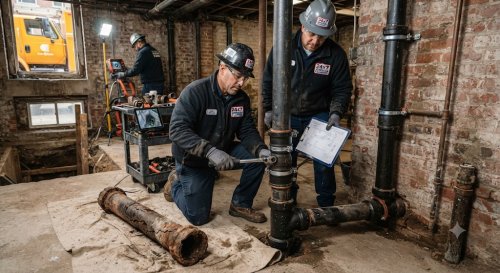
When standard cleaning fails to eliminate persistent sewer smells, a certified master plumber utilizes advanced diagnostic testing protocols:
┌─────────────────────────────────────────────────────────────────┐
|              PROFESSIONAL ODOR DIAGNOSTIC WORKFLOW              |
├─────────────────────────────────────────────────────────────────┤
| 1. Artificial Smoke Testing: Pump non-toxic, high-density smoke |
|    into the waste system to visually detect micro-cracks/leaks.  |
|                                                                 |
| 2. Fiber-Optic Camera Scope: Guide high-definition cameras      |
|    through main stacks to spot hidden belly traps or root tears|
|                                                                 |
| 3. High-Pressure Hydro Jetting: Scour 100% of pipe interior using|
|    3,500 PSI water streams to eliminate stubborn grease layers. |
|                                                                 |
| 4. Roof Vent Obstruction Audit: Inspect vent stacks for bird    |
|    nests, ice dams, or leaves causing negative pressure drops.  |
└─────────────────────────────────────────────────────────────────┘
Need a permanent solution for stubborn sewer line gas? Specialized tools like hydro-jetters and artificial smoke testing pinpoint hidden leaks fast. Contact 24x7 American Plumber at
762-383-0288 to book an expert camera or smoke audit.
Industry Cost Estimates and Equipment Lifespan Context
Understanding typical repair costs and expected piping lifespans helps property owners make educated decisions when upgrading aging infrastructure.
                  EXPECTED DRAINAGE SYSTEM LIFESPAN
 ─────────────────────────────────────────────────────────
 Schedule 40 PVC Drain Piping  : 50 - 100 Years
 Cast Iron Soil Pipes          : 30 - 50 Years
 Air Admittance Valves (AAV)   : 5 - 8 Years
Realistic US Industry Estimates (Parts & Labor):
-
Air Admittance Valve (AAV) Replacement: $125 – $250
-
Professional Drain Snaking & Biofilm Flush: $175 – $350
-
Commercial Hydro-Jetting Service (Main Sewer): $450 – $1,000+
-
Sewer Line Smoke & HD Camera Scope Test: $250 – $550
-
Powered Anode Rod Installation (Water Heater): $250 – $450
When to Call the Pros
Certain plumbing scenarios present severe safety risks and require immediate intervention by a licensed plumbing authority:
-
Sewer Gas Smells Accompanied by Headache or Nausea: Methane and hydrogen sulfide concentrations can be toxic and flammable; evacuate and seek immediate professional help.
-
Foul Odors Coming from Multiple Drains Simultaneously: Indicates a major main sewer line blockage or a obstructed primary roof vent stack.
-
Gurgling or Bubbling Toilets When Other Fixtures Drain: Signals that negative atmospheric pressure is actively pulling water out of your P-traps.
-
Visible Sewage Backup in Lower-Level Floor Drains or Showers: Points to a full line stoppage that threatens property damage and biohazard exposure.
Frequently Asked Questions
Is breathing sewer gas from a smelly drain dangerous to my health?
Yes. While low levels of hydrogen sulfide gas are mainly unpleasant, prolonged exposure to higher concentrations of sewer gas can cause headaches, fatigue, dizziness, nausea, and respiratory irritation. Severe methane accumulation also creates a potential fire hazard.
Why does my drain smell like rotten eggs only when I run hot water?
When the odor occurs exclusively with hot water, the smell originates inside your water heater rather than the drain line. Sulfate-reducing bacteria inside the tank react with the sacrificial magnesium anode rod, creating hydrogen sulfide gas that escapes as the water heats up.
Can a clogged roof vent cause my drains to smell like sewage?
Yes. Your home's vent stack extends through the roof to equalize air pressure in the drainage system. If leaves, ice, or bird nests block this vent, moving water creates a vacuum that pulls standing water out of your interior P-traps, allowing sewer gas to vent directly into your home.
Will pouring bleach down the drain eliminate sewage smells permanently?
No. Chlorine bleach may temporarily kill surface bacteria near the drain opening, but it does not remove thick organic sludge layers deep inside the pipe. Additionally, pouring excessive bleach down drains can damage septic system balances and corrode older metal piping.
Eliminate Drain Odors with 24x7 American Plumber
Don't let foul sewer odors ruin your indoor comfort or compromise your health. Trust the master plumbers at 24x7 American Plumber for 24/7 emergency leak detection, fiber-optic camera scope testing, high-pressure hydro jetting, and comprehensive drain repairs nationwide.
-
Call Us 24/7:
762-383-0288 -
Schedule Service Online:
24x7americanplumber.com -
Our Promise: 24/7 Rapid Emergency Response, Upfront Pricing, and Dependable Workmanship Guaranteed