How to Thaw Frozen Pipes Safely | 24x7 American Plumber
Learn how to thaw frozen pipes safely without bursting them. Follow expert step-by-step DIY steps, mechanical safety tips, and emergency plumbing guidance.

How to Thaw Frozen Pipes Without Bursting Them
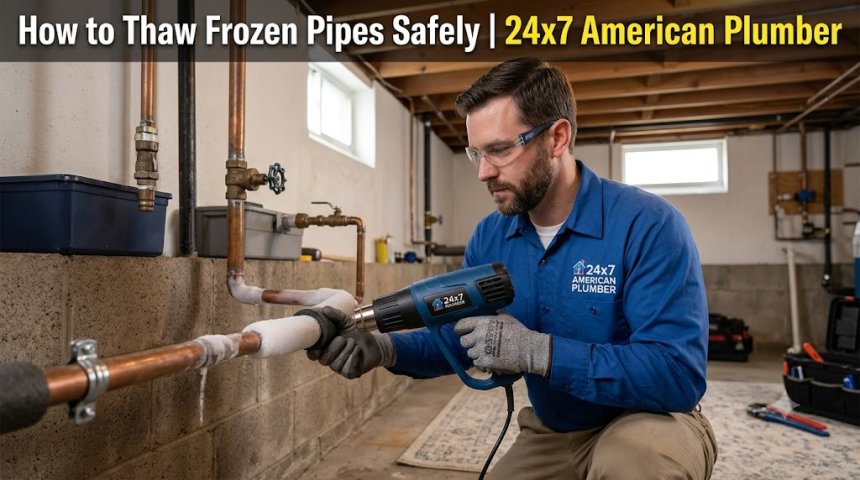
To thaw frozen pipes safely without bursting them, immediately turn on the affected faucet to relieve pressure, locate the frozen section, and apply gentle, indirect heat moving from the faucet toward the blockage using a hairdryer, heat tape, or space heater while keeping open flames far away.
The Physics and Mechanics: Why Frozen Pipes Burst
Understanding why pipes rupture during winter freezes requires examining the physical properties of water and hydraulic pressure dynamics inside closed plumbing lines. Contrary to common belief, pipes rarely burst at the exact point where ice forms; instead, they fail due to extreme hydraulic pressure downstream.
+-----------------------------------------------------------------------+
|                    HYDRAULIC PRESSURE IN FROZEN PIPES                 |
+-----------------------------------------------------------------------+
|  [CLOSED FAUCET] <===== (TRAPPED WATER PRESSURE: 100-300+ PSI) =====> |
|                                   ▲                                   |
|                        Point of Pipe Fracture                         |
|                                   ▲                                   |
|                          [SOLID ICE BLOCKAGE]                         |
|                                   ▲                                   |
|                     [MAIN WATER SUPPLY LINE]                          |
+-----------------------------------------------------------------------+
1. Thermal Expansion and Volumetric Ice Growth
When liquid water drops below 32°F (0°C), its molecular structure realigns into a crystalline lattice. Unlike almost all other liquids, water expands as it freezes, increasing its total volume by approximately 9%.
2. Trapped Water and Hydraulic Pressure
As ice expands inside a rigid copper, PEX, or galvanized pipe, it acts as a solid mechanical plug. Liquid water trapped between the ice blockage and a closed faucet cannot compress. As ice grows further along the pipe interior, it forces trapped water into a confined space, driving localized water pressure up from normal operating levels (40–60 PSI) to over 300 PSI.
3. Structural Tensile Limit Failure
Metal and plastic supply lines possess specific ultimate tensile strength thresholds:
-
Copper Pipe: Yields and splits radially along seam lines under high pressure.
-
PEX Tubing: Possesses elastic memory and expands slightly, but fittings, elbows, and aged walls still rupture under sustained ice pressure.
-
Galvanized Steel: Fails at threaded joints and pre-corroded structural thin spots.
Rapid or uneven heating creates thermal shock, expanding the metal or plastic faster than the ice plug inside melts. Controlled, gradual heating from the open faucet side releases trapped hydraulic pressure as the ice liquefies, preventing pipe rupture.
Safe DIY Thawing Methods vs. Professional Interventions
Before attempting to thaw an icy line, review safety bounds to prevent fires, electrical shocks, or accidental property flooding.
| Action Item / Method | Safe for DIY Homeowner | Requires Licensed Professional |
| Opening Faucets to Relieve Trapped Hydraulic Line Pressure | ✅ | ❌ |
| Using Hairdryers, Heating Pads, or Towels Soaked in Hot Water | ✅ | ❌ |
| Applying Thermostatically Controlled UL-Listed Electric Heat Tape | ✅ | ❌ |
| Thawing Pipes Hidden Inside Drywall, Ceilings, or Cavities | ❌ | ✅ |
| Using Torches, Propane Burners, or Open Flame Heat Devices | ❌ | ✅ |
| Operating Commercial Electrical Pipe Thawing Transformers | ❌ | ✅ |
| Sectional Hydro-Jetting or Chemical De-icing Operations | ❌ | ✅ |
| Repairing Burst, Cracked, or Heavily Distorted Water Lines | ❌ | ✅ |
Safety Warning: NEVER use open-flame blowtorches, propane heaters, or gasoline-powered heat tools on residential plumbing lines. Open flames ignite dry wall insulation, timber studs, and vapor barriers, making torch thawing a leading cause of winter house fires in North America.
Step-by-Step Instructions: Safe DIY Pipe Thawing Protocol
If a frozen pipe is accessible (such as under a sink, in an unheated basement, or in a crawl space), follow this sequential safety process.
Step 1: Open Faucet  ──>  Step 2: Shut Main Off  ──>  Step 3: Locate Freeze
                                                              │
Step 6: Restore Flow  <──  Step 5: Heat End-to-End  <──  Step 4: Apply Gentle Heat
Step 1: Open the Connected Faucet
Open both hot and cold handles on the affected faucet. As you thaw the ice plug, escaping water and steam require an immediate outlet to release hydraulic buildup. Leaving the valve open allows liquid water to flow across the remaining ice, accelerating the melting process.
Step 2: Identify the Main Water Shut-Off Valve Location
Before applying heat, locate your property's main water supply valve (typically a gate or ball valve where the water line enters the foundation). If the pipe breaks or has a hidden fracture that opens up as the ice melts, you must be prepared to turn off the main water immediately to avoid catastrophic interior flooding.
If you cannot locate your main water shut-off or if the valve is stuck or rusted shut, call a licensed technician before proceeding. Contact
Step 3: Locate the Ice Blockage
Trace exposed water lines running through unheated spaces like garages, basements, crawl spaces, or exterior wall cabinets.
-
Look for frost buildup, ice crystals, or slight bulging along metal pipes.
-
Tap gently along the line with a screwdriver handle—a solid metallic ring indicates clear liquid, while a dull thud pinpoints ice density.
Step 4: Apply Gradual Heat from the Faucet Toward the Freeze
Start applying heat at the open faucet side of the line, working gradually toward the frozen center. This allows melted water to escape freely through the open spout rather than remaining trapped behind solid ice.
-
Hairdryer Method: Set a standard hairdryer to medium or high heat and sweep it back and forth along the pipe exterior.
-
Hot Towel Wrap: Saturate heavy towels in hot water, wring them out, and wrap them tightly around the frozen pipe section. Re-soak as they cool.
-
Space Heater: Position an electric space heater near the exposed pipe, keeping it at least three feet clear of flammable materials.
Step 5: Restore Full Flow and Monitor Integrity
As water begins to trickle out, leave the faucet running until full city water pressure is restored. Keep the water running at a steady stream while checking the entire pipeline length for small hairline cracks or weeping joint fittings.
Proactive Freeze Prevention & Hidden Plumbing Tips
1. The "Drip & Open" Winter Protocol
During extreme cold snaps (temperatures dropping below 20°F or -6°C):
-
Let Faucets Drip: Allow faucets served by vulnerable exterior wall pipes to drip a light trickle of cold water continuously. Moving water requires significantly lower ambient temperatures to freeze and prevents static hydraulic pressure accumulation.
-
Open Cabinet Doors: Keep kitchen and bathroom sink cabinet doors open overnight to allow warm ambient room air to circulate around concealed supply lines.
2. Insulation and Thermal Sealing
-
Pipe Sleeving: Encase exposed supply lines in pre-slit closed-cell foam insulation sleeves or fiberglass pipe wraps (minimum R-value of 4).
-
Air Sealing: Seal gaps where pipes penetrate exterior framing using expanding spray foam or silicone caulk to prevent cold drafts from freezing localized pipe sections.
3. Thermal Heat Trace Installation
For persistent problem zones, install UL-listed self-regulating electric heat trace cables equipped with integrated thermostats. These cables automatically warm up when ambient pipe temperatures drop below 38°F (3°C).
Equipment Lifespans and Repair Cost Context
When severe freeze events cause line splits or structural fitting failures, understanding repair scopes and replacement costs helps budget effectively.
Estimated US Industry Repair Costs
-
Emergency Frozen Pipe Thawing (Professional Acoustic/Thermal): $250 – $600
-
Isolated Copper/PEX Pipe Section Repair: $350 – $850
-
Drywall and Ceiling Water Mitigation Patching: $500 – $1,800
-
Main Water Valve / Backflow Assembly Replacement: $400 – $1,200
-
Whole-Home Supply Line Repiping (PEX/Copper): $3,500 – $10,000+
Expected Equipment & Pipe System Lifespans
-
PEX Plumbing Tubing: 40 – 50 Years (High elastic freeze tolerance)
-
Type L Copper Supply Lines: 50+ Years (Susceptible to splitting during hard freezes)
-
UL-Listed Pipe Heat Tape Systems: 5 – 10 Years
-
Brass Shut-Off Valves: 20 – 30 Years
When ice blockages occur behind finished drywall, inside exterior wall cavities, or in high-pressure commercial risers, specialized pipe thawing transformers and thermal imaging units are necessary. Contact
How Professional Plumbers Work: Advanced Pipe Thawing Procedures
When DIY thawing methods fail or pipes freeze behind walls, professional plumbers employ specialized non-destructive tools and diagnostics.
+------------------------------------------------------------------+
|               PROFESSIONAL PIPE THAWING WORKFLOW                 |
+------------------------------------------------------------------+
| 1. Thermal Camera Sweep  --> Identifies exact location of frost  |
|                              line inside wall cavities.          |
| 2. Resistance Electrical --> Sends safe, controlled low-voltage  |
|    Pipe Transformers         current along metal pipe runs.      |
| 3. Internal Steam Probes --> Feeds micro-tubing inside PEX lines |
|                              to melt ice directly with steam.    |
| 4. Pressure Testing      --> Verifies pipe wall integrity before |
|                              re-pressurizing household line.     |
+------------------------------------------------------------------+
-
Infrared Thermal Imaging: Technicians scan exterior wall surfaces with high-resolution thermal cameras to identify exact temperature dips and locate ice plugs inside wall cavities without tearing down drywall blindly.
-
Low-Voltage Electrical Pipe Transformers: For continuous metallic lines (copper or iron), technicians attach high-amperage, low-voltage leads to both ends of the frozen segment. Resistance generates uniform heat through the metal wall, melting the ice internally within minutes without flame hazards.
-
Internal Micro-Steam Jetters: For non-conductive PEX tubing buried behind walls, plumbers insert a flexible food-grade micro-hose into the pipe. High-temperature steam melts the ice plug from the inside out while vacuum units collect runoff.
When to Call the Pros
Frozen pipes are immediate plumbing emergencies. Delaying action or attempting risky thawing maneuvers can turn a simple ice plug into thousands of dollars in water damage, structural timber decay, and toxic mold growth.
Call 24x7 American Plumber immediately if:
-
Water does not flow from faucets after 30–45 minutes of gentle exterior heating.
-
The frozen pipe section is located inside a wall, ceiling, floor, or unexcavated crawl space.
-
You observe visible bulges, hairline fractures, or active water leaks along frozen pipe walls.
-
Your main water shut-off valve is stuck, inoperable, or inaccessible.
Why Choose 24x7 American Plumber?
-
24/7 Rapid Emergency Response: Local master plumbers available around the clock across the United States.
-
Advanced Non-Destructive Equipment: Thermal imaging cameras, electrical pipe thawing units, and internal steam jetters.
-
Upfront Honest Estimates: Clear pricing before work begins, with zero hidden fees or surcharges.
-
Licensed, Bonded, and Fully Insured: Complete property protection on every residential and commercial job.
Contact Us Today:
-
Phone:
762-383-0288 -
Website:
24x7americanplumber.com
Frequently Asked Questions
Q: Will frozen pipes thaw on their own without bursting?
A: While frozen pipes can thaw naturally as ambient temperatures rise, leaving them to thaw without supervision carries a high risk of bursting. Trapped water pressure behind the ice plug can split the pipe wall, causing immediate high-pressure flooding as the ice thaws.
Q: How long does it take to safely thaw a frozen pipe?
A: An exposed pipe section usually thaws in 30 to 60 minutes using standard indirect heating methods like a hairdryer or hot towels. Concealed lines inside wall cavities may take longer or require professional electrical/steam thawing tools.
Q: Does homeowner's insurance cover water damage from burst pipes?
A: Most standard US homeowners insurance policies cover sudden and accidental water damage caused by burst frozen pipes, including floor and drywall restoration. However, claims may be denied if the property was left unheated or reasonable precautions (like maintaining heat above 55°F) were neglected.
Q: Is PEX pipe completely immune to freezing and bursting?
A: While PEX tubing is flexible and resists freeze damage better than rigid copper or galvanized steel, it is not completely freeze-proof. Extremely low temperatures can rupture PEX walls or force brass connecting joints and crimp rings to fail under pressure.