Black Slime & Foul Odor in Drain | Fix
Noticing black slime and foul odor coming from bathroom drain? Discover what causes this bio-sludge buildup, safe cleaning steps, and pro fixes.

Introduction
Walking into your bathroom and being greeted by a swampy, sulfurous stench every time you turn on the faucet is an unpleasant and frustrating experience. Discovering black slime and foul odor coming from bathroom drain fixtures is a common household nuisance that turns your private sanctuary into an uncomfortable space. Homeowners throughout the region frequently encounter this gelatinous gunk as organic waste, hair, soap scum, and moisture combine inside warm bathroom piping networks.
Ignoring this foul-smelling buildup allows colonies of bacteria and fungi to multiply rapidly, eventually causing slow drains and airborne irritants. This comprehensive guide details the biological causes behind sink slime, professional cleaning workflows, and essential maintenance steps to keep your plumbing fresh.
Financial Breakdown: Cost Factors & Investment Realities
Addressing stubborn drain odors, bio-sludge buildup, and internal pipe cleaning involves variable financial inputs depending on accessibility and severity:
-
Service Call & Dispatch Fees: Standard diagnostic dispatches cover technician travel and initial equipment mobilization.
-
Manual P-Trap Service vs. Hydro-Jetting: Removing and cleaning a standard sink P-trap involves minimal labor costs, whereas scouring entire vertical and horizontal branch lines with high-pressure hydro-jetting requires specialized equipment.
-
Material Quality & Upgrades: Upgrading corroded brass P-traps and tailpieces to modern PVC or slip-joint components impacts overall parts pricing.
-
Permitting Requirements: Routine drain cleaning and P-trap maintenance do not require municipal permits, keeping minor service costs low.
What Is Bathroom Drain Bio-Sludge? Decoding the Mechanism
To understand why a slimy black substance forms inside your bathroom drains, it helps to examine how everyday waste accumulates within sink fixtures. Every time you wash your hands, brush your teeth, or shower, microscopic particles of dead skin cells, hair, soap scum, lotions, toothpaste, and organic oils wash down the drain.
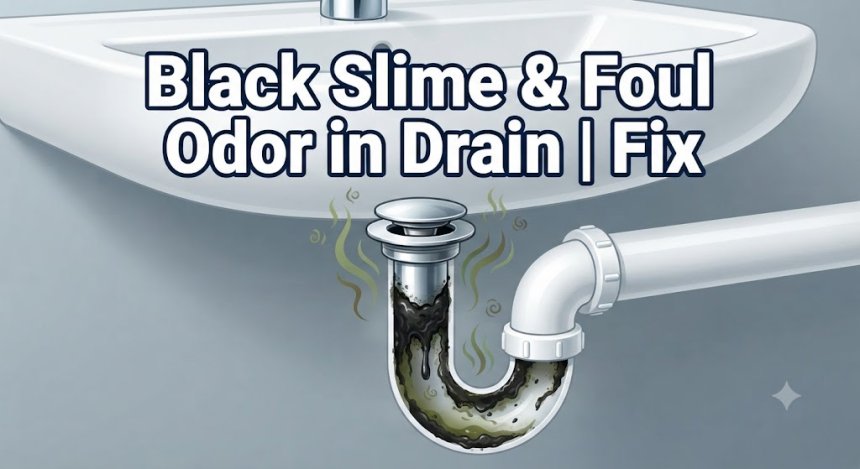
As these residues descend, they encounter the P-trap—the curved section of pipe beneath your sink designed to hold a small pool of standing water that blocks sewer gases from entering your home. Organic debris settles on the interior walls of the tailpipe and P-trap, creating an ideal breeding ground for bacteria, fungi, and mold known as biofilm.
Imagine a busy family bathroom where multiple users apply hair products and moisturizers daily: within weeks, a sticky black or pinkish matrix forms along the pipe walls. As bacteria feed on this organic matter, they release foul-smelling gases, resulting in that distinct mildew and sewage odor.
Critical Warning Signs: When Your Home is Sounding the Alarm
Drain biofilm and organic blockages rarely appear without giving distinct sensory indicators before a complete clog develops:
-
Olfactory Indicators: Persistent musty, damp earth, sulfur, or mildew odors rising directly from the bathroom sink or tub drain, worsening when water is turned on.
-
Visual Clues: A slimy black, brown, or pinkish gelatinous ring visible around the pop-up stopper, drain flange, or inside the overflow hole.
-
Performance Anomalies: Sluggish water drainage, bubbling sounds, or water taking longer to clear as the bio-sludge narrows the interior pipe diameter.
-
Cascading Risks: Ignoring slimy buildup allows organic matter to harden into dense blockages, trapping hair and debris until the fixture backs up completely.
Root Causes: Why Bio-Sludge Accumulates in Bathroom Drains
Black slime and foul odors stem from a combination of daily usage habits, chemical reactions, and plumbing design factors:
-
Biofilm & Bacteria Colonization: Serratia marcescens and sulfur-reducing bacteria feeding on organic hair, soap, and skin cell residues trapped in moist environments.
-
Trap and Overflow Channel Buildup: The hidden overflow channel inside bathroom sinks collects stagnant water and soap scum that regular running water never reaches, constantly venting bad odors.
-
Mineral Scaling and Rough Surfaces: Older cast-iron or galvanized steel pipes develop rough interior pitting that catches and holds organic sludge much faster than smooth PVC.
-
Improper Venting: Inadequate ventilation can trap sewer gases near the P-trap, accelerating the decomposition odors rising into the room.
Professional Diagnostic & Repair Workflow
When a licensed master plumber investigates persistent bathroom drain odors and slime, they execute a systematic technical workflow:
-
Non-Invasive Triage & Odor Assessment: The technician checks all bathroom fixtures to determine whether the odor is isolated to a single sink or originating from the main vent stack.
-
Precision P-Trap & Tailpiece Inspection: The plumber inspects the slip-joint connections, pop-up assembly, and internal P-trap condition for structural wear or corrosion.
-
Transparent Options & Written Estimating: The plumber provides a clear, flat-rate pricing breakdown detailing mechanical cleaning, P-trap replacement, or hydro-scouring options.
-
Code-Compliant Remediation: The drain assembly is disassembled, mechanically scrubbed or replaced with smooth PVC components, and reassembled with proper water-tight seals.
-
Flow Verification & Sanitization: The system undergoes high-volume water flow testing and eco-friendly sanitizing flushes to ensure complete odor elimination.
Advanced Diagnostics: The Professional Tool Arsenal
Professional plumbing contractors utilize specialized equipment to clean and evaluate bathroom drainage systems thoroughly:
-
Miniature Push-Rod Drain Cameras: Navigates small-diameter 1.5-inch bathroom branch lines to inspect interior pipe walls for hidden cracks, scale, or sludge pockets.
-
Hydro-Jetting Micro-Units: Delivers controlled high-pressure water streams specifically calibrated for small residential branch lines to scour pipe walls completely clean.
-
Electronic Leak and Gas Detectors: Pinpoints whether ambient bathroom odors stem from dry P-traps, cracked vent lines, or simple surface biofilm.
-
Manometers: Measures air pressure differentials across drain traps to verify proper venting and negative pressure elimination.
DIY Reality Check: What You Can Safely Fix vs. When to Step Back
-
Safe Homeowner Actions: Removing and manually cleaning the pop-up stopper, scrubbing the visible drain flange with a stiff brush and baking soda/vinegar solution, or flushing the drain with boiling water and enzyme cleaners.
-
The Danger Zone: Never pour harsh industrial acid drain cleaners into a sink where you recently used bleach or other chemical products, as mixing chemicals creates toxic, dangerous vapors.
-
When to Call a Pro: If cleaning the P-trap and stopper does not eliminate the foul odor, or if multiple drains throughout the bathroom emit sewer smells, drop the wrench and call a licensed plumber.
Unique Expert Insights: Hard Truths Homeowners Learn Too Late
Years of hands-on field experience reveal critical industry realities that protect homeowners from costly mistakes:
-
Bleach Only Cleans the Surface: Pouring standard household bleach down a smelly drain provides temporary relief by killing surface bacteria, but it leaves the sticky organic biofilm intact underneath, allowing odors to return within days.
-
Overflow Channels Are Hidden Trapdoors: Many homeowners spend hours cleaning the main drain while ignoring the hidden sink overflow hole, which is often the true source of chronic bathroom mildew smells.
-
Harsh Chemicals Destroy Metal Traps: Corrosive commercial drain openers eat through thin brass and chrome-plated P-traps from the inside out, leading to sudden cabinet leaks.
-
Enzyme Cleaners Outperform Acid: Using biological enzyme treatments regularly digests organic sludge safely without damaging delicate pipe seals or environmental plumbing components.
Comprehensive Home Plumbing Maintenance Framework
Protect your bathroom plumbing from recurring slime, biofilm, and foul odors by adopting these seasonal maintenance habits:
-
Spring & Summer Checks: Inspect bathroom sink and tub stoppers for hair accumulation; clean out pop-up mechanisms thoroughly.
-
Fall & Winter Preparation: Flush bathroom drains with hot water and enzyme treatments monthly to prevent winter sludge buildup when windows remain closed.
-
Year-Round Habits: Use mesh hair catchers in all tubs and showers; avoid washing heavy grease or oils down bathroom sinks; clean overflow channels with a flexible brush quarterly.
Emergency Protocol: When Immediate Dispatch is Non-Negotiable
Certain plumbing scenarios demand immediate, 24/7 professional intervention:
-
Severe Sulfur Gas Leaks: Unbearable, overwhelming sewer gas odors causing headaches or nausea, indicating a dry or broken P-trap or cracked vent line.
-
Active Cabinet Leaks: P-traps corroded by chemical cleaners failing completely and flooding bathroom vanity cabinets.
-
Complete Multi-Fixture Backups: Bio-sludge combining with hair clogs to back up raw wastewater across multiple bathroom fixtures simultaneously.
Frequently Asked Questions (FAQs)
What causes the black slime in my bathroom drain?
Black slime is a biofilm composed of trapped bacteria, fungi, soap scum, skin cells, and hair feeding on organic residues inside the warm, moist pipe environment.
How do I get rid of the foul odor coming from my bathroom sink?
Remove and clean the pop-up stopper and P-trap, scrub the internal pipe walls with a brush and enzyme cleaner, and flush the hidden sink overflow channel with a disinfectant solution.
Are commercial drain cleaners effective against black slime?
Chemical cleaners may temporarily punch a hole through sludge, but they rarely remove sticky biofilm completely and can corrode metal P-traps over time.
Why does my bathroom smell like sewage even after cleaning the drain?
A persistent sewage smell often points to a dry P-trap, a cracked or unvented drain pipe, or heavy biofilm accumulation inside the sink's hidden overflow channel.
How often should bathroom P-traps be cleaned?
Bathroom P-traps and pop-up stoppers should be inspected and cleaned of hair and organic buildup every 6 to 12 months to prevent odors and slow drains.
What is bio-sludge and is it dangerous?
Bio-sludge is an accumulation of harmless environmental bacteria and fungi living on organic waste, though it produces unpleasant sulfur odors and can harbor mildew.
Can I use vinegar and baking soda to clean drain slime?
Yes. Pouring baking soda followed by vinegar down the drain creates a fizzing reaction that helps loosen surface soap scum and deodorize mild organic odors.
When should I call a professional plumber for drain odors?
Call a licensed plumber if cleaning the P-trap and using enzyme treatments fails to eliminate foul odors, or if multiple drains in your home begin gurgling and smelling.
Why Homeowners Trust Professional Plumbing Experts
Resolving stubborn plumbing odors, biofilm accumulations, and corroded P-traps requires professional expertise, proper tools, and adherence to sanitary plumbing codes. Relying on licensed plumbing contractors ensures your bathroom drainage network is thoroughly cleaned, safely repaired, and protected by reliable warranties.
Are you struggling with persistent black slime or foul odors in your bathroom drains, or would you like to schedule a professional plumbing inspection today?