Slab Leak Detection & Repair Costs in Kansas City
Discover slab leak detection and repair costs in Kansas City. Learn the warning signs, professional diagnostic steps, and local pricing factors.

Introduction
Nothing ruins a quiet evening at home quite like the sudden sound of running water when every faucet is shut off, or worse, stepping onto a mysteriously warm patch of living room flooring. If your water bill has unexpectedly spiked and you notice dampness creeping along your baseboards, you may be facing a slab leak repair cost Kansas City homeowners dread hearing about. A slab leak occurs when the water supply or drain lines running beneath your home's concrete foundation become compromised, leaking water directly into the sub-base and soil.
Because Kansas City experiences intense seasonal weather shifts, freezing winter temperatures, and shifting expansive clay soils, local foundations and underground plumbing undergo extreme stress. Ignoring these underground failures leads to catastrophic structural settling, severe mold growth, and skyrocketing utility bills. Understanding how slab leaks happen, how professionals locate them without destroying your floors, and what the financial investment looks like is the first step toward safeguarding your property.

Professional Diagnostic & Repair Workflow
When you hire a licensed plumbing specialist to handle a suspected foundation leak, they follow a rigorous, non-destructive process to pinpoint the issue before any concrete is touched:
-
Step 1: Non-Invasive Triage & Safety Isolation: The technician performs isolation tests on your main water lines to verify whether the leak is pressurized (supply) or gravity-fed (drain), shutting off specific zones safely.
-
Step 2: Precision Diagnostic & Digital Video Inspection: Acoustic listening devices and thermal imaging cameras are deployed across the flooring to isolate the exact coordinates of the moisture and pressure drop.
-
Step 3: Transparent, Upfront Options & Written Estimating: Once the leak is mapped, the plumber provides a clear, flat-rate estimate outlining repair options, such as spot repair, pipe rerouting, or epoxy lining.
-
Step 4: Code-Compliant Remediation & Part Replacement: The team executes the agreed-upon repair using durable materials like cross-linked polyethylene (PEX) or copper, adhering strictly to local building codes.
-
Step 5: Pressure Testing, Flow Verification, & Clean-up: The line is re-pressurized and monitored to guarantee zero pressure loss, followed by complete jobsite clean-up and restoration recommendations.
Advanced Diagnostics: The Professional Tool Arsenal
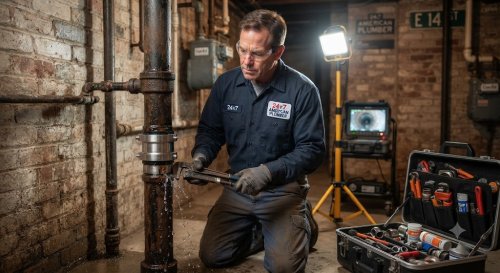
Locating a pinhole leak buried beneath four to six inches of reinforced concrete requires specialized technology far beyond traditional guesswork. Modern plumbers utilize an advanced gear arsenal to protect your home from unnecessary excavation:
-
Electronic Acoustic and Thermal Leak Detectors: Highly sensitive ground microphones amplify the distinct hissing frequency of pressurized water escaping through concrete, while thermal cameras reveal hidden temperature anomalies.
-
Push-Rod High-Definition Drain and Sewer Cameras: Waterproof fiber-optic cameras travel through lines to visually inspect interior pipe walls for cracks, root intrusion, and joint separation.
-
Electronic Pipe Locators and Digital Manometers: These tools trace the exact subterranean path of metallic and non-metallic pipes while measuring precise pressure losses in real-time.
Critical Warning Signs: When Your Home is Sounding the Alarm
Foundation leaks rarely announce themselves with a gushing geyser; instead, they display subtle symptoms that compound over time. Property owners should remain vigilant for these indicators:
-
Subtle Structural Shifts & Damp Patches: Carpeting that stays damp in one specific spot, warped hardwood flooring, or cracking drywall near floor level.
-
Auditory Clues: Hearing water running continuously when all appliances are off, or experiencing faint water hammering sounds within walls.
-
Olfactory Indicators: Musty, mildewy odors or the unmistakable scent of damp earth rising from beneath floorboards.
Failing to address these warnings accelerates structural deterioration, inviting wood rot, framing damage, and hazardous mold colonies that threaten indoor air quality.
Root Causes: Why This Problem Occurs in Local Homes
Understanding why underground pipes fail helps property owners prevent future plumbing emergencies. Several structural and environmental factors contribute to slab leaks in the region:
-
Shifting Expansive Clay Soils: Local clay-heavy soils expand intensely when saturated and shrink during dry spells, putting severe mechanical shear stress on rigid subterranean pipes.
-
Hard Water Mineral Scaling and Calcification: Mineral-rich municipal water builds up interior scale over decades, accelerating interior corrosion and pitting.
-
Water Pressure Fluctuations: High or unstable municipal pressure strains aging joints, fittings, and soldered connections beneath the slab.
-
Material Degradation: Older homes featuring aging galvanized steel or unprotected copper pipes eventually succumb to external soil corrosion and friction wear.
What Is a Slab Leak? Decoding the Mechanism
To put it simply, a slab leak is a breach in the water supply or drainage pipes encased within or running directly beneath the concrete slab foundation of your home.
In a properly functioning plumbing system, water travels securely from the municipal main through sealed copper or plastic conduits straight to your fixtures. When a pipe fails—due to friction against abrasive sub-base gravel, chemical corrosion, or soil shifting—water forces its way out under pressure. Instead of flowing out of your faucet, it pools beneath the concrete, saturates the earth, and begins wicking upward through microscopic pores in the slab via capillary action.
Consider a mid-century home where copper pipes were laid directly against rough limestone gravel fill without protective sleeves. Over years of thermal expansion and contraction, the gravel acts like sandpaper against the pipe wall until a pinhole rupture forms.
DIY Reality Check: What You Can Safely Fix vs. When to Step Back
When faced with a mysterious water bill or damp floors, homeowners often wonder if they can investigate or fix the problem themselves.
-
Safe Homeowner Actions: You can safely monitor your water meter, check visible hose bibs, clear exterior drainage paths, and turn off the main water shut-off valve if an active flood occurs.
-
The Danger Zone: Attempting to jackhammer through a concrete floor without knowing where post-tension cables, electrical conduits, or main sewer lines run can result in electrocution, structural collapse, or thousands of dollars in added damage.
Knowing when to drop the wrench and call a licensed professional prevents minor sub-surface issues from turning into major structural disasters.
Financial Breakdown: Cost Factors & Investment Realities
Slab leak repairs are complex engineering tasks, meaning flat-rate pricing varies based on specific project variables. On average, minor repairs might start around a few hundred dollars for localized access, while complete rerouting projects can range significantly higher.
-
Diagnostic and Dispatch Fees: Specialized electronic detection requires advanced equipment and expert labor to isolate the leak precisely.
-
Accessibility and Depth: Repairing a pipe located beneath a kitchen island or deep beneath a thick foundation slab requires more intensive labor than lines near an exterior wall.
-
Material Selection: Modern repairs typically favor flexible PEX piping for reroutes or high-grade copper for direct spot repairs.
-
Permitting and Restoration: Major line replacements often require municipal permits and subsequent flooring or concrete restoration work.
Unique Expert Insights: Hard Truths Homeowners Learn Too Late
Over decades of field experience, master plumbers encounter recurring misconceptions that end up costing property owners dearly:
-
Temporary patch kits mask deeper system failures and will eventually rupture, often voiding home insurance clauses regarding neglected maintenance.
-
Harsh chemical drain cleaners corrode pipe walls from the inside out, severely weakening older lines buried beneath concrete slabs.
-
Unlicensed handymen often create hidden code violations that fail catastrophic home inspections when the property is eventually put on the market.
-
Proactive leak detection checks cost a fraction of a single emergency midnight foundation extraction and repair.
Comprehensive Home Plumbing Maintenance Framework
Keeping your underground and interior plumbing healthy requires seasonal diligence. Implement these structured maintenance habits year-round:
-
Spring & Summer Checks: Inspect outdoor spigots for backflow issues, test sump pump discharge lines, and ensure exterior soil grading slopes away from your foundation.
-
Fall & Winter Preparation: Insulate exposed basement pipes, disconnect garden hoses, and flush your water heater to eliminate sediment buildup before freezing temperatures arrive.
-
Year-round Habits: Use drain strainers in every sink, monitor your water meter monthly for unusual movement, and avoid pouring chemical clog removers down aging pipes.
Emergency Protocol: When Immediate Dispatch is Non-Negotiable
Certain plumbing scenarios demand an immediate emergency response from a 24/7 professional team:
-
Catastrophic pipe bursts causing active structural flooding in living areas.
-
Complete main sewer line backups forcing raw sewage up through floor drains.
-
Total loss of potable water supply to the residence.
-
Overflowing fixtures or leaks actively threatening electrical panels and outlets.
Frequently Asked Questions (FAQs)
How do I know if I have a slab leak or just a bad plumbing joint?
A slab leak specifically involves moisture originating beneath or inside the concrete foundation. If your water meter spins continuously when all indoor fixtures are off and you feel warm spots on your floor, it points directly to a sub-slab issue.
Will homeowners insurance cover my slab leak repair?
Standard insurance policies typically cover the resulting water damage to your home's structure and flooring, but they rarely cover the cost of repairing the actual pipe itself due to wear and tear. Review your specific policy endorsements.
Can a slab leak be repaired without breaking through the concrete?
Yes. In many cases, plumbers can perform a trenchless pipe rerouting by running new Pex lines through the attic or walls, bypassing the damaged under-slab pipe entirely.
How much does professional slab leak detection cost?
Detection costs vary depending on the square footage of the home and the complexity of the plumbing layout, but professional electronic detection ensures you avoid random, destructive exploratory jackhammering.
Can I turn off just the leaking pipe under my slab?
Most sub-slab lines feed major zones of the home. While you can shut off the main water valve to stop the active leaking, you will temporarily lose water service to multiple fixtures until a professional performs a targeted repair or bypass.
How long does a typical slab leak repair take?
A localized spot repair can often be completed in a single day, whereas a complete overhead or wall reroute of a compromised supply line may take two to three days depending on home layout complexity.
Are older homes more prone to foundation pipe leaks?
Yes. Homes built several decades ago frequently utilized galvanized steel or uninsulated copper pipes that degrade over time when exposed to abrasive sub-base aggregate and shifting soils.
Should I choose spot repair or complete pipe rerouting?
If your plumbing system is aging and showing widespread corrosion, a total reroute is often more cost-effective in the long run than repeatedly chasing individual pinhole leaks under the concrete.
Why Local Homeowners Trust 24x7 American Plumber
Navigating a foundation plumbing failure requires a partner you can trust. 24x7 American Plumber brings decades of hands-on field experience, cutting-edge diagnostic technology, and transparent communication to every job.
-
Fully licensed, insured, and background-checked technicians dedicated to your safety.
-
Upfront, flat-rate pricing with no hidden overtime surprises or gimmicks.
-
State-of-the-art acoustic and thermal diagnostic equipment for precise location accuracy.
-
Deep regional expertise serving Kansas City, MO, and surrounding neighborhoods.
-
Comprehensive customer-first warranties backing every repair and installation.
Single Follow-Up Question
Would you like assistance scheduling a professional diagnostic inspection or evaluating specific repair options for your property?