How to Tell If Main Sewer Line Is Clogged: Signs
Is your main sewer line clogged? Learn the top warning signs, diagnostic steps, hydro-jetting costs, and emergency actions in our expert guide

How to Tell If Your Main Sewer Line Is Clogged
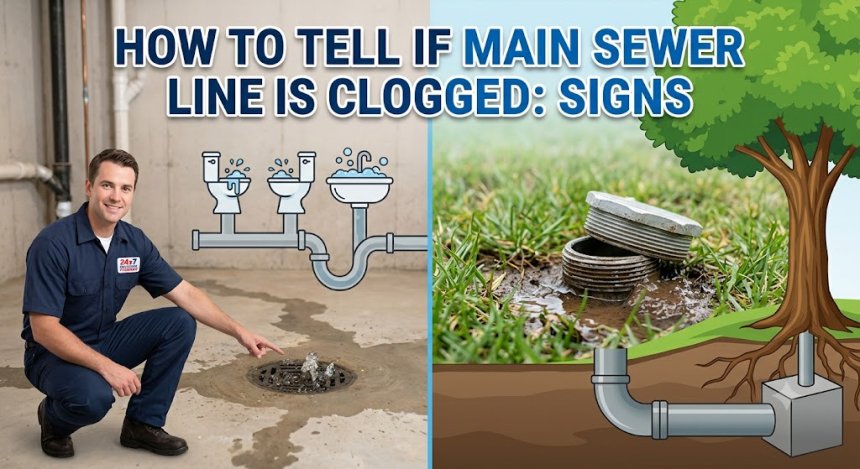
To tell if your main sewer line is clogged, check for multiple drains backing up simultaneously, sewage overflowing into lower-level fixtures like basement floor drains or tubs when running water elsewhere, gurgling toilets, and sewage odors near indoor drains or outdoor cleanout caps.
The Physics and Mechanics of Sewer Main Blockages
Your home’s drainage network operates strictly on gravity, negative atmospheric pressure, and fluid dynamics. Understanding how wastewater flows through your system reveals why a main line clog causes widespread house symptoms.
┌─────────────────────────────────────────────────────────────────┐
|                  MAIN SEWER LINE DRAINAGE MECHANICS             |
├─────────────────────────────────────────────────────────────────┤
| 1. Upper Fixtures Drain ──> Wastewater flows down branch lines   |
| 2. Main Line Obstruction──> Tree roots / grease block 4"-6" pipe|
| 3. Back-Pressure Build   ──> Water column accumulates behind block|
| 4. Lowest Point Escape  ──> Wastewater flows out floor drains/tubs|
└─────────────────────────────────────────────────────────────────┘
1. The Gravity Trunk Line and Branch Lines
Individual drains (sinks, showers, toilets) route wastewater into secondary branch pipes. These branch pipes feed into a single, 3- to 6-inch main sewer stack running beneath your home's foundation to the municipal sewer or septic tank. When an obstruction closes off this primary trunk line, all upstream wastewater has nowhere to go.
2. Siphonage Displacement and Gurgling Sounds
As wastewater hits a main sewer line blockage, it fills the entire pipe diameter. As the water attempts to push past the obstruction, it creates a localized vacuum behind it. This negative pressure exerts siphonage on the water seals inside nearby fixture P-traps. Air is sucked through the traps, causing distinct gurgling or bubbling sounds in sinks and toilets.
3. Hydraulic Back-Pressure and Lowest Point Seeking
Liquids always seek the path of least resistance and the lowest elevation. When a upper floor toilet is flushed into a blocked main stack, hydraulic pressure forces the trapped water column backward up through the lowest fixtures in the structure—typically basement floor drains, ground-floor showers, or tub basins.
Top Warning Signs of a Clogged Main Sewer Line
Recognizing the distinction between a localized fixture clog and a main sewer blockage saves time and prevents catastrophic indoor flooding.
┌─────────────────────────────────────────────────────────────────┐
|                  MAIN SEWER CLOG INDICATORS                     |
├─────────────────────────────────────────────────────────────────┤
| • Multiple Fixture Backups : Water in shower when toilet flushes|
| • Gurgling Toilets & Drains: Vacuum siphonage pulling P-trap air |
| • Sewage Odors             : Sewer gas escaping empty dry traps |
| • Outdoor Sewer Cleanout   : Standing water inside cleanout pipe|
| • Soggy Lawn / Lush Grass  : Sewage leaking from broken underground|
└─────────────────────────────────────────────────────────────────┘
1. Multiple Fixtures Backing Up Simultaneously
A single clogged sink is a branch line issue. However, if running the washing machine causes water to erupt into the bathroom shower, or if flushing a hallway toilet causes water to rise in the tub, the main sewer lateral is obstructed.
2. Sewage Odors Indoors and Outdoors
P-traps maintain a standing water barrier that blocks foul sewer gases (hydrogen sulfide and methane). Main line back-pressure can siphon P-traps dry, allowing noxious sewer gas to fill your living space.
3. Standing Water in the Exterior Sewer Cleanout
Your sewer cleanout is a threaded PVC or cast-iron cap protruding from your lawn or basement slab. Unscrewing this cap (safely) reveals the main line: if raw sewage or standing water sits near the top of the pipe, the obstruction is down-line toward the street.
4. Soggy Spots or Exceptionally Green Grass in the Yard
If tree roots have invaded your underground clay, cast-iron, or PVC pipe, sewage will leak into the surrounding soil. This acts as a potent fertilizer, creating unusually lush, green patches of grass alongside sunken, muddy soil patches in your lawn.
DIY Diagnostics vs. Professional Plumbing Scope
Clearing a main sewer line requires heavy commercial equipment, chemical biohazard safety protocols, and underground camera technology.
| Diagnostic or Repair Task | Safe for DIY? | Requires a Licensed Professional |
| Locating and Inspecting Exterior Cleanout | Yes | Optional |
| Shutting Off Household Main Water Supply | Yes | Optional |
| Plunging Individual Fixtures (Sinks/Toilets) | Yes | Optional |
| Clearing Main Line with 100-ft Motorized Drain Auger | Moderate / Caution | Recommended |
| Hydro-Jetting Main Sewer Lines (3,000+ PSI) | No | Yes (Specialized Equipment) |
| In-Line Sewer Camera Scope Inspection | No | Yes (Diagnostic Fiber-Optics) |
| Trenchless Pipe Lining / Excavation Repair | No | Yes (Permit & Code Enforced) |
Step-by-Step DIY Guide: Emergency Shutdown and Safe Cleanout Inspection
If wastewater is actively backing up into your living spaces, execute these emergency isolation steps immediately to minimize water damage.
       EMERGENCY SEWER BACKUP PROCEDURE
       ─────────────────────────────────
 [Step 1: Shut Off Main Household Water Valve]
                       │
                       ▼
 [Step 2: Cease Appliance & Plumbing Use]
                       │
                       ▼
 [Step 3: Locate Exterior Sewer Cleanout]
                       │
                       ▼
 [Step 4: Slowly Loosen Cleanout Cap to Release Pressure]
Safety Equipment Needed:
-
Heavy rubber gloves and safety goggles
-
Pipe wrench or channel-lock pliers
-
Catch bucket and towels
-
Disinfectant spray
Step 1: Shut Off the Main Water Supply
Immediately turn off the main water shut-off valve entering your home. Stopping incoming water prevents family members or appliances from accidentally adding more volume to the blocked drainage stack.
Step 2: Stop All Water Consumption
Do not flush toilets, run faucets, use garbage disposals, or operate washing machines and dishwashers. Any water added to the plumbing system will emerge through the lowest drain.
Step 3: Locate Your Exterior Sewer Cleanout
Find the main sewer cleanout pipe outside your home (usually a 3- to 4-inch pipe with a square notch cap located near the foundation or front yard).
Step 4: Release Hydraulic Pressure Safely
-
Stand to the side of the cleanout cap (never directly in front of it).
-
Put on heavy rubber gloves and safety goggles.
-
Slowly loosen the threaded cap using a pipe wrench.
-
Caution: If water begins leaking around the threads, the pipe is under head pressure. Allow the trapped wastewater to bleed into a bucket or soil slowly before removing the cap completely.
-
If standing water fills the cleanout pipe, your main lateral line is blocked between the cleanout and the city sewer main.
Dealing with an active sewage backup in your home? Don't risk exposure to harmful pathogens. Call the licensed emergency plumbing team at 24x7 American Plumber at
762-383-0288 for immediate dispatch.
Pro "Hidden Tips" for Sewer Line Preservation
-
Beware of Chemical Drain Cleaners: Pouring liquid drain cleaners into a clogged main line rarely clears severe blockages like tree roots or heavy grease buildup. The harsh chemicals (sodium hydroxide or sulfuric acid) sit in the standing water column, eating away at older cast-iron or clay pipes while posing severe chemical burn risks to plumbers inspecting the line later.
-
Install a Backwater Valve: If your home is built on a slab or has basement fixtures lower than the street sewer main, install a city-code-approved sewer backwater valve. Its flapper valve automatically seals shut if city main lines surcharge, stopping municipal sewage from entering your home.
-
Map Underground Trees: Tree roots seek moisture vapor escaping through tiny pipe joints. Avoid planting fast-growing trees (like willows, poplars, or maples) within 20 feet of your main sewer lateral path.
Plumber Work: How Master Plumbers Clear and Repair Main Lines
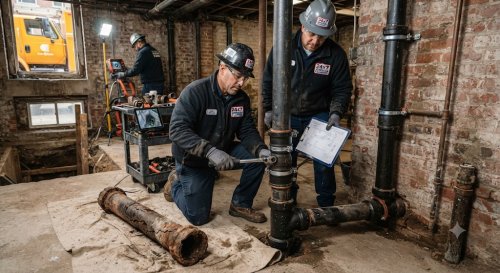
When a master plumber addresses a main sewer line blockage, they use a structured, multi-tier diagnostic and clearing approach:
┌─────────────────────────────────────────────────────────────────┐
|               PROFESSIONAL SEWER REPAIR WORKFLOW                |
├─────────────────────────────────────────────────────────────────┤
| 1. High-Definition Camera Scope: Feed self-leveling fiber-optic  |
|    camera into cleanout to locate roots, belly, or collapse.    |
|                                                                 |
| 2. Mechanical Auger / Root Cutting: Use continuous heavy-duty   |
|    cables with C-cutter heads to punch through solid obstacles. |
|                                                                 |
| 3. Commercial Hydro-Jetting: Scour pipe walls clean using high- |
|    pressure water streams (3,000–4,000 PSI) at 12–15 GPM.       |
|                                                                 |
| 4. Cured-in-Place Pipe (CIPP) Lining: Install seamless epoxy    |
|    liners inside old pipes without digging up lawns.            |
└─────────────────────────────────────────────────────────────────┘
Need a precise diagnosis of your underground pipes? Specialized tools like hydro-jetters and sewer cameras restore full flow fast. Contact 24x7 American Plumber at
762-383-0288 to schedule a camera inspection.
Realistic Cost Estimates and Lifespan Context
Understanding industry standard repair costs helps property managers evaluate service options and budget accurately.
                  EXPECTED SEWER PIPE LIFESPAN
 ─────────────────────────────────────────────────────────
 PVC / ABS Plastic Pipe Lines : 50 - 100 Years
 Cast Iron Drain Lines        : 30 - 50 Years
 Clay / Orangeburg Pipe Lines : 20 - 30 Years
Estimated US Industry Repair Costs:
-
Professional Sewer Camera Inspection: $250 – $500
-
Main Line Mechanical Snaking / Augering: $250 – $600
-
Commercial Hydro-Jetting Service: $450 – $1,000
-
Trenchless Pipe Lining (CIPP Per Foot): $150 – $250 per foot
-
Traditional Excavation Pipe Replacement: $3,000 – $9,000+
When to Call the Pros
You should cease all DIY efforts and call a licensed plumbing company immediately under any of the following critical conditions:
-
Raw Sewage Overflowing Indoors: Wastewater leaking into living quarters presents immediate biohazard, health, and structural risks.
-
Repeated Main Line Clogs Within 30 Days: Indicates a structural issue like a bellied pipe, broken fitting, or heavy root invasion.
-
Persistent Sewer Gas Smell Inside the Home: Methane and hydrogen sulfide gases are flammable and hazardous to health.
-
Water Backing Up from Multiple Floor Levels: Indicates a complete stoppage in the main municipal connection or septic inlet.
Frequently Asked Questions
Will a clogged main sewer line clear itself?
No. Main sewer line clogs caused by tree roots, flushed paper products, or grease accumulation will not dissolve over time. Leaving a blockage unaddressed increases hydraulic pressure, leading to pipe failure or severe indoor sewage flooding.
Can I run water if my main sewer line is clogged?
No. Any water used inside your home (from sinks, showers, toilets, or laundry) drains into the same main lateral pipe. If that pipe is blocked, the used water will back up and overflow through your lowest drains.
How do plumbers determine where the main sewer clog is located?
Plumbers feed a flexible, high-definition fiber-optic sewer camera equipped with a radio transmitter sonde down the line. A locator wand above ground tracks the camera head, pin-pointing the exact depth, distance, and cause of the blockage.
Who is responsible for fixing a clogged main sewer line?
As a general rule in the United States, homeowners are responsible for maintaining and repairing the sewer lateral pipe from their house up to the property line or connection to the municipal main sewer line.
Restore Your Drain System with 24x7 American Plumber
Don't let a main sewer line blockage threaten your health or property. The master plumbers at 24x7 American Plumber offer 24/7 emergency response, fiber-optic camera inspections, hydro-jetting, and trenchless pipe repairs across the USA.
-
Call Us 24/7:
762-383-0288 -
Visit Our Website:
24x7americanplumber.com -
Our Promise: 24/7 Rapid Emergency Response, Transparent Upfront Pricing, and Dependable Workmanship