Sewage in Bathtub When Flushing | Causes & Fixes
Experiencing sewage backing up into bathtub when toilet flushes? Discover root causes, emergency steps, and when to call a licensed plumber.

Introduction
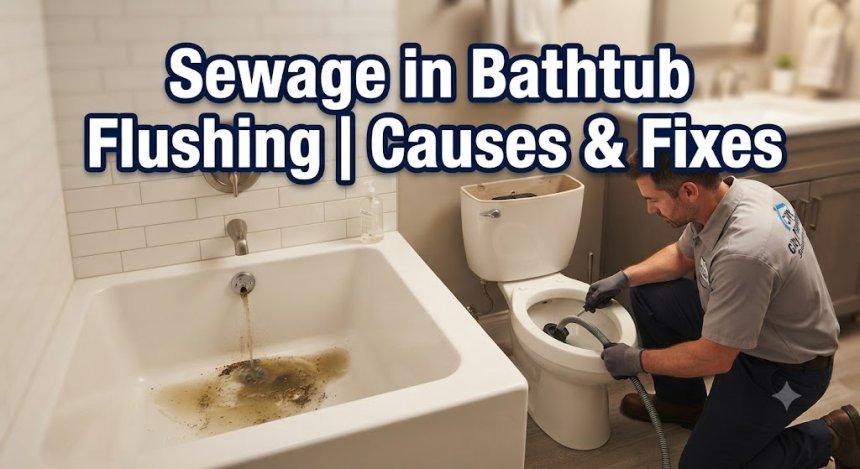
Nothing fills a homeowner with instant dread quite like flushing the toilet only to watch dark, foul-smelling liquid rise up through the drain of the nearby bathtub. Finding sewage backing up into bathtub when toilet flushes is one of the most alarming household crises imaginable, signaling an immediate, catastrophic disruption in your home's waste evacuation network. Properties across the Northeast experience unique challenges due to aging municipal infrastructure, deep ground frost, and shifting soils that stress underground sewer laterals.
Ignoring this cross-contamination disaster or attempting to push it down with a standard plunger frequently worsens the situation, driving biological waste into living areas and causing expensive structural and health hazards. This comprehensive guide breaks down the underlying mechanical failures, professional diagnostic workflows, and emergency steps required to resolve a main line backup safely.
What Is a Main Line Sewer Backup? Decoding the Mechanism
To grasp why a toilet flush forces wastewater out of your bathtub, it helps to understand your home’s gravity-fed drainage, waste, and vent (DWV) architecture. Every fixture in your home—toilets, sinks, showers, and tubs—empties into a centralized vertical waste stack that connects to a main horizontal building sewer line beneath your basement floor or yard, eventually linking to the municipal sewer main.
Your bathtub sits at the lowest physical elevation point in standard residential bathroom layouts. When a heavy obstruction blocks the main sewer line downstream, wastewater cannot escape toward the street. As you flush the toilet, gravity forces gallons of water downward, but the blocked pipe creates a bottleneck. Because the path of least resistance for trapped air and rising wastewater is upward, the sewage escapes through the lowest open terminal in the network: your bathtub drain.
Consider a typical scenario in a mid-century suburban home: mature oak trees surrounding the property send aggressive roots searching for moisture, eventually cracking an aging clay sewer lateral. Over time, grease, wipes, and paper build up behind the root mass, culminating in a total blockage that pushes raw waste backward into the ground-floor bathroom tub.
Critical Warning Signs: When Your Home is Sounding the Alarm
Sewer line collapses and major blockages rarely happen overnight; they usually send out subtle warning signals days or weeks in advance:
-
Auditory Clues: Hearing a deep, rhythmic gurgling sound in your shower drain whenever you wash clothes in the washing machine or flush the toilet.
-
Functional Anomalies: Multiple plumbing fixtures draining sluggishly at the same time—such as your kitchen sink backing up when the dishwasher runs, or toilets bubbling uncontrollably.
-
Olfactory Warnings: Lingering, foul sewer gas odors emanating from floor drains, basement utility sinks, or outdoor cleanout ports.
-
Cascading Risks: Delaying intervention accelerates biological contamination, rots subflooring, warps joists, and creates toxic mold environments that jeopardize indoor air quality.
Professional Diagnostic & Repair Workflow
When a licensed master plumber arrives to handle a severe waste line backup, they follow a rigorous, step-by-step methodology to ensure safety and precision:
-
Non-Invasive Triage & Safety Isolation: The technician assesses the scope of contamination, advises residents to avoid using any water fixtures, and locates main cleanout access points.
-
Precision Diagnostic & Digital Video Inspection: A high-definition, self-leveling push-rod camera is deployed down the line to visually identify whether the obstruction is caused by grease, a structural belly, crushed pipes, or root infiltration.
-
Transparent Options & Written Estimating: Before heavy machinery is engaged, the plumber provides a clear, flat-rate pricing breakdown detailing repair versus trenchless rehabilitation options.
-
Code-Compliant Remediation: The blockage is cleared using heavy-duty mechanical augers or hydro-jetting, or damaged pipe sections are excavated and replaced according to local building codes.
-
Pressure Testing & Flow Verification: The entire waste network undergoes a rigorous flow test to verify that drainage is completely clear and structural integrity is restored.
Root Causes: Why Main Sewer Lines Fail
Main sewer line blockages stem from a combination of structural degradation, environmental pressures, and daily usage habits:
-
Aging Infrastructure: Legacy cast iron and Orangeburg pipe materials installed decades ago suffer from interior corrosion, structural collapse, or ovalization under heavy ground weight.
-
Intrusive Tree Roots: Underground pipe joints weep microscopic amounts of moisture, attracting tree roots that penetrate the gap and expand inside the pipe until they form a dense, hair-like web.
-
Flushable Wipes and Grease Buildup: Modern "flushable" wipes do not disintegrate like toilet paper; combined with congealed cooking fats poured down kitchen sinks, they form impenetrable blockages.
-
Ground Shifting & Soil Settlement: Freeze-thaw cycles and heavy construction cause underground pipes to sag or "belly," creating low spots where solid waste settles and accumulates permanently.
Advanced Diagnostics: The Professional Tool Arsenal
Guessed repairs cost homeowners thousands of dollars. Professional plumbing contractors rely on high-tech diagnostic equipment to eliminate uncertainty:
-
High-Definition Push-Rod Sewer Cameras: Captures real-time digital footage of pipe interiors, recording exact footage measurements to pinpoint the precise location of defects underground.
-
Electronic Sonde Transmitters: Attached to camera heads, these radio transmitters allow technicians above ground to trace the exact depth and path of buried pipes using surface receivers, preventing guesswork.
-
Hydro-Jetting High-Pressure Systems: Delivers water streams up to 4,000 PSI through specialized rotating nozzles to strip away hardened scale, grease, and root masses completely from pipe walls.
-
Pneumatic Test Balls & Manometers: Used to isolate specific sections of a drainage system to test for leaks and verify holding capacity during major repairs.
Financial Breakdown: Cost Factors & Investment Realities
Plumbing investments vary widely based on the depth of the issue, accessibility, and required labor. Understanding these variable cost inputs ensures clear budgeting:
-
Service Call & Emergency Dispatch Fees: After-hours and holiday emergency deployments carry specialized dispatch rates to cover rapid mobilization and safety gear.
-
Accessibility Challenges: Clearing a blockage via an accessible outdoor cleanout is significantly faster than opening a basement concrete slab or digging deep yard trenches.
-
Repair Scope & Technique: Simple snaking or hydro-jetting represents a minor service investment, whereas spot repairs, pipe relining, or full sewer lateral replacements require extensive labor and material costs.
-
Permitting Requirements: Municipal code compliance often mandates local permits and inspections for major exterior sewer replacements.
DIY Reality Check: What You Can Safely Fix vs. When to Step Back
-
Safe Homeowner Actions: Clearing minor localized clogs in a single sink trap with a plunger, maintaining drain strainers, or avoiding the use of water fixtures until a professional arrives.
-
The Danger Zone: Never attempt to clear a main sewer line blockage using retail chemical drain openers; these harsh products sit atop the standing water, generate extreme heat, and can violently splash toxic chemicals into your bathtub or face.
-
When to Call a Pro: Any backup involving multiple fixtures, raw sewage in living spaces, or gurgling toilets demands immediate intervention from a licensed, insured plumbing contractor.
Unique Expert Insights: Hard Truths Homeowners Learn Too Late
Years of hands-on plumbing experience reveal critical industry realities that protect property owners from costly mistakes:
-
Chemical Cleaners Melt Pipes: Pouring corrosive chemical liquids down backed-up drains only destroys metallic joints and warps PVC lines without dissolving dense tree roots or wipes.
-
Temporary Augering Isn't a Cure: Renting a small box-store snake often pokes a tiny hole through a massive root ball, clearing flow temporarily while leaving the core blockage intact to fail again days later.
-
Insurance Limitations: Standard homeowner insurance policies frequently deny coverage for water damage if the backup stems from neglected, root-damaged sewer lines that lacked preventative maintenance.
-
Video Inspection is Non-Negotiable: Never authorize a major sewer repair or replacement without first viewing the digital camera footage yourself to verify the true extent of the damage.
Comprehensive Home Plumbing Maintenance Framework
Protect your home from catastrophic waste line failures by implementing these seasonal and routine maintenance best practices:
-
Spring & Summer Checks: Inspect basement floor drains to ensure trap primers are functioning; monitor exterior yard grading to prevent rainwater pooling directly over sewer lines.
-
Fall & Winter Preparation: Protect outdoor hose bibs, monitor indoor plumbing against freezing temperatures, and avoid planting large trees near your underground lateral path.
-
Year-In, Year-Out Habits: Never flush wipes, paper towels, feminine hygiene products, or grease down drains; schedule professional mainline video inspections every two to three years.
Emergency Protocol: When Immediate Dispatch is Non-Negotiable
Certain critical plumbing situations require immediate, 24/7 professional dispatch to mitigate property loss:
-
Active Sewage Inundation: Raw biological waste overflowing continuously from tubs, showers, and floor drains into living areas.
-
Total Household Drainage Failure: Every toilet and sink in the house refusing to drain, rendering the home entirely uninhabitable.
-
Structural Flooding Hazards: Water rising near electrical outlets, baseboard heaters, or finished basement walls.
Frequently Asked Questions (FAQs)
Why does sewage come out of my bathtub when I flush the toilet?
This occurs because your main sewer line is blocked. Since the bathtub drain is the lowest fixture in your home's plumbing network, rising wastewater escapes upward through it when you flush.
Can I use liquid drain cleaner to fix a main sewer line backup?
No. Liquid chemical cleaners will pool in the clogged pipe, fail to dissolve solid obstructions like roots or wipes, and present severe chemical burn hazards if they back up into your tub.
How do plumbers clear a blocked main sewer line?
Licensed plumbers typically use motorized sectional drain augers to punch through and retrieve roots, or high-pressure hydro-jetting equipment to scour the pipe walls completely clean.
Are "flushable" wipes really safe for plumbing systems?
Despite manufacturer marketing, flushable wipes do not break down rapidly in sewer lines. They catch on pipe imperfections, tangle with hair, and form dense clogs.
How much does it cost to repair a broken sewer line?
Costs vary based on the depth of the pipe, whether excavation or trenchless relining is required, and local labor rates. A video inspection is needed for an accurate estimate.
How can I tell if my main sewer line is damaged?
Frequent multi-fixture backups, gurgling drains, foul odors in the yard or basement, and slow-draining tubs are prime indicators of main sewer line failure.
Should I call a plumber or the city if my sewer backs up?
If the blockage is located between your home and the property line cleanout, it is the homeowner's responsibility. If the blockage is in the municipal main under the public street, the city handles it.
How often should sewer lines be cleaned preventatively?
Homes surrounded by mature trees or properties with older cast iron lines benefit from professional hydro-jetting or root-clearing maintenance every 1 to 2 years.
Why Homeowners Trust Professional Plumbing Experts
Resolving a complex main sewer backup requires specialized heavy equipment, licensed expertise, and strict adherence to sanitary codes. Relying on professional plumbing contractors ensures your home's waste network is thoroughly diagnosed, safely cleared, and fully restored with transparent pricing and reliable warranties.
Are you currently dealing with a sewer backup emergency, or would you like to schedule a professional camera inspection for your plumbing system?